
Red Bull Heavily Sanctioned After Second Hadjar Failure in Qatar Practice
Days after Red Bull fitted a front-wing fix following Las Vegas, Isack Hadjar's car failed again in Qatar first practice, and the stewards' heavy sanction raises hard questions about the team's engineering processes.
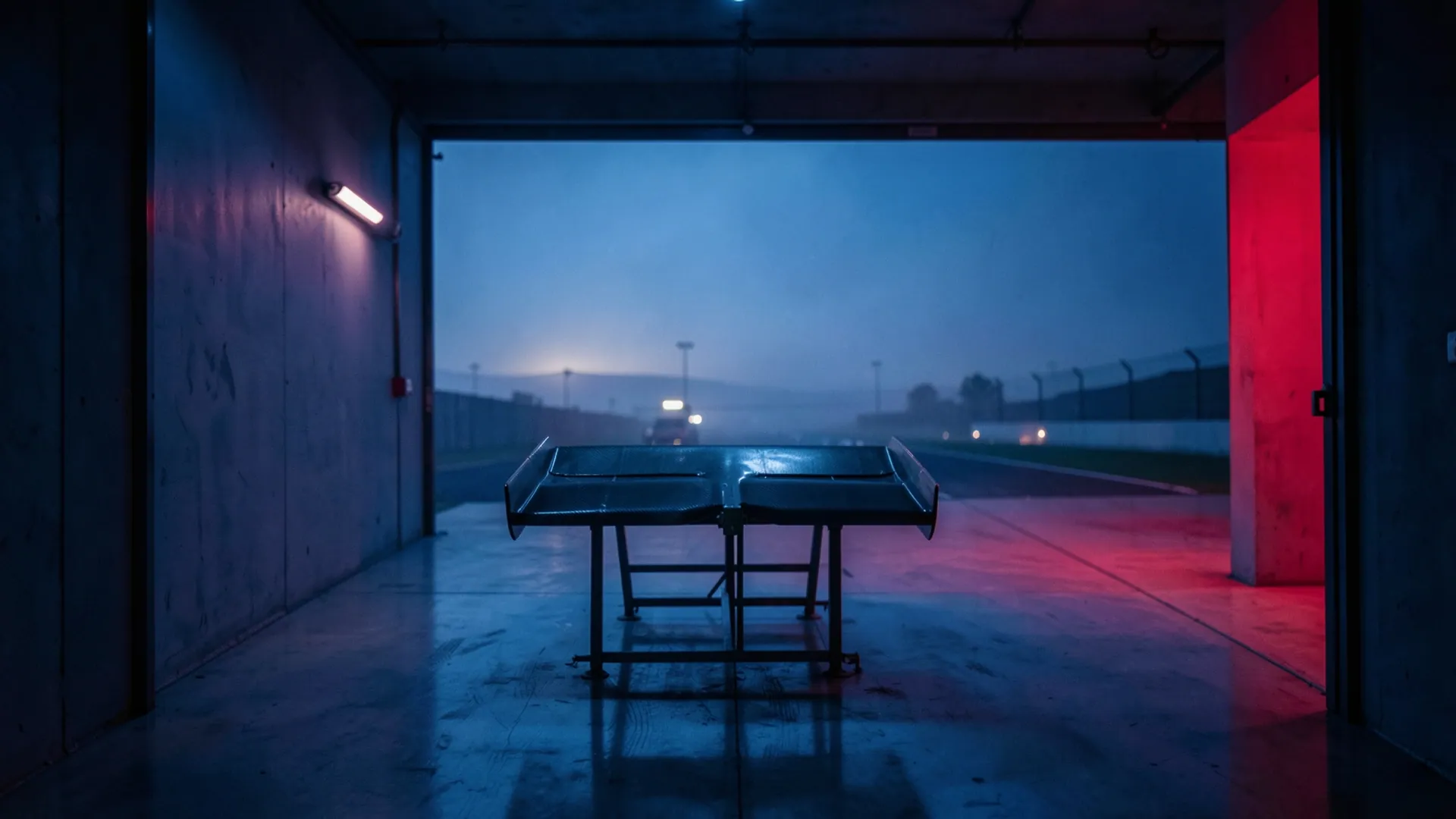
Red Bull were handed a heavy sanction by the Formula 1 stewards on Friday after Isack Hadjar’s car suffered a second alarming failure in the space of a week, this time in first practice for the Qatar Grand Prix at the Lusail International Circuit. Hadjar and the team were summoned once the session had finished. The incident came only days after Red Bull introduced a front-wing fix following the problems that wrecked the Frenchman’s race in Las Vegas.
The severity of the punishment reflects the pattern rather than any single moment. One failure can be put down to misfortune. Two in consecutive outings, with the second arriving after the team believed it had solved the first, raises a question about process, and the stewards are entitled to treat it that way.
A fix that did not hold
Las Vegas should have been a strong night for both Red Bull cars. Max Verstappen converted pole into victory, his fourth win of the season, and Hadjar lined up fourth on the grid. He finished 15th, out of the points, his race compromised by front-wing trouble. Red Bull scored 25 points from a weekend on which a clean result for both cars could have brought them close to 40.
The team’s response was a fix to the front wing. Engineering remedies after an in-race failure tend to come in two forms. The quick one reinforces the part that broke: add material, change a fixing, increase a safety margin. The slower one establishes why it broke, whether through a load case the design did not anticipate, a manufacturing flaw, an assembly error or an interaction with another part of the car. The first can be done between races. The second sometimes cannot, particularly in a triple-header at the end of a long season.
A repeat on the same car, in the very first session of the next event, suggests one of two things. Either the root cause was not identified, or the fix addressed a symptom rather than the mechanism behind it. Neither reflects well on a team with Red Bull’s resources.
The change of circuit sharpens the point. Las Vegas is defined by long straights and short bursts of cornering on a cold street surface. Lusail is a flowing, high-speed track where the front of the car carries heavy, sustained aerodynamic load through sequences of fast corners, and where the kerbs have punished cars before: in 2023 they did such damage to tyre sidewalls that Pirelli imposed maximum stint lengths. A front wing with an unresolved weakness was always going to be tested harder in Qatar than in Nevada.
The 2026 regulations add a further layer. This generation of cars uses active aerodynamics, with movable front and rear wing elements that switch between straight-line and cornering settings. That brings actuators, linkages and moving surfaces into a component that was once a largely fixed structure, and every additional mechanism is another place for something to fail. Every team has had to learn this architecture from scratch, but most have kept their failures out of the stewards’ office.
Why repeat failures draw a harsher response
The stewards’ job is to judge consequence and recurrence as well as intent. A failure in practice is no less dangerous than one in the race. Parts shed at high speed become debris in the path of following cars, and a car whose aerodynamic balance changes suddenly can leave its driver as a passenger. On a circuit as fast as Lusail, those risks are magnified.
F1 has a long history of treating mechanical safety as a matter of responsibility rather than luck. The defining modern precedent is Hungary in 2009, when Fernando Alonso’s Renault lost a wheel after a pit stop and the team let him continue. The stewards suspended Renault from the following race. That ban was overturned on appeal and replaced with a fine, but the principle stood: a team is answerable for knowing whether its car is safe to run, and for acting on that knowledge. The same weekend, Felipe Massa was seriously injured by a spring that came off Rubens Barrichello’s car, one reason the governing body has been so sensitive to loose components ever since.
More recently, Kevin Magnussen spent much of 2022 on the receiving end of the black-and-orange flag, the signal that orders a driver to pit and repair damage. Those episodes prompted debate over whether the flag was being applied consistently, but they reinforced the same line. A compromised car is a safety problem first and a performance problem second.
Against that background, the case against Red Bull in Qatar is not hard to follow. The team had prior warning. It had a week to understand the failure. It sent Hadjar out in a car that failed again. Whatever criticism the stewards’ decision attracts, it will be hard to argue that they lacked a basis for treating this more seriously than an isolated breakage.
Hadjar himself deserves no blame. Nothing in the episode points to a driving error, and a driver in his first season alongside Verstappen needs mileage and confidence in his car, not a second Friday spent in a hearing. The failings lie in the system around him.
Nine points from losing third
The timing could hardly be worse. Both championships are settled: Andrea Kimi Antonelli leads Verstappen by 98 points with two rounds left, a margin beyond reach, and Mercedes’ 666 points put them far clear in the constructors’ table. Ferrari sit second on 517, 77 points ahead of Red Bull, a gap that would take an implausible collapse to close.
The live fight is for third, and it is closing fast.
| Position | Team | Points | Las Vegas haul |
|---|---|---|---|
| 3 | Red Bull | 440 | 25 |
| 4 | McLaren | 431 | 33 |
McLaren took eight points out of Red Bull in Las Vegas alone. Lando Norris finished second, and Oscar Piastri drove from 17th on the grid to third. That is the shape of the problem for Red Bull: McLaren are bringing two cars home in the points while Red Bull are leaning heavily on one.
The drivers’ table makes the imbalance plain. Verstappen is second on 304 points; Hadjar is eighth on 122, with nothing from Las Vegas. Norris and Piastri, on 264 and 167, give McLaren a far more even spread. In a two-race shootout over a single-digit margin, Red Bull need Hadjar scoring steadily, and a weekend that begins with a failure, a summons and lost running is not a promising foundation.
Position in the constructors’ table determines each team’s share of F1’s prize fund, so a single place is worth a substantial sum. For an organisation that has built its identity on technical excellence, finishing behind McLaren because of reliability failures on the second car would also cost it reputation.
What Red Bull must prove before Sunday
The immediate test is simple to state and difficult to meet. Red Bull have to give the stewards, their driver and themselves confidence that Hadjar’s car is safe for the rest of the weekend. That means more than another reinforcement. It means a clear account of what failed, why the Las Vegas fix did not prevent it, and what has changed. If that analysis cannot be completed at the track, the conservative option of a more robust, less optimised specification is the right one, even at some cost in lap time.
The wider question will outlast this weekend. Red Bull built a car fast enough for Verstappen to win from pole a week ago, so raw performance is not the issue. The issue is whether the validation behind that performance is keeping pace with a rule set that has put new mechanisms into the most heavily loaded parts of the car. Two failures on one car in two events point to a gap between how quickly the team can modify a component and how thoroughly it can prove the change works.
The arithmetic offers the sharpest verdict. Hadjar started fourth in Las Vegas, and fourth place is worth 12 points. Red Bull’s margin over McLaren is nine. If the team lose third place at the season finale by less than the points that slipped away in Nevada, the cause will be found in the design office and on the test rigs rather than in the cockpit, and the stewards’ sanction in Qatar will be remembered as the warning that came too late.