
Audi Loses Tsunoda Appeal, Leaving Haas Three Points Clear in Seventh-Place Fight
The FIA International Court of Appeal has rejected Audi's bid for a penalty against Yuki Tsunoda at Monza, so the three-point fight with Haas for seventh will be settled on track.
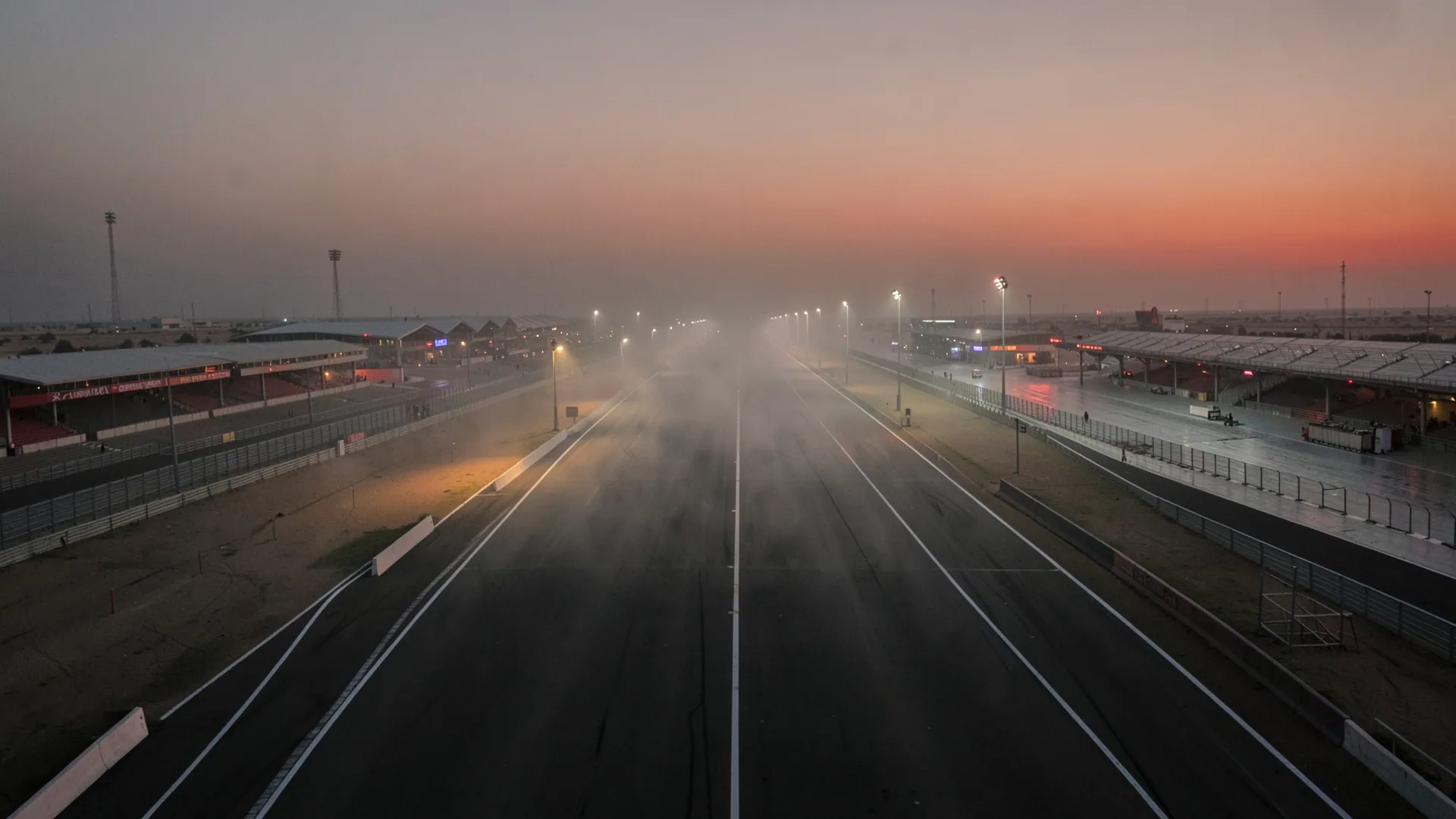
The FIA’s International Court of Appeal has rejected Audi’s attempt to have a penalty applied to Yuki Tsunoda over the Italian Grand Prix, leaving the Monza result as it stood. The ruling ends the matter within the FIA’s judicial system. Audi’s three-point deficit to Haas in the fight for seventh place in the constructors’ championship must now be closed on track, with only Qatar this Sunday and the season finale left to run.
A courtroom route that has now closed
Audi went to court because, in a battle this tight, every point counts. Haas sits seventh on 31 points and Audi eighth on 28. At the front, nothing remains to be decided. Andrea Kimi Antonelli’s 98-point lead over Max Verstappen cannot be overturned in two rounds, and Mercedes’ 149-point margin over Ferrari has settled the teams’ title as well.
Further down the order, places still have a price. Each step in the constructors’ table changes a team’s share of Formula 1’s prize fund, and the difference between seventh and eighth is generally reckoned to run into millions of dollars. Audi is in its first season as a full works operation with its own power unit. For a manufacturer in that position, pursuing every legitimate avenue to recover points is a defensible decision.
The court was not persuaded that a penalty was warranted. With the Monza classification untouched, the points Audi hoped to gain will not materialise, and the table it takes to Lusail is the one published after Las Vegas.
Why the bar for rewriting a result sits so high
The rejection follows a long pattern. Stewards make their calls at the circuit, usually within hours of an incident, with access to video, telemetry and the drivers themselves. The regulations allow those calls to be reopened in only two ways. A team can request a right of review, which succeeds only if it produces a significant and relevant new element that was unavailable at the time. Alternatively, it can take the case to the International Court of Appeal. Certain penalties, such as drive-throughs, cannot be appealed at all.
The system is designed to favour finality, and recent history shows how rarely results change once a race is over:
- Canada 2019: Ferrari’s petition to review Sebastian Vettel’s five-second penalty, which cost him victory, was dismissed because the team’s material did not count as new evidence.
- Australia 2014: Red Bull took Daniel Ricciardo’s fuel-flow disqualification to the Court of Appeal, and the exclusion was upheld.
- Abu Dhabi 2021: Mercedes lodged notice of an appeal over the title decider and then withdrew it.
- Saudi Arabia 2023: Aston Martin had Fernando Alonso’s podium restored through a right of review. It stands out precisely because such successes are rare.
Haas knows the territory from the other side. At the 2023 United States Grand Prix it sought a review of track-limits breaches by rivals, arguing that offences had gone unpunished, and was turned away on the grounds that it had offered nothing genuinely new. The team that benefits from Audi’s defeat in court has itself learned that the stewards’ verdict on the day is very hard to move.
There is a sound sporting reason for this. A championship whose results stay provisional for weeks while lawyers argue over them is worse for everyone, including the team that might win one of those arguments. Audi was entitled to test its case. The outcome confirms that, in practice, the classification at the chequered flag is close to final.
Three points, two rounds and a threat from Grove
With the legal route exhausted, the arithmetic is simple. Audi needs to outscore Haas by four points across the remaining two rounds to take seventh outright. If it outscores Haas by exactly three, the teams finish level and the tie goes to countback on best finishes.
| Position | Team | Points | Gap to team ahead |
|---|---|---|---|
| 6 | Alpine | 87 | – |
| 7 | Haas | 31 | 56 |
| 8 | Audi | 28 | 3 |
| 9 | Williams | 16 | 12 |
| 10 | Aston Martin | 7 | 9 |
| 11 | Cadillac | 0 | 7 |
In practical terms, a single eighth place for Audi, worth four points, would be enough if Haas fails to score. A tenth-place finish for Haas would change the target again. With margins this small, one retirement or a well-timed safety car could decide the whole fight.
Alpine is out of reach. Its 18-point haul in Las Vegas, from Pierre Gasly’s fifth and Franco Colapinto’s sixth, opened a 56-point cushion over Haas. Williams is a different matter. It sits 12 points behind Audi and 15 behind Haas, and Carlos Sainz showed in Las Vegas what one strong afternoon can do by climbing from 20th on the grid to eighth. A Williams finish in the top six in Qatar would turn a two-team contest into a three-way scramble. Audi and Haas both need to watch their mirrors as well as each other.
What Las Vegas revealed about the midfield order
On the most recent evidence, Audi has the stronger car of the two. Nico Hülkenberg finished 11th and Gabriel Bortoleto 12th in Las Vegas, each gaining a place from their grid slots of 12th and 13th. Hülkenberg crossed the line one position behind Charles Leclerc, whose tenth place was worth a single point. Audi was the first team outside the scoring positions on a night when Isack Hadjar, Liam Lawson and Arvid Lindblad all failed to score from top-seven grid slots. Much of that opening went to Alpine and Williams instead.
Haas had the harder weekend. Oliver Bearman recovered well from 22nd on the grid to finish 13th, but that still left him behind both Audis. Rafael Camara slipped from 15th to 16th. Neither car threatened the top ten.
Audi will take encouragement from that, but one race is a small sample, and an 11th place in Las Vegas does not guarantee points elsewhere. Lusail is a different challenge from the Las Vegas street circuit. Its long, fast corners load the tyres heavily and reward a car with strong high-speed balance rather than straight-line efficiency. The midfield order has rarely carried over neatly from Las Vegas to Qatar. Whichever team better manages tyre wear over a stint is likely to profit if the frontrunners stumble.
Audi’s points were lost long before Monza
The appeal was legitimate, but it was also a symptom of Audi’s season. A team does not end up going to court over a handful of points unless it has left more on the table across 21 rounds. Audi’s 28 points in a debut works season with a new power unit are not a disaster by historical standards. Building an engine programme from scratch has humbled bigger budgets. Still, being three points behind a Ferrari customer team is not the position Audi would have planned for, and the money at stake explains the urgency.
The court’s decision does Audi a favour of sorts. It removes a distraction and leaves the team with a clear task. Audi does not need victory or a podium, only one clean afternoon in which a car finishes eighth or higher while the Haas cars fail to score.
On the evidence of Las Vegas, Audi has the car to contend, and Hülkenberg’s experience is exactly what a conversion job like this requires. If Audi is to take seventh, Qatar is the likeliest place, because a points finish there would leave Haas chasing at the final round rather than defending. If Lusail passes without an Audi score, the advantage moves firmly back to Haas, and the three points Audi failed to recover in court may well decide where it finishes.