
Audi's Monza Protest Could Reshape a Three-Point Fight With Haas
An FIA hearing on Audi's protest over the Italian Grand Prix could rewrite the Monza classification months after the race, with Audi only three points behind Haas in the constructors' standings.
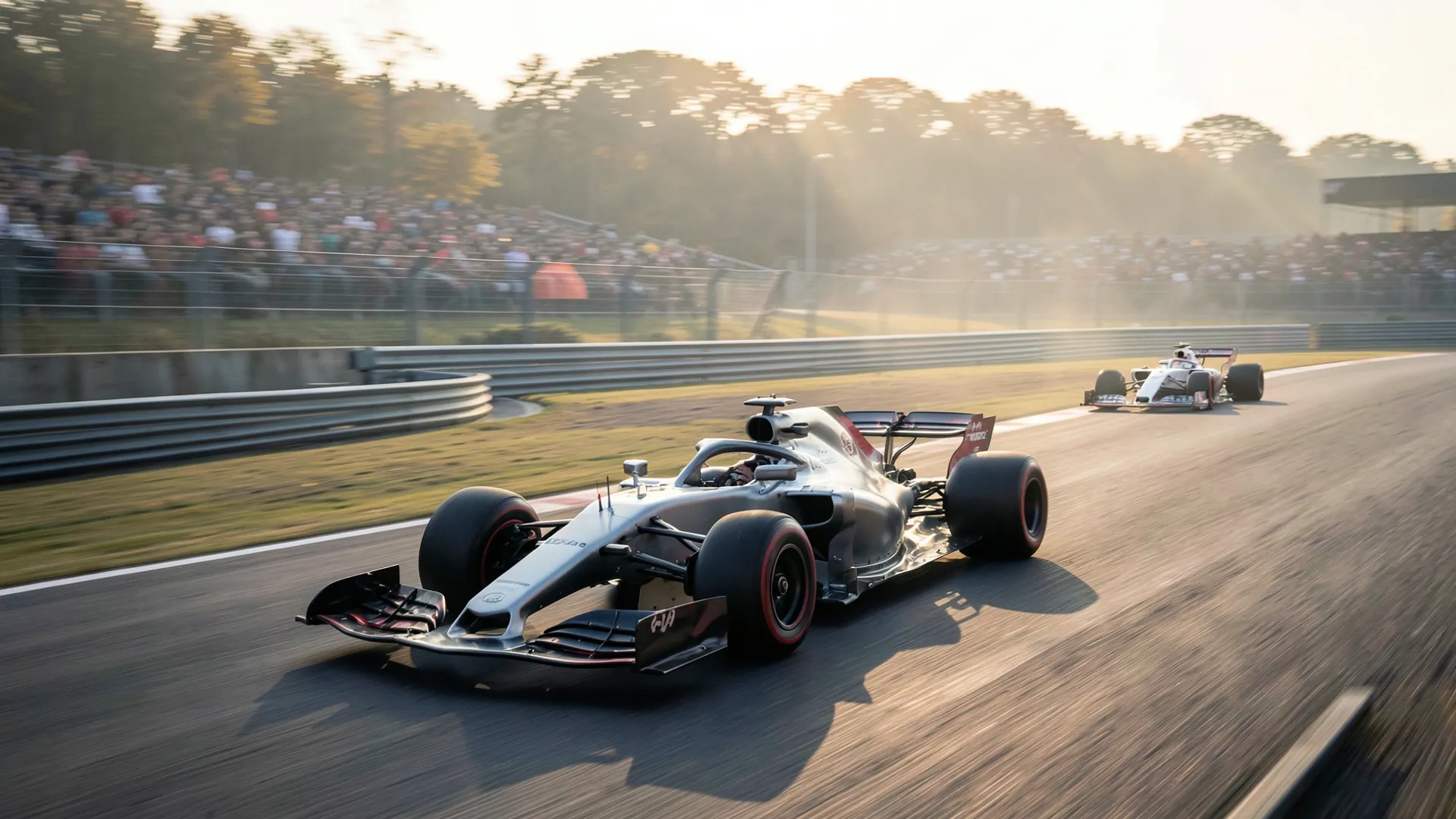
The FIA has held a hearing into a protest lodged by Audi over the result of the Italian Grand Prix, GPfans reports. The hearing reopens a Monza classification that the rest of the paddock had long since filed away, and a ruling in Audi’s favour would amend a race result months after the chequered flag. With two rounds left and Audi three points behind Haas in the fight for seventh in the constructors’ championship, the timing could hardly be more sensitive.
Why Monza is still open in late November
Formula 1’s rulebook is built to close results quickly. Under the FIA’s International Sporting Code, a protest against a classification must normally be lodged within 30 minutes of its publication. The stewards can rule on the spot or adjourn the matter if they need more evidence, such as technical checks, data or witness accounts. A separate mechanism, the right of review, lets a team ask the stewards to reopen a decision within 14 days. It succeeds only if the team presents a “significant and relevant new element” that was not available when the original call was made.
Neither route is meant to leave a result in limbo for long, which is why a hearing on Monza at this stage of the season stands out. Usually the provisional classification becomes the final one within hours. Disputes that run longer tend to take weeks, not months.
How a ruling changes the table is simple. If a car is excluded, everyone classified behind it moves up a place; if it receives a time penalty, the cars it drops behind are promoted. Either way, points are reallocated down to 10th place. A team does not need to be the direct beneficiary of a decision to gain from it. It only needs a car sitting in the right part of the order.
Three points between seventh and eighth
The bottom half of the constructors’ table shows why a single amended result could matter so much.
| Position | Team | Points |
|---|---|---|
| 7 | Haas | 31 |
| 8 | Audi | 28 |
| 9 | Williams | 16 |
| 10 | Aston Martin | 7 |
| 11 | Cadillac | 0 |
At the foot of the points scale, the margins are tiny. Tenth pays one point, ninth two, eighth four and seventh six. A one-place change in that part of the top 10 can therefore be worth one or two points, while a change involving a car further up the order is worth more. Against a three-point gap, a revised Monza result could leave Audi level with Haas, ahead of them, or further behind if the ruling promotes a Haas car as well. Until the stewards publish their decision, nobody can say which.
Points have been scarce at this end of the grid all year. The top four teams have taken the bulk of them, and RB (114 points) and Alpine (87) have picked up most of what remained. Haas, Audi, Williams, Aston Martin and Cadillac have scored 82 points between them across 21 rounds, fewer than RB have managed alone. When a team’s entire season amounts to 28 or 31 points, a single result decided in a stewards’ room is a large share of its year.
Las Vegas showed how fine the margins are. Nico Hülkenberg and Gabriel Bortoleto finished 11th and 12th for Audi, just outside the points. Oliver Bearman recovered from 22nd on the grid to 13th for Haas, and Rafael Camara was 16th. Neither team scored. Williams did, through Carlos Sainz’s drive from 20th to eighth, which showed how one well-timed result can upend this part of the table. Williams are 12 points behind Audi, so a big weekend in Qatar would bring them into contention too.
Seventh and eighth are worth fighting for in more than prestige. A team’s constructors’ position determines its share of the sport’s prize fund, and each place is worth millions of dollars. That money pays for development work within the cost cap. For Haas, the smallest operation on the grid, it is a significant part of the budget. For Audi, in their first season as a works entry after taking over Sauber, finishing ahead of a customer team would be a modest but tangible sign of progress in a year that has otherwise offered few.
When the stewards’ room settled a table
Formula 1 has seen championship positions decided away from the track before, and the most relevant case is recent.
In 2020, Renault protested Racing Point’s brake ducts after the Styrian Grand Prix, arguing that the parts had been copied from Mercedes’ previous-year design. The stewards’ verdict came weeks later and docked Racing Point 15 constructors’ points, along with a fine. Racing Point finished the season fourth, seven points behind McLaren. Without the deduction they would have been third. A protest from a rival team, ruled on long after the race, changed the final order of the championship and the prize money attached to it.
Other cases show how high the bar is for overturning a result. Aston Martin sought a review of Sebastian Vettel’s disqualification from the 2021 Hungarian Grand Prix, where he was excluded from second place because his fuel sample fell short, and the request was rejected. Ferrari’s attempt to overturn Vettel’s penalty at the 2019 Canadian Grand Prix met the same fate. In 2023, Fernando Alonso lost a podium in Saudi Arabia to a post-race penalty and had it restored on review the same evening. Even that reversal, awkward as it was for the officials involved, was settled within hours.
There is also the question of appeal. A stewards’ decision can be taken to the FIA International Court of Appeal, which adds weeks. If either side signals an intention to appeal, the Monza result might not be final until after the season ends. Haas and Audi would then start their winter planning without knowing where they finished.
The FIA owes the midfield a verdict before Lusail
Accuracy should come before tidiness. If Audi’s protest has merit, the stewards should uphold it however late in the year it arrives. A season whose record is known to be wrong is worse than one that changes its classification in November. Nobody should want rulings shaped by how inconvenient they are to deliver.
Timing still matters, because the final two rounds are not run in isolation. Teams fighting over three points make different decisions depending on which side of the gap they are on: how aggressive to be with strategy, whether a safety-car gamble is worth taking, and how much risk to accept on the opening lap. Haas will start the Qatar Grand Prix at Lusail on 29 November either three points clear of Audi or not, and they ought to know which before they arrive.
This fight also carries more weight than usual because the headline championships are settled. Andrea Kimi Antonelli leads Max Verstappen by 98 points, more than remain available, and Mercedes’ 149-point margin over Ferrari puts the constructors’ title equally out of reach. Of the battles still open, two are separated by three points. In the drivers’ standings, Lewis Hamilton has 267 points for third, with George Russell and Lando Norris tied on 264. The other is the fight for seventh in the constructors’ table, and it is the one now in the FIA’s hands.
The stewards should therefore publish their decision, with full reasoning, before the cars run in Qatar. Clear reasons would also help the teams that were not party to the protest understand what is and is not permitted. If the ruling comes this week, Haas and Audi can settle seventh on track at Lusail and in the finale. If it slips into December or goes to appeal, Audi’s first season as a works team may end with their championship position decided by a hearing rather than by their two drivers.