
Red Bull Reinforce Front Wing After Hadjar's Straight-Mode Failure in Las Vegas
Isack Hadjar's front wing broke as it left Straight Mode in Las Vegas, and Red Bull's reinforced design must now hold at Lusail to protect a nine-point lead over McLaren for third.
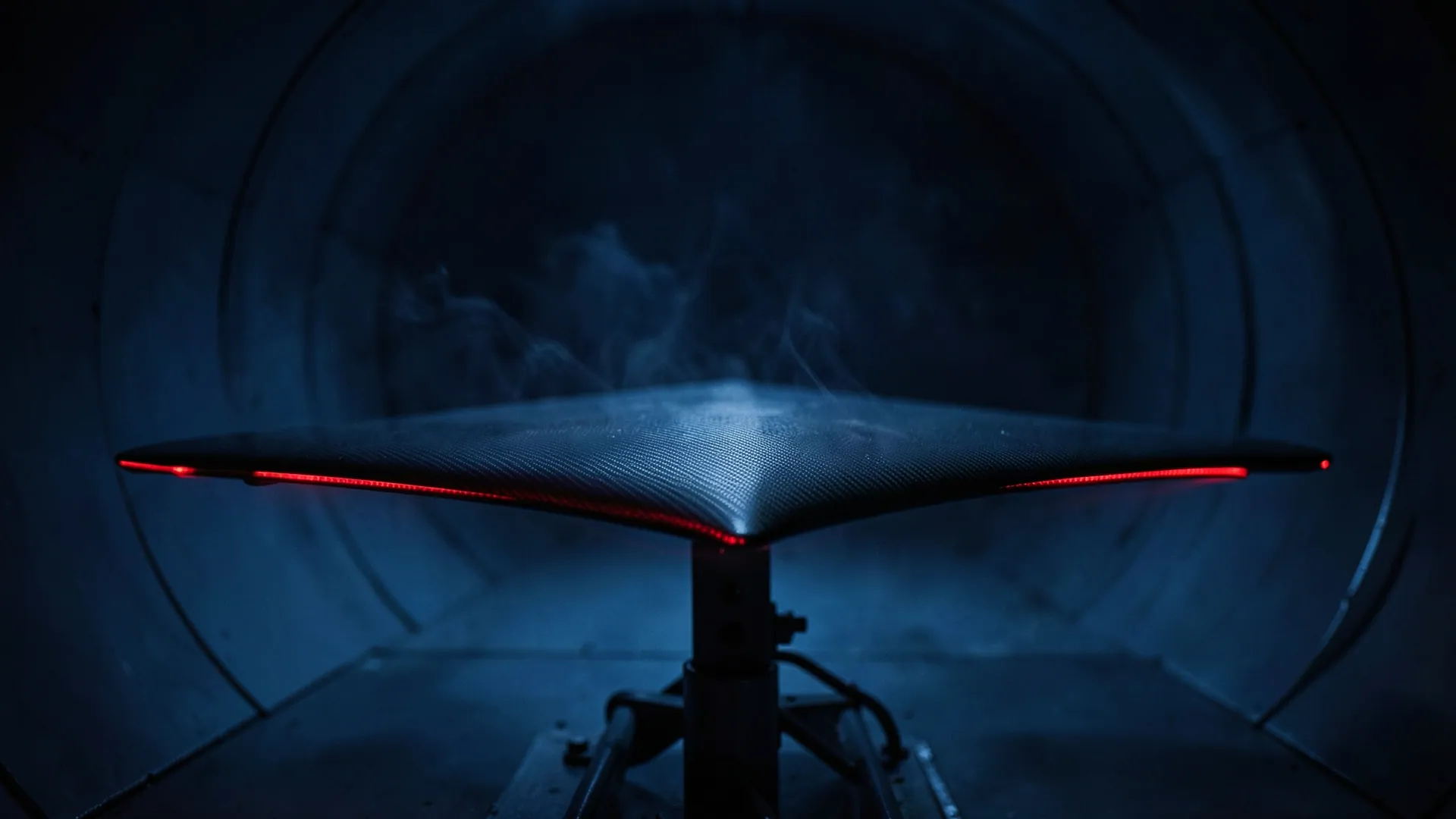
Red Bull are reinforcing their front wing after Isack Hadjar’s wing failed as it switched out of Straight Mode during the Las Vegas Grand Prix on 22 November. The failure wrecked a race he had begun from fourth on the grid: Hadjar finished 15th and scored nothing. According to RaceFans, he blamed unfortunate timing and described the wing as having “exploded”. With the Qatar Grand Prix at Lusail just a week after Las Vegas, Red Bull need the stronger part fitted and working on one of the most demanding circuits of the year.
From fourth on the grid to 15th at the flag
The bare result understates the cost. Hadjar qualified fourth on a night when his team-mate Max Verstappen converted pole into victory. A finish anywhere near his grid slot would have been worth a healthy haul; fourth alone pays 12 points. Instead Red Bull left the Strip with Verstappen’s 25 and nothing else.
McLaren took 33 from the same race. Lando Norris finished second and Oscar Piastri climbed from 17th on the grid to third. That swing now matters more than anything else in Red Bull’s season. Before Las Vegas, Red Bull led McLaren by 17 points in the fight for third in the constructors’ championship. They now lead by nine, 440 to 431, with two rounds to run.
The other titles are effectively settled. Andrea Kimi Antonelli leads the drivers’ standings on 402 points, 98 clear of Verstappen, a margin beyond reach with two rounds left. Mercedes sit 149 points clear of Ferrari in the constructors’ table, and Ferrari are 77 ahead of Red Bull, a gap only a Ferrari collapse would close. What remains open is the scrap for third between Red Bull and McLaren. Third place carries real prize money and, for a team still building its new power unit programme, real pride. A single broken front wing has turned that contest into a two-race shootout.
Why the switch out of Straight Mode is the dangerous moment
The 2026 regulations replaced DRS with active aerodynamics on both the front and rear wings. On designated straights the movable elements open into Straight Mode, cutting drag. As the car approaches the corner, they return to Corner Mode and restore the downforce the car needs to brake and turn.
That return is where the engineering gets difficult. Aerodynamic load rises with the square of speed, so the wing experiences its greatest forces at the end of the longest straights. The switch back to Corner Mode happens at almost exactly that point. The flap swings from a low-load position to a high-load one in a fraction of a second, at or near the car’s top speed. The structure does not see a steady force. It sees a sharp, rising spike, applied through hinges, pivots and actuator mountings that a fixed wing never needed.
A conventional front wing is essentially one continuous composite structure, laid up and bonded to carry its load evenly. An active wing has to be split so that parts of it can move, and every split is a joint. Joints are where composite structures concentrate stress, and where fatigue tends to begin. Las Vegas makes the problem worse than most venues. Its long Strip straight produces some of the highest top speeds of the year, so the wing closes from a very high speed.
Hadjar’s own explanation, that the timing was unfortunate, fits this picture. The failure came at the single moment when the loads change fastest. That does not prove the whole concept is fragile. It does show that the transition is a load case teams have had less than a season of real-world data to understand.
A new load case in a season of weight saving
This matters beyond one car because of the pressure the 2026 rules place on mass. The cars are lighter than their predecessors, with the minimum weight cut by around 30kg. Every designer has been asked to shave grams from every component, and a front wing is an obvious target. It sits ahead of the front axle, where mass is least welcome, and the aerodynamicists want it as thin and finely shaped as the regulations allow.
When engineers design to a margin, they design to the loads they expect. In the first season of an entirely new aerodynamic concept, those expectations come from simulation, rig testing and a handful of pre-season days. Twenty-one race weekends later, Red Bull have learned something the rig did not tell them. That is uncomfortable but not unusual.
Formula 1’s recent history is full of first-generation concepts that met an unplanned load in the real world. The ground-effect cars of 2022 bounced violently on the straights, and teams had to stiffen floors with extra stays. The FIA also intervened on safety grounds in a way nobody had planned for. Wing flexibility has been policed again and again, most recently when the FIA tightened its front-wing deflection tests from the 2025 Spanish Grand Prix. Each time, the cycle is the same. A rule creates a new freedom, teams push it to the edge, and a failure or a protest shows where the edge actually lies.
Red Bull’s response is the correct one, but it is not free. A stronger wing is usually a heavier wing. A stiffer wing may also behave differently on track, changing how the flap moves under load and therefore how the car’s aerodynamic balance shifts between the two modes. Red Bull will accept a small penalty in weight or balance rather than risk another zero. Any modified part must still pass the FIA’s load and deflection checks, and it must be built and shipped in the week between Nevada and Lusail. That is a tight turnaround even for a team with Red Bull’s resources.
There is also a regulatory question. The FIA’s static tests measure how much a wing deflects under a fixed load. A failure triggered by a moving flap closing at speed points to a dynamic load that a static test may not fully represent. The FIA would do well to study what broke on Hadjar’s car before writing the 2027 technical directives.
Lusail is a harsh place to test the fix
If Red Bull wanted a gentle venue to prove the reinforced wing, Qatar is not it. Lusail is defined by long sequences of medium- and high-speed corners in which the car carries heavy aerodynamic load for sustained periods. Its main straight runs for more than a kilometre, so the wing will still have to close from a high top speed into Turn 1 on every lap.
The circuit’s kerbs add another layer. In 2023 they caused so much tyre damage that Pirelli imposed a maximum stint length. Cars riding those kerbs send vibration through the whole structure, including the front wing. The 2024 race also showed how much damage small debris can do here: a mirror that fell onto the main straight caused punctures and changed the order at the front. A front wing breaking at the end of that straight would scatter carbon fibre across the fastest part of the track, making it a safety concern as much as a sporting one.
The championship arithmetic makes Hadjar’s role in Qatar unusually important. Verstappen has carried Red Bull for much of the season, scoring 304 of the team’s 440 points. McLaren, however, now have two drivers capable of scoring heavily: Norris has 264 points and Piastri has just shown he can climb from deep in the field. Red Bull cannot rely on Verstappen alone to hold off two papaya cars over two races. Hadjar’s own season has been solid. He is eighth in the standings on 122 points, 33 clear of Liam Lawson and 45 behind Piastri, and his points have often been the difference between Red Bull and McLaren.
Third place now hangs on a wing
Red Bull have not been undone by a lack of speed. Hadjar started fourth in Las Vegas and was in a position to score well. They were undone by a component that met a load it was not built to survive. That makes the problem simpler to fix than a fundamental pace deficit, but it leaves no room for a repeat.
If the reinforced wing holds at Lusail and Hadjar scores in both remaining races, Red Bull should keep third. McLaren need Red Bull to drop points to overturn a nine-point gap, and Las Vegas showed how quickly that can happen. A second failure would almost certainly hand third to McLaren. More importantly, it would tell every team that the active front wing still has a weakness nobody has fully understood.
The rest of the grid will be watching Hadjar’s front wing at the end of the Lusail straight, wanting to know whether Red Bull have solved a problem that every team building an active wing may yet have to confront.