
Verstappen-Russell Feud Escalates After Las Vegas as Old Qatar Wounds Await
Max Verstappen's repeated digs at George Russell after winning in Las Vegas have revived one of the grid's sharpest rivalries, with Lusail and a live fight for second place to come.
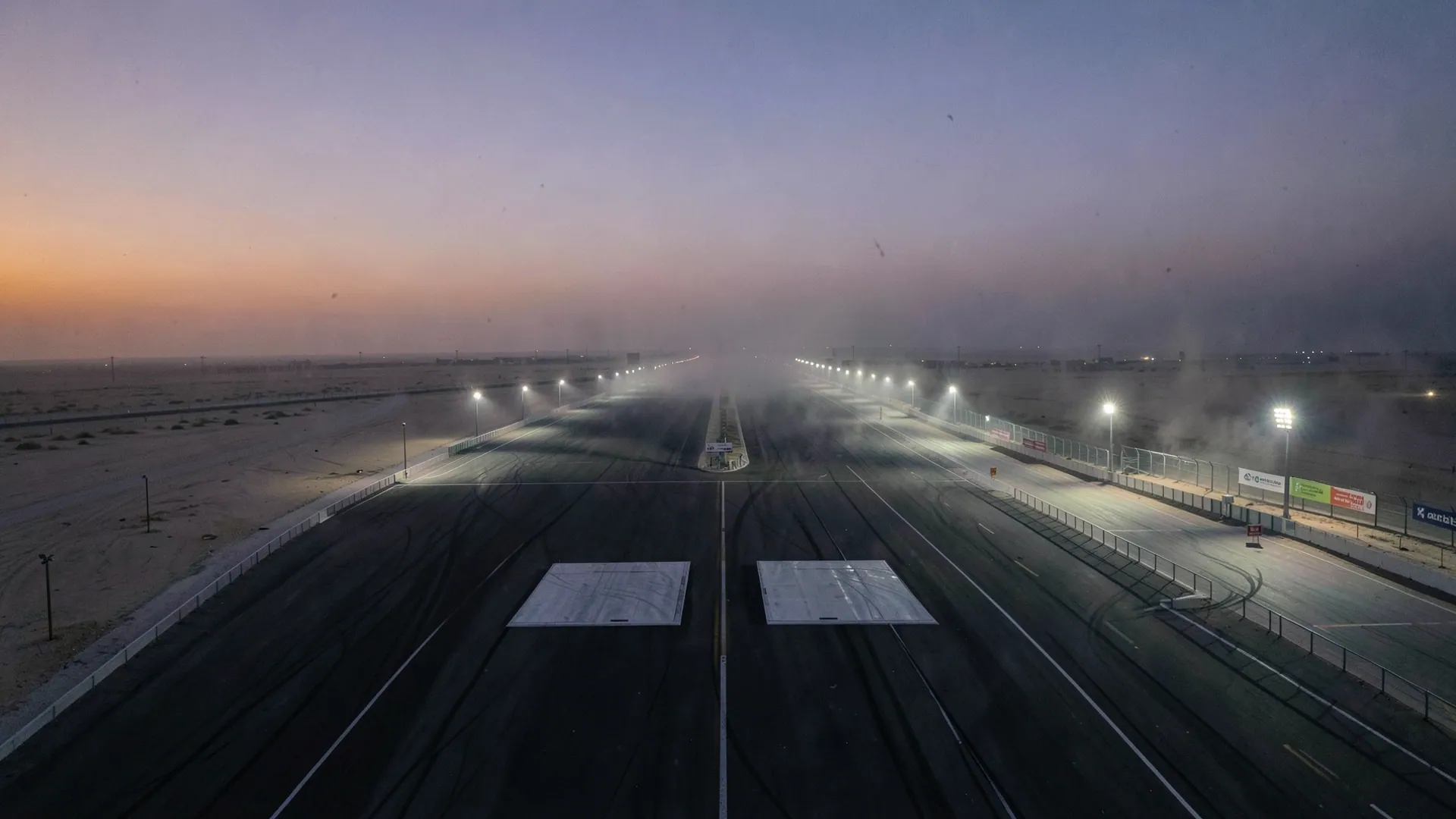
Max Verstappen won the Las Vegas Grand Prix from pole position on 22 November, then renewed his criticism of George Russell, who had started alongside him and finished ninth. GPfans characterised Verstappen’s post-race verdict on Russell as scathing and reported that he returned to the theme within 24 hours. PlanetF1’s Final Sector podcast presented the exchange as the moment the hostilities became open. With the paddock heading to Lusail for Round 22, a rivalry that has simmered for two years is boiling again.
A front row that finished eight places apart
The result sheet explains much of the tone. Verstappen and Russell shared the front row in Las Vegas. Verstappen converted pole into his fourth win of the season and 25 points. Russell, starting second, came home ninth with two points.
That is a heavy fall for a driver in a Mercedes, the car that has won 12 of the 21 rounds so far. Russell finished behind both Alpines, behind Lewis Hamilton’s Ferrari from 11th on the grid, and behind Carlos Sainz, who brought a Williams through from 20th. Oscar Piastri started 17th and finished on the podium. On a night when several drivers made up ground, Russell gave it away.
When one man leaves a race with the trophy and the other with two points, the winner holds the microphone, and Verstappen has never been shy about using it. His remarks were not idle chatter. They came from a driver who had just beaten his rival on the road and wanted to reinforce the order of things. Returning to the theme a day later, once the moment had passed and nobody needed to raise it, suggests this was deliberate.
Lusail, where the rivalry first turned sour
Qatar is a fitting next stop, because this feud in its modern form was born there. At Lusail in 2024, Verstappen took a one-place grid penalty for impeding Russell in qualifying, which handed Russell pole position. Verstappen was angered less by the sanction than by the way he felt Russell had argued his case in the stewards’ room, and said publicly that he had lost respect for the Mercedes driver. A week later in Abu Dhabi, Russell went further, accusing Verstappen of threatening to put him into the wall and describing his behaviour as bullying. Verstappen dismissed that account.
The 2025 season added layers. In Canada, Red Bull lodged a protest against Russell’s victory over his driving behind the safety car, which the stewards rejected. In Spain, Verstappen was told to give a position back to Russell, appeared to comply, then made contact with him. The 10-second penalty dropped Verstappen from fifth to 10th, and he later conceded he had got it wrong. In the background ran the summer’s speculation about Verstappen joining Mercedes, a subject Russell addressed openly while his own future was still being settled.
Read together, those episodes show two very different ways of competing. Verstappen settles things directly, on track and in plain language, and regards lobbying officials as beneath a racing driver. Russell is a director of the Grand Prix Drivers’ Association, fluent in the rulebook and comfortable making his case through the stewards and the media. Each sees the other’s approach as the problem, which is why the friction never quite goes away: it is a clash of methods as much as of personalities.
Verstappen has also won the last three grands prix held at Lusail, though the 2026 regulations make that history a weaker guide than usual. Either way, he arrives at a circuit where he is comfortable, carrying momentum and a grievance.
The title is settled, second place is not
None of this concerns the championship itself. Andrea Kimi Antonelli leads on 402 points, 98 clear of Verstappen, with only two grands prix left. That is more than the maximum still available, so the drivers’ crown belongs to the 20-year-old. Mercedes, on 666 points, are 149 ahead of Ferrari and have the constructors’ title secured as well.
Below Antonelli, though, the table is tight enough to give the final two races real meaning:
| Position | Driver | Team | Points | Gap to 2nd |
|---|---|---|---|---|
| 2 | Max Verstappen | Red Bull | 304 | n/a |
| 3 | Lewis Hamilton | Ferrari | 267 | 37 |
| 4 | George Russell | Mercedes | 264 | 40 |
| 5 | Lando Norris | McLaren | 264 | 40 |
| 6 | Charles Leclerc | Ferrari | 250 | 54 |
Leclerc, 54 points back, is effectively out of contention, but Hamilton, Russell and Norris can all still overhaul Verstappen in theory. In practice, Russell would need two strong weekends from a car capable of winning them and a poor pair of results from Verstappen. Las Vegas made the job much harder: a podium there would have put Russell within striking distance, whereas ninth left him fourth in the standings, 40 points adrift.
There is a team dimension too. Red Bull sit on 440 points in the constructors’ standings, nine ahead of McLaren in the fight for third. McLaren outscored them in Las Vegas thanks to Norris in second and Piastri in third, while Isack Hadjar fell from fourth on the grid to 15th. Verstappen is carrying Red Bull’s hopes almost single-handed, and every point he takes from a Mercedes or a McLaren counts.
Russell’s position within Mercedes adds to the pressure. He has three wins to Antonelli’s nine and trails his younger team-mate by 138 points in identical machinery. For a driver who spent years establishing himself as Mercedes’ leader, that gap is uncomfortable, and Verstappen knows it. Aiming his remarks at the senior Mercedes driver, the one having the harder season, is shrewd targeting. He has not turned the same attention on the champion-elect.
Why the needle will carry into 2027
The bigger stakes lie beyond Abu Dhabi. Mercedes have dominated the first year of the new regulations, and unless Red Bull close the gap over the winter, Verstappen will spend 2027 trying to beat two silver cars. Psychological pressure is one of the few tools available to a driver in a slower car, and Verstappen has used it effectively throughout his career. Planting the idea that Russell can be rattled costs him nothing, and it could pay off in the wheel-to-wheel fights to come.
The risk sits with both men. Verstappen’s directness has occasionally tipped into misjudgement, and Barcelona 2025 showed what happens when it spills onto the track. Russell’s risk is subtler. If he responds in kind, he plays the game on Verstappen’s terms. If he says nothing and keeps finishing behind him, the narrative hardens anyway. The only effective reply is a result: beating Verstappen on the road, cleanly, the next time they share a piece of tarmac.
The stewards will be watching too. Two drivers with a documented history of grievance, one a GPDA director and the other openly dismissive of protest culture, make for a pairing in which every close moment will be examined for intent. That scrutiny cuts both ways. Russell cannot be seen to lean on officials, and Verstappen cannot afford a repeat of Spain.
Lusail on 29 November is the first test of who has the upper hand. If Russell qualifies ahead and keeps Verstappen behind him, the Las Vegas remarks will look like noise from a driver in the second-best car. If Verstappen beats him again, on the circuit where their feud began, he will take a psychological edge into the winter that Russell will struggle to shift before testing. My view is that Verstappen has already chosen his target for 2027, and that Russell’s response in Qatar will matter more to next season than anything said in Las Vegas.