
Cadillac Extends Ferrari Engine Deal as V8 Prospect Delays Its Own Power Unit
Cadillac will rely on Ferrari power for longer after the prospect of a 2030 V8 formula prompted a rethink of its in-house engine plans, showing how an unsettled rules debate is already shaping strategy.
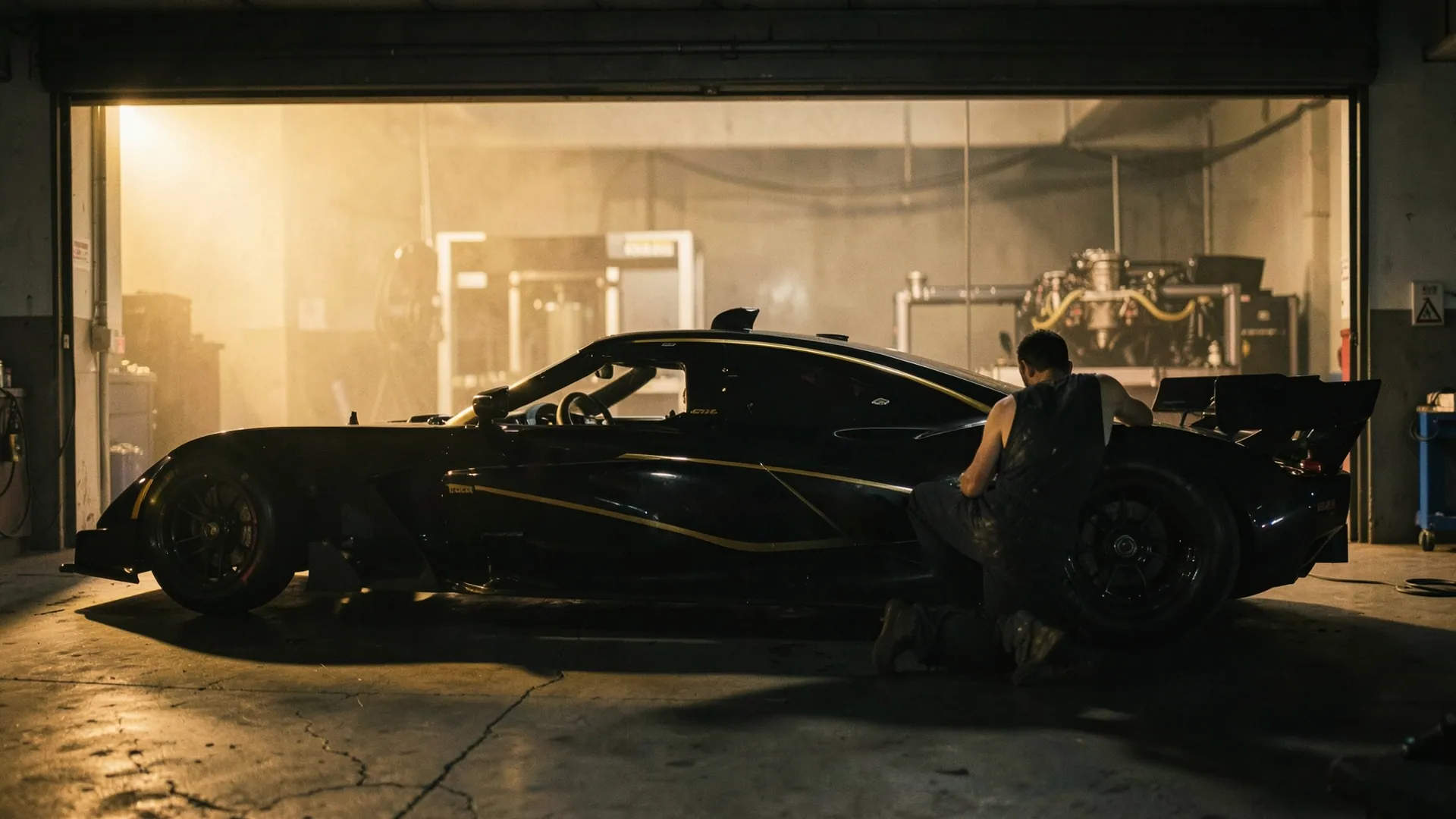
Cadillac will use Ferrari power units for longer than it originally intended, chief executive Dan Towriss has confirmed, as the prospect of a return to V8 engines from 2030 forces a rethink of the American team’s in-house engine project. Cadillac entered Formula 1 this season with the stated aim of becoming a full works outfit, with a General Motors-built power unit replacing the Ferrari supply later in the decade. That timeline has now shifted, according to reports from GPfans and RacingNews365. The cause is a set of engine regulations that nobody has yet written down.
The decision makes sense on its own terms. It also shows how far an unsettled debate is already reaching into the teams’ long-term planning.
Why Towriss is keeping Ferrari power for longer
The logic lies in the lead time. A Formula 1 engine programme needs years of design, dyno running and correlation before it races. The architecture is fixed early, and much of the money is spent long before the first competitive lap. A manufacturer committing today is effectively designing for a specific rulebook three or four years ahead.
The current regulations, introduced this season, are built around a 1.6-litre turbocharged V6 with a far larger electrical contribution than before and fully sustainable fuel. If the sport moves to a V8 formula in 2030, any GM unit designed to the current rules would have a very short racing life. GM would spend heavily to master the most complex hybrid systems the sport has ever used, race them for perhaps a season or two, then start again on a different engine.
No board would welcome that bill. Delaying the in-house project and extending the Ferrari deal lets Cadillac aim its engine programme at the start of the next cycle rather than the end of this one. That is the route the most recent new manufacturers have taken. Audi and Ford both timed their entries to coincide with the 2026 regulations, so their engineers began from the same blank sheet as Mercedes, Ferrari and Honda.
History shows the cost of doing otherwise. Honda returned in 2015, a year after the hybrid era began. It spent several seasons with McLaren trying to catch rivals who had a head start in a formula where energy recovery mattered as much as combustion. Cadillac has no wish to repeat that, least of all with a programme carrying an American car giant’s name.
Mercedes’ head start and the newcomers’ struggle
This season’s results are the strongest argument for patience. The new regulations were supposed to give everyone a fresh start, yet Mercedes power has been the benchmark. Mercedes have won 12 of the 20 rounds so far and McLaren, another Mercedes customer, three more. That leaves Red Bull with three victories and Ferrari with two. Mercedes lead the constructors’ championship on 652 points, 142 clear of Ferrari, and Andrea Kimi Antonelli holds a 111-point lead over Max Verstappen in the drivers’ standings with three rounds to go.
The newer engine projects have found the going far harder. Aston Martin, in their first season with works Honda power, have seven points. Audi, who built their own power unit for this season, have 28. Chassis performance plays a large part in both cases, and it would be wrong to blame the engines alone. Even so, the numbers show how slowly a new or reshaped engine programme turns money into lap time.
For Cadillac, the Ferrari deal has removed one major variable from a debut season that has been difficult enough. The team sits 11th of 11 in the constructors’ championship and is the only outfit yet to score. In Brazil, Sergio Pérez started 22nd and finished 18th, a lap down. Any new team must build its chassis, aerodynamics, pit stops and race operations from nothing. A proven engine from a supplier that has fought at the front lets those problems be solved one at a time.
There is a price. A customer team receives the engine that Ferrari designs for its own car. It has little say over packaging, cooling demands or how the power unit’s characteristics are tuned, and it depends on Maranello’s priorities. Haas, Ferrari’s other customer, have spent a decade showing both sides of that arrangement and are seventh this year on 31 points. Cadillac’s ambition was always to escape that dependence. It will now last longer.
A rulebook that is moving teams before it exists
The striking part of the story is that Cadillac has changed a strategic plan on the strength of a proposal. The idea of a V8 return, running on sustainable fuel with lighter, simpler and louder engines, has gathered support over the past year without being formally adopted. RacingNews365 reports that the process has stalled even as the idea keeps gaining backers.
Williams team principal James Vowles is one of them, having given the concept a 100 per cent endorsement, according to the same outlet. The support from team bosses is easy to understand. The current formula is expensive, its energy management has shaped how races are run in ways that have not pleased everyone, and the 2.4-litre V8s of 2006 to 2013 are still remembered fondly by drivers and fans. A V8 on sustainable fuel offers a way to keep the environmental argument while cutting cost and complexity.
Support is not a regulation, though. Until the FIA, Formula 1 and the manufacturers agree a specification, every team with an engine decision to make is guessing. Cadillac’s response is to wait. Others may hedge in different ways: by slowing investment in the current units, holding back upgrades whose value depends on the formula’s lifespan, or delaying commitments to the sport altogether.
That is the hidden cost of an unresolved rules debate. Each month of uncertainty pushes manufacturers towards caution, and caution in engine development tends to protect whoever is ahead. Mercedes have built a clear advantage in the first year of these rules. A grid unsure how long the formula will last has less reason to spend heavily on catching up.
The risk in waiting for 2030
Cadillac’s choice rests on one assumption: that the V8 formula will arrive on roughly the timetable now being discussed. If it does, the team will have avoided an expensive dead end and can enter the next era as a works manufacturer with the same starting point as everyone else. That would be the best possible outcome for a project of this kind.
If the process stays stalled, or the eventual rules look very different from the proposals, the picture changes. Cadillac would have spent years as a customer, without its own engine for a formula that carries on, while still needing to build expertise from scratch. Engine departments cannot simply be paused and restarted. Engineers have to be recruited, facilities run and test programmes kept going, or the knowledge gained so far is lost.
The question for Cadillac, then, is how to keep its engine project moving while the target remains blurred. The sensible course is to focus research on the elements that will matter under any formula, such as combustion efficiency on sustainable fuel, materials and manufacturing, and to hold off committing to hardware until the rules are fixed. Whether GM has the patience to fund that kind of holding pattern will show how serious its Formula 1 ambitions really are.
What the sport owes its newest manufacturer
Cadillac was admitted to the grid partly because it promised to bring a major American manufacturer into engine building. That promise has not been withdrawn, only postponed, and the reason for the delay lies largely outside the team’s control. The burden now falls on the rule-makers. A firm decision on the post-2029 engine formula, with a fixed specification and timeline, would let Cadillac, and any other manufacturer weighing an entry, plan with confidence rather than guess.
On the track, the immediate task is simpler and harder at the same time. With Las Vegas this weekend and three rounds left, Cadillac’s realistic goal is a first championship point before the season ends. Its engine future, however, depends on a decision being made elsewhere. If the governing bodies have not settled the V8 question by the end of next season, Cadillac’s delay will no longer look like prudence. It will look like a programme left waiting, and the blame for that will belong to the sport rather than the team.