
F1 today: the stories everyone's talking about — 13 Aug 2026
GP Headlines' round-up and analysis of the biggest Formula 1 storylines making news right now.
Silly season arrives early as Cadillac’s shake-up dominates a restless summer break
Formula 1’s summer shutdown is supposed to be the one fortnight when the paddock actually goes quiet. Instead, the sport has spent the days before Zandvoort consumed by a boardroom earthquake at its newest team, fresh doubts over two of grid’s most consequential contract situations, and a scattering of stories — from V8 engines to a Lakers sale — that between them capture just how much money, nostalgia and uncertainty is swirling around F1 right now. There’s no single dominant narrative here so much as several colliding at once, and that’s arguably the more honest reflection of where the sport sits in August 2025.
Cadillac’s leadership reshuffle: a statement of intent, not a crisis
The news that Graeme Lowdon has been replaced by Marcin Budkowski as Cadillac’s team principal, delivered via an abrupt afternoon announcement more than a week out from Zandvoort, is the kind of move that invites overreaction. It shouldn’t. Read carefully, this looks less like panic and more like a new-team ownership group deciding, quite deliberately, that the composition of its leadership needed to change before the car ever turns a wheel in anger.
Lowdon was the right figurehead for Cadillac’s entry phase — a paddock-trusted operator who helped steer the project through the FIA and F1 approval gauntlet that sank previous American bids. But building an entry and building a competitive constructor are different jobs requiring different skill sets, and Budkowski’s background running technical and operational sides of a grid team is a clear signal of what phase Cadillac believes it’s now entering. The timing — deliberately chosen away from a race weekend, so the story could be absorbed without competing for oxygen against on-track news — tells you this was a considered piece of corporate choreography, not a knee-jerk reaction to some hidden failure.
Why Perez matters to the story
The other half of this reshuffle is the swirl around Sergio Perez. Cadillac’s new leadership has been unambiguous in public: keeping Perez is “crucial,” and the team has moved quickly to address suggestions he could be lured away by Williams. That’s a notable stance for an outfit yet to score a point. Perez and Valtteri Bottas already form the most experienced pairing on the grid, and for a debutant team there is real value in fielding drivers who won’t need a year simply learning how a Grand Prix weekend works. Losing Perez before the car has even run would undercut the stability message Cadillac is trying to send to sponsors, staff and the paddock at large.
GP Headlines take: This is sensible sequencing from Cadillac. Get the technical leadership right first, then use experienced drivers to accelerate the learning curve rather than compounding a new team’s teething problems with two rookies. The Rafael Camara talk for 2027 is worth filing away rather than dismissing — Dan Towriss’s “things can change” caveat is corporate-speak for exactly that — but it’s a 2027 conversation, not a 2026 one, and Cadillac seems to know the difference.
McLaren’s wing headache and the Fornaroli question
McLaren’s summer has been dominated by two very different stories: a wing development setback and the emergence of Leonardo Fornaroli as a genuine long-term prospect.
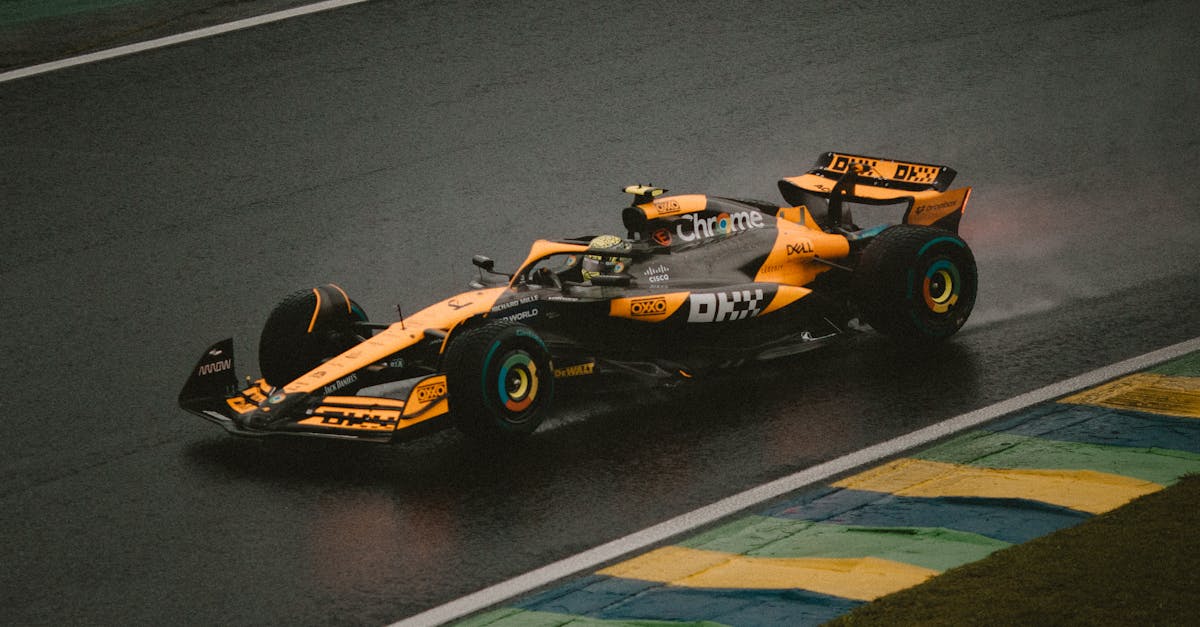
On the technical side, Andrea Stella’s now-notorious “Macarena” comparison for the team’s front wing troubles — something so ubiquitous that everyone thinks they understand it after one look, but that’s actually far more nuanced underneath — is a neat piece of self-deprecating candour from a team that has spent the year at the sharp end of the constructors’ fight. The specifics of what’s gone wrong haven’t been laid bare in detail, but the mere fact that McLaren is publicly flagging disappointment with an aerodynamic update speaks to the wafer-thin margins at the front of the field this season. When Red Bull, Ferrari and Mercedes are all capable of finding performance from race to race, even a team as dominant as McLaren has looked cannot afford developmental missteps, however minor they may prove in isolation.
The more forward-looking story is Fornaroli. The reigning F2 champion has been working closely with McLaren’s junior programme, and the fact he’s being talked up as a serious future prospect while a race-seat search continues elsewhere on the grid tells you McLaren’s driver pipeline is in genuinely good health. F2 titles don’t guarantee F1 careers — the graveyard of champions who never got a seat is well populated — but McLaren’s development infrastructure, refined through the Piastri pathway, has earned enough credibility that when they talk up a junior, it carries weight.
GP Headlines take: Neither story should be overstated in isolation, but together they paint a picture of a team operating on two timescales simultaneously — fixing today’s car while quietly building tomorrow’s driver roster. That dual competence is precisely why McLaren’s current position at the front doesn’t look like a one-season fluke.
Verstappen, Alonso and the widening cracks in F1’s contract certainty
Perhaps the most quietly significant story of the window is Max Verstappen’s suggestion that Fernando Alonso faces an “easier” decision over his F1 future than Verstappen himself does. On the surface this reads as one driver being generous about another’s situation, but it’s worth unpacking why Verstappen would frame it that way at all.
Alonso, now well into his forties, is approaching the end of his career on his own terms — his calculation is essentially about how much longer he wants to keep competing, not whether he has options. Verstappen’s situation is entirely different in kind: a driver in his prime, contracted to Red Bull, but whose long-term commitment has been the subject of persistent speculation as the team’s competitiveness has fluctuated through the current regulation cycle. For Verstappen to frame his own decision as the harder one is a tacit acknowledgement that his future involves weighing competitiveness, team dynamics and title ambitions against loyalty and contract — a genuinely complex calculus with no obvious right answer, unlike Alonso’s more binary “how much longer do I want to do this” question.
This matters because 2026’s regulation reset — new power units, new aerodynamic philosophy — is already reshaping the driver market a year out. Teams want their big decisions locked in before they know exactly how the new-era pecking order will shake out, which paradoxically means some of the most consequential driver moves in years could be decided with incomplete information. Verstappen’s remarks, however lightly delivered, are a reminder that even the sport’s most dominant recent figure is not immune to that uncertainty.
The V8 whisper: nostalgia versus the direction of travel
An F1 chief’s suggestion that a return to V8 engines is under consideration, with an explicit assurance that future cars will “not be electric,” is the sort of headline guaranteed to set fan forums alight — and it should be treated with appropriate caution until it’s attached to a name and a concrete proposal. F1 has spent the better part of two decades building its power unit identity around hybrid technology, first with the V8 KERS era and then the V6 turbo-hybrids that arrive in dramatic new form in 2026. A full reversion to naturally aspirated V8s would represent an extraordinary about-turn, not just technically but commercially — manufacturer investment from Audi, and the rationale for existing manufacturers to remain, has been built substantially around hybrid and sustainable-fuel relevance to road car technology.
That said, the sentiment behind the remark is real and worth taking seriously as a signal of mood rather than policy. There is a persistent, vocal constituency of fans who feel something was lost when the sport moved away from the sound and rawness of the V8/V10 era, and F1’s leadership is clearly attuned to that nostalgia as a marketing lever even if the engineering reality points firmly in a different direction.
GP Headlines take: File this under “aspiration,” not “regulation.” The 2026 power units are locked in, manufacturers have committed enormous resource against that framework, and unwinding it for a nostalgia play would be commercially reckless. But the comment does suggest F1’s power unit strategy beyond 2026 is not as settled in stone as some assumed, and it’s a conversation worth revisiting once the new era has actually run.
Money moves: Hamilton’s investment and Walter’s Lakers windfall
Away from the cars, two stories underline just how deeply F1’s biggest names are now woven into global finance and entertainment. Lewis Hamilton’s investment portfolio has been given a headline-grabbing valuation boost, the latest evidence that his off-track business acumen is increasingly rivalling his on-track legacy as a source of influence and leverage within the sport. Meanwhile, Mark Walter — owner of an F1 team — has sold the LA Lakers in a deal reportedly worth $12.5 billion, one of the largest transactions in sports ownership history.
Neither story affects a single lap time, but both matter to F1’s broader trajectory. The sport’s ownership and adjacent investment landscape has become increasingly enmeshed with American sports and entertainment capital since Liberty Media’s takeover, and deals of this scale — even when only tangentially connected to F1 itself — reinforce how the paddock now sits within a much larger economic ecosystem than it did a decade ago. Hamilton’s growing off-track portfolio, similarly, reflects a broader trend of elite drivers building financial independence and influence that stretches well beyond their cockpit contracts, giving them leverage in career decisions that previous generations simply didn’t have.
On the radar
- Guenther Steiner’s potential F1 return — nearly three years out of a team role, any concrete move would be one of the paddock’s more entertaining subplots to track through the autumn.
- Rafael Camara’s F2 form — regardless of Cadillac’s denials, a driver good enough to prompt 2027 speculation is worth watching race by race.
- Envision Racing’s Formula E reset — a complete driver line-up change for Gen4 is a bold statement of intent from a team looking to reset its fortunes.
- The unnamed Ferrari Academy driver’s difficult year — a reminder that for every junior success story, there are others fighting simply to stay in the sport.
- Williams’ driver market plans — now publicly linked with Perez, worth watching how they respond given Cadillac’s firm stance.
- McLaren’s wing fix — whether the “Macarena” update issue is resolved quickly will be a useful gauge of the team’s operational resilience under competitive pressure.