
Aston Martin and Honda's Reliability Crisis Turns First Season Together Into a Write-Off
With seven points from 20 rounds and only Cadillac beneath them, Aston Martin and Honda must turn a wrecked first season together into a credible foundation for 2027.
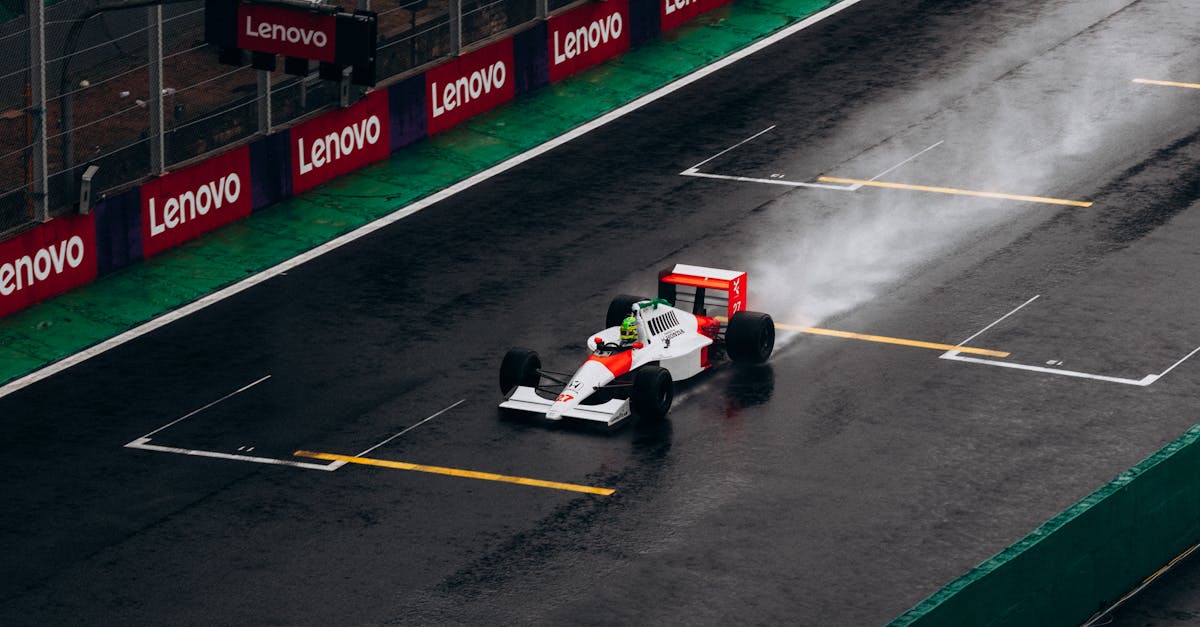
Aston Martin left the Brazilian Grand Prix on 8 November with seven points from 20 rounds, a total that leaves the Honda-powered team 10th of 11 in the constructors’ championship. Fernando Alonso started eighth at Interlagos and finished 12th, a lap down, while his team-mate was not among the 20 classified finishers. RacingNews365 has reported deep frustration at senior level over the chronic reliability problems that have wrecked the season. The Brazil result offered nothing to ease it.
Seven points and a lap down at Interlagos
The constructors’ table is blunt. Mercedes lead on 652 points with 12 wins. Aston Martin have seven. Only Cadillac, a brand-new entry, sit below them on zero, and Williams are five points clear in ninth with three rounds left: Las Vegas on 22 November, then the final two.
The Brazil weekend captured the season in miniature. Eighth on the grid suggests that, on a single lap with everything working, the car is not hopeless. Twelfth and lapped at the flag suggests the opposite over a race distance. Interlagos was a weekend on which points were available to those who kept going. Nico Hülkenberg converted fourth on the grid into 10th for Audi. Lewis Hamilton recovered from 20th to ninth, and Max Verstappen came from 21st to second. Aston Martin had a car in the top 10 at the start and left with nothing.
That gap between potential and result is what makes the reliability story so corrosive. A slow car tells a team where to aim its development. A car that cannot finish races withholds even that information, because every failure removes the race mileage engineers need to understand the package. Problems compound. Fixes are tested in sessions that are themselves interrupted, and confidence in new parts never builds.
There is also a financial cost. Under the cost cap, every failed component is a spare that has to be built again, eating into money that would otherwise go on performance. Reliability failures make a team slower and poorer at the same time.
Why Red Bull’s first engine makes Honda’s struggles harder to explain
The 2026 power unit regulations were a reset for everyone. The MGU-H has gone, the electrical contribution has risen to roughly half the total output, and the cars run on fully sustainable fuel. Reliability scares were expected across the field, so a new manufacturer struggling would have surprised nobody.
Honda is not a new manufacturer, and that is the uncomfortable comparison. Red Bull Powertrains built its first engine from a blank sheet, with Ford as a partner, and that unit has carried Verstappen to second in the drivers’ championship on 279 points. Red Bull sit third in the constructors’ standings on 415, and the junior RB F1 Team have added another 114. Between them, the two Red Bull-powered teams have scored 529 points. Audi, also in their debut season as a works manufacturer, have 28, four times Aston Martin’s total.
Honda arrived with the deepest recent pedigree of any supplier in the field. It powered Verstappen to four drivers’ titles and gave Red Bull a dominant 2023. The company announced its works partnership with Aston Martin in 2023, which gave it a long run-in to these rules. That experience should have been an advantage. On this season’s evidence, it has not been.
Fairness requires one qualification. Engines do not determine everything. Williams have the same Mercedes power unit that has carried Andrea Kimi Antonelli to nine wins and a 111-point championship lead, yet the team sit ninth on 12 points. Aston Martin’s 2026 car was the first developed with Adrian Newey on the technical side, and any honest assessment of the season has to consider how chassis and power unit work together rather than judging the engine in isolation. In a works partnership, packaging, cooling and energy management are shared responsibilities. When a works car fails repeatedly, the blame rarely sits cleanly on one side of the factory wall.
That is exactly why the partnership is under strain. A works deal is supposed to remove the gaps between chassis and engine that customer teams must work around. If the integration itself is part of the problem, the main advantage of the arrangement has become a weakness.
The McLaren years Alonso knows too well
For Alonso, none of this is unfamiliar. He spent 2015 to 2017 at McLaren during Honda’s first hybrid-era return, three seasons defined by failures, grid penalties and a breakdown in the relationship between team and supplier. His radio complaint at Suzuka in 2015, comparing the engine to a GP2 unit, became shorthand for the whole period. McLaren finished ninth that year and ended the partnership after 2017.
The precedent matters because it cuts both ways. The pessimistic reading is that Honda can again struggle badly when it enters a new set of rules, and that these partnerships fail when trust breaks down before the hardware improves. McLaren lost faith, Honda took the reputational damage, and the two parted before the engine came good.
The optimistic reading rests on what happened next. Honda moved to Toro Rosso in 2018, used a lower-pressure season to rebuild its reliability, joined Red Bull in 2019 and won the world championship in 2021. The engine McLaren abandoned became a title winner within four seasons. Honda’s engineers can fix deep problems when they are given time and a partner willing to work through the bad years with them.
Aston Martin’s position is closer to McLaren’s than to Toro Rosso’s. Lawrence Stroll has invested heavily in a new factory and wind tunnel at Silverstone, and in Newey, on the premise of fighting for championships. That kind of ambition rarely leaves much patience for a rebuilding year. Alonso is 45, so whatever remains of his career will not wait for a four-season turnaround either.
What Aston Martin and Honda must fix before 2027
The regulations offer some help. The 2026 power unit framework includes a catch-up mechanism that grants extra development allowance to manufacturers who fall significantly behind, a provision written precisely because the rule-makers feared one supplier would get the new formula badly wrong. Reliability fixes have also always been treated more leniently than performance upgrades. Honda will have room to work over the winter.
Reliability is also the more fixable of the two problems. Finding raw performance in a frozen or tightly controlled engine formula is slow and uncertain. Making components survive is largely a matter of dyno hours, material choices, quality control and understanding failure modes, and Honda has done exactly that before. Teams that start a regulation cycle unreliable but with a sound underlying concept have often recovered quickly. Teams whose concept is wrong take much longer.
Points will barely matter in the remaining three rounds. Closing the five-point gap to Williams would be welcome, but the real objective is mileage. Every lap completed in Las Vegas and the two races that follow is data that cannot be gathered once the cars stop running for the winter. Las Vegas, with its long straights and heavy demands on energy deployment, is a useful test of whether the electrical side of the package can survive sustained load.
The relationship matters as much as the hardware. The McLaren-Honda years showed that public frustration between team and supplier can become self-fulfilling, and the reports of exasperation inside Aston Martin are an early warning. Aston Martin and Honda need a shared, frank account of what has gone wrong, with responsibility divided between chassis and power unit, rather than parallel versions in which each side blames the other.
My view is that this partnership can recover, but not on the timescale Stroll would like. A realistic target for 2027 is a car that finishes races and scores regularly in the midfield, rather than one that challenges Mercedes. If Aston Martin cannot get both cars to the flag in at least two of the last three rounds, the winter becomes a rebuild rather than a refinement. In that case, by next summer the question will be whether the partnership can survive the 2027 season intact.