
Verstappen Calls for Red Bull Investigation After Storming From 21st to Second
Max Verstappen's charge from 21st to second at Interlagos left him 17 points clear in the fight for runner-up, yet his call for Red Bull to find what is wrong exposes a deeper unease.
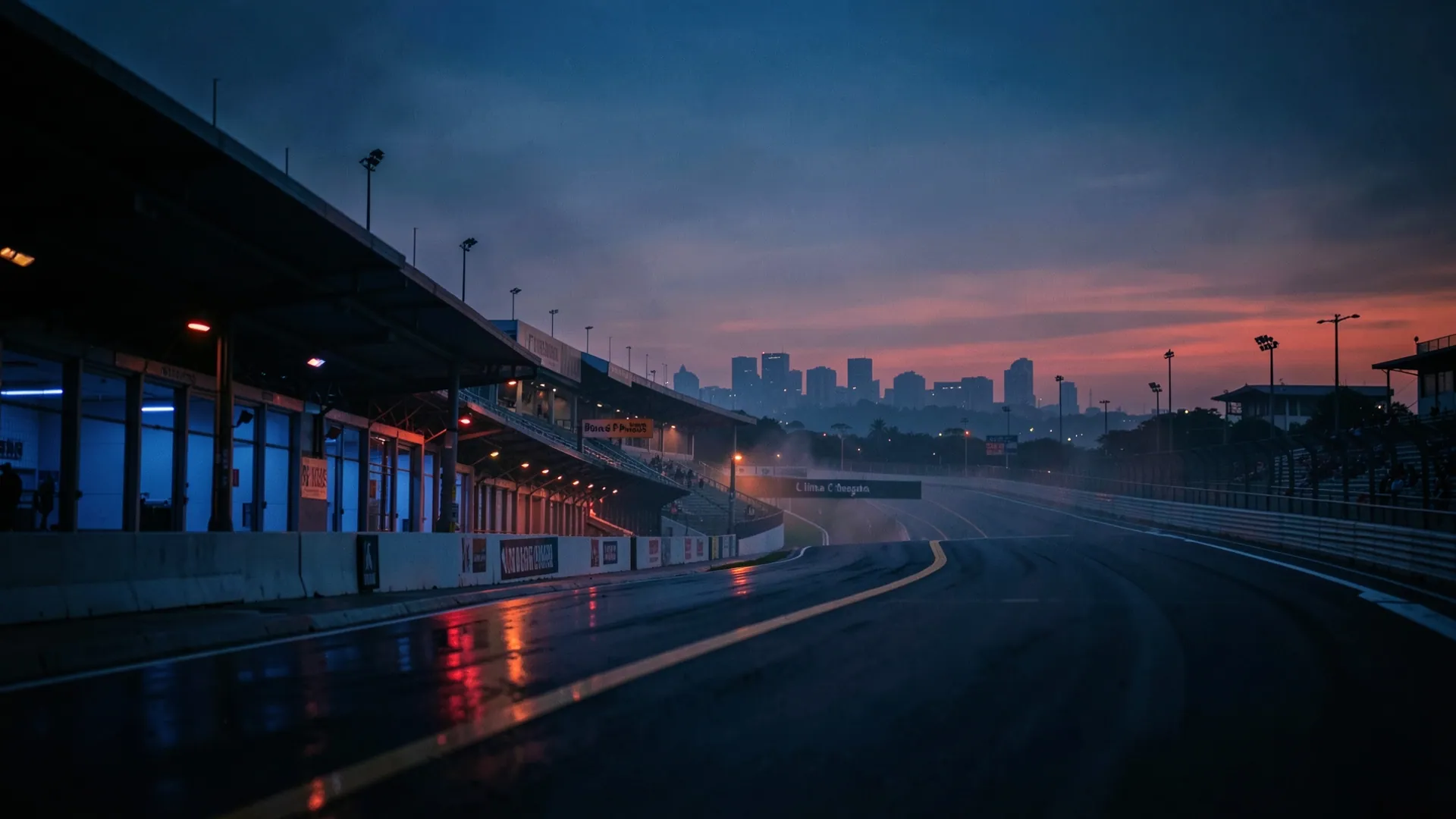
Max Verstappen finished second in the Brazilian Grand Prix on Sunday after starting 21st, then insisted that “there is something wrong” at Red Bull and called for the team to investigate. It was one of the drives of the season, and it came from a driver who left Interlagos dissatisfied. That contrast is the story. A four-time champion who has just gained 19 places is telling his employer, in public, that the result flatters the machinery.
Nineteen places gained, one complaint lodged
The bare numbers from Interlagos are remarkable. Verstappen lined up 21st of 22 and crossed the line behind only Lando Norris, who won from pole. He finished ahead of both Mercedes cars. Andrea Kimi Antonelli started second and finished fifth, and George Russell went from seventh to fourth. Verstappen also beat his team-mate Isack Hadjar, who converted fifth on the grid into third place.
Lewis Hamilton offers the clearest comparison. He started 20th, one place ahead of Verstappen, and finished ninth, a lap down. The two drivers had similar starting positions and very different afternoons. Some of that gap is down to the cars. A lot of it is down to the man in the Red Bull.
Daniel Ricciardo, Verstappen’s former team-mate, has called him “one of the best ever”, according to Crash.net. Few people watching Sunday’s race would argue. Yet Verstappen, as reported by RacingNews365, was not wholly happy afterwards. He did not spend his post-race comments enjoying the recovery. He spent them pointing at the team.
This is consistent with how he has always worked. Verstappen judges a weekend by what the car should have achieved, and a podium from the back of the grid does not change that judgement. If he believes the package has a flaw that showed up at some point over the weekend, scoring 18 points does not make the flaw go away. It only makes it easier for everyone else to ignore.
What a charge through the field can hide
There is a sound engineering reason for his impatience. A charge through the field is one of the least reliable ways to measure a car. Overtaking slower machinery on a track with a long, uphill run to the line rewards straight-line speed and how well a car copes in dirty air. It says much less about outright one-lap pace, or about whether the car can control a race from the front against Mercedes.
Hadjar’s afternoon matters here too. He gained two places, which is respectable, but it does not suggest the Red Bull was secretly the class of the field. Verstappen gained 19 places in the same car. When one driver’s result sits that far from his team-mate’s, the team learns more about the driver than about the car.
The season’s broader numbers show the size of the gap Verstappen wants explained. Mercedes have won 12 of the 20 grands prix and lead the constructors’ championship on 652 points. Antonelli alone has won nine times and has 390 points. Red Bull have three wins, all of them Verstappen’s, and sit third on 415 points, 237 behind Mercedes and 95 behind Ferrari.
This is the first year of the new technical rules. The power units now rely far more heavily on electrical energy, and the cars use active aerodynamics. It is also Red Bull’s first season with its own power unit, built with Ford. Any shortfall could therefore sit in several places: energy deployment, chassis balance, or the way the two interact over a lap. A driver cannot diagnose that from the cockpit. He can only report that the car is not doing what it should and demand that the engineers find out why. That appears to be exactly what Verstappen has done.
The 2024 precedent and Verstappen’s leverage
Red Bull have been here before. In 2024 the team began the season dominant, then lost its advantage as the RB20 became harder to drive. Verstappen won in Spain in June and did not win again for 10 races. He was openly critical of the car’s balance during that run and pressed the team to understand why it had fallen behind McLaren.
That run ended at Interlagos. In the 2024 São Paulo Grand Prix he started 17th and won in the rain. The drive saved his championship, and it also drew attention away from the car’s weaknesses for a while. The parallel with this weekend is clear. Once again Verstappen has produced an extraordinary result at the same circuit. This time he is making sure it does not become an excuse to stop asking questions.
His position within Red Bull gives him the standing to push. He has scored 279 of the team’s 415 points this season, and won every one of its races. When a driver carries that much of a team’s results, his complaints are not easily filed away as frustration. They become a priority for the engineers.
Making the demand in public is a choice, and it has a cost. Public criticism can sharpen a factory’s focus, but it can also harden positions inside a team going through a demanding first season with its own engine. The fairer reading is that Verstappen is asking Red Bull to put one question above all others before the winter. With 2027 development already competing for resources, that is not an unreasonable request.
Seventeen points and three races to defend them
The title itself is gone. Antonelli’s lead of 111 points is larger than the 75 points available from the three remaining grands prix. What is still open is the fight for second, and it is close.
| Position | Driver | Team | Points | Gap to second |
|---|---|---|---|---|
| 2 | Max Verstappen | Red Bull | 279 | – |
| 3 | George Russell | Mercedes | 262 | 17 |
| 4 | Lewis Hamilton | Ferrari | 261 | 18 |
| 5 | Charles Leclerc | Ferrari | 249 | 30 |
| 6 | Lando Norris | McLaren | 246 | 33 |
Brazil changed this table significantly. Before Sunday, Hamilton was only two points behind Verstappen. Had Verstappen finished eighth, his lead over Hamilton would now be four points. The recovery drive therefore bought him a cushion of roughly two race places over Russell and Hamilton, and Norris’s victory has pulled the McLaren driver back into contention as well.
The structure of the fight works against Verstappen. Russell drives the season’s dominant car, and Hamilton and Leclerc have a Ferrari that has outscored Red Bull as a team. Of the top four in that table, Verstappen is the only one whose car has not consistently been the best or second-best. A 17-point lead, with 75 grand prix points still available, can disappear after a single difficult weekend.
The constructors’ table adds more pressure. Red Bull lead McLaren by 17 points for third. Both teams scored 33 points in Brazil, so the margin did not move. If Red Bull lose ground at the next round, that position comes under threat too, along with the prize money and reputation that go with it.
Las Vegas, on 22 November, is a poor place to discover a weakness. Its long straights and cold night-time conditions test energy deployment and tyre warm-up harder than almost any other venue. Under these rules, a car that struggles to harvest and release electrical energy efficiently will lose time on every straight. If something in Red Bull’s package is limiting performance, the Strip circuit is likely to expose it.
My judgement is that Verstappen is right to push, and right not to let the podium end the discussion. Brazil showed what he can do in a difficult car, but it also showed that he cannot rely on extraordinary recoveries for three more weekends against two Ferraris and a Mercedes. If Red Bull find the answer before Las Vegas, he should secure second place. If they do not, Russell is close enough to take it from him in the final race.