
Verstappen to Start From the Back in Brazil as Ferrari Pair Take Penalties
Power unit penalties for Max Verstappen, Lewis Hamilton and Charles Leclerc reshape the fight for second at Interlagos, while Haas hands Rafael Câmara a home debut and Brazil's race is secured until 2035.
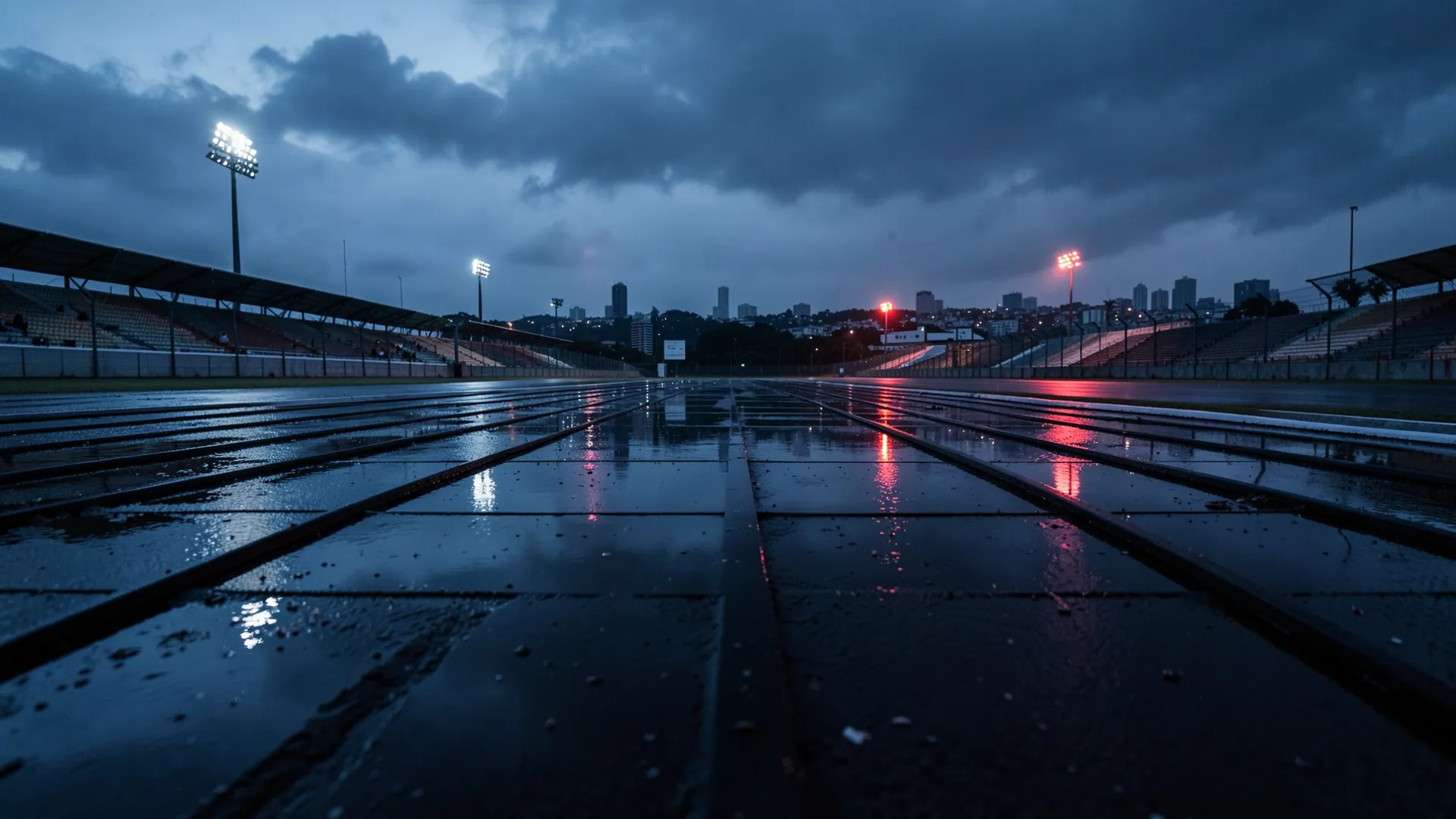
Max Verstappen will start Sunday’s Brazilian Grand Prix from the back of the grid after Red Bull team principal Laurent Mekies confirmed a power unit change. Lewis Hamilton and Charles Leclerc will also take grid penalties at Interlagos for fresh power unit components, leaving three of the top five in the drivers’ standings starting out of position. Away from the grid, Formula 1 has extended its Brazilian contract to 2035, and Haas has replaced a points-scorer with a home debutant.
Why Red Bull chose Interlagos for Verstappen’s penalty
The timing is deliberate. When a team knows it will exceed its power unit allocation before the season ends, the only question is where to take the hit. Interlagos is close to the ideal answer. The lap is short, and the long, uphill, full-throttle run from Junção to the line feeds a heavy braking zone into the Senna S. That braking zone is one of the few genuine overtaking opportunities left on the calendar. The weather is often unsettled, so races here are rarely orderly.
There is also recent precedent, and it is specific to this circuit.
- 2024: Verstappen started 17th after a five-place engine penalty and won in the rain. It remains one of the defining drives of his career.
- 2021: Hamilton served a five-place penalty for a new engine, started 10th and won after one of the most aggressive recovery drives of his title fight with Verstappen.
This season’s evidence points the same way. In Mexico City last Sunday, Liam Lawson went from 22nd to seventh, and Ryo Hirakawa climbed from 18th to 10th. A car with Red Bull’s current pace, in Verstappen’s hands, should be capable of more than either.
There is a strategic logic beyond Sunday, too. Verstappen won in Mexico from fifth on the grid, his third win of the year. By taking the new components now, Red Bull frees him to run the remaining rounds in Las Vegas, Qatar and Abu Dhabi without having to protect a tired unit. In a season under the new power unit regulations, with Red Bull’s in-house engine in its first year, reliability margins are thinner than the team is used to. Absorbing one penalty at the most forgiving venue left is sensible risk management.
The cost is real all the same. Starting last means traffic, tyre wear from running in dirty air and a higher chance of first-lap contact in the tight opening sequence. Verstappen’s 2024 win needed a red flag and changeable conditions to fall his way. A dry race on a stable track would make for a much harder afternoon.
Ferrari’s double penalty and the constructors’ arithmetic
Ferrari’s decision to change power unit components on both cars is the more consequential call for the championship tables, and it comes at an awkward moment. Hamilton started from pole in Mexico and finished second, with Leclerc fourth, a weekend that suggested the SF-26 had found something on a high-downforce circuit. Taking that form to Interlagos with both cars out of position makes the job harder.
The constructors’ standings show how much is at stake.
| Position | Team | Points | Gap to leader |
|---|---|---|---|
| 1 | Mercedes | 630 | – |
| 2 | Ferrari | 504 | 126 |
| 3 | Red Bull | 382 | 248 |
| 4 | McLaren | 365 | 265 |
A team can score a maximum of 43 points per grand prix with a one-two finish. Across four rounds that is 172, so Ferrari remain mathematically in contention. Their chance is slim, though, and this weekend could end it. If Mercedes outscore Ferrari by three points or more on Sunday, their lead reaches 129, which is exactly the maximum Ferrari could recover across the final three races. Even a tie would go to Mercedes on countback, because they hold 12 wins to Ferrari’s two.
The practical effect of Ferrari’s choice is to hand Mercedes a clean shot at sealing the title in São Paulo. Andrea Kimi Antonelli and George Russell start without penalties, and two strong finishes should be enough unless Hamilton and Leclerc recover remarkably quickly.
Ferrari may simply have run out of options. A team does not willingly give up track position on both cars with the constructors’ title still mathematically live. If the allocation forced the change, Brazil was the right place to absorb it, and splitting the penalties across two weekends would only have spread the damage to another race.
Red Bull versus McLaren
Further down, the fight for third is far tighter. Red Bull lead McLaren by 17 points, and Verstappen starting last brings Lando Norris and Oscar Piastri straight into play. Piastri finished 13th from 12th on the grid in Mexico and has scored 144 points to Norris’s 221, a gap that has shaped McLaren’s season as much as any upgrade. If McLaren are to overhaul Red Bull, this is the weekend to start. Isack Hadjar’s role as Red Bull’s second scorer matters more than usual, too. He took two points for ninth in Mexico, and he will need more than that to protect the team’s position.
Antonelli’s title is settled, so the real contest is for second
The drivers’ championship has been decided. Antonelli’s 119-point margin over Verstappen exceeds the 100 points available from the remaining four grands prix. With nine wins this season, the 20-year-old has delivered the most emphatic campaign of the new regulation era so far, and he has become the youngest world champion in the sport’s history.
The battle behind him is much closer, and the Brazilian penalties have thrown it open.
- Verstappen, 261 points: penalised, starting last.
- Hamilton, 259 points: penalised.
- Russell, 250 points: no penalty.
- Leclerc, 245 points: penalised.
- Norris, 221 points: no penalty.
Only 16 points separate second from fifth, and the obvious beneficiary is Russell. He sits 11 points behind Verstappen and nine behind Hamilton, and he starts this weekend with no handicap. A podium for Russell on Sunday while the penalised trio recover into the lower points would put him second with three rounds left.
Russell’s season has been overshadowed by his team-mate, but three wins and 250 points represent a solid campaign. Finishing as runner-up behind Antonelli would also give Mercedes a one-two in the drivers’ standings to go with the constructors’ title, a strong result for the team in the first year of the new rules.
Norris deserves attention as well. At 40 points behind Verstappen, he needs things to go his way, but he is the only other front-runner starting without a penalty. A win in Brazil would bring him close enough to make Las Vegas interesting.
Haas chooses Câmara over a points-scorer
Haas has given Rafael Câmara his Formula 1 debut at his home race, replacing Hirakawa. Team principal Ayao Komatsu has said the decision was made purely on professional grounds.
The timing makes the decision harder to read. Hirakawa scored a point in Mexico by climbing from 18th to 10th, and Haas need every point they can find. They are seventh in the constructors’ standings on 31 points, four ahead of Audi, and that gap is worth real money in the prize fund. Audi bring Gabriel Bortoleto to his home race on the back of eighth place in Mexico, and the Brazilian will be highly motivated in São Paulo.
Câmara arrives with a strong junior record. He is a Ferrari academy driver and won the 2025 FIA Formula 3 title, and Haas’s close technical partnership with Ferrari makes the connection obvious. Interlagos is a demanding place to start a career, though. Its elevation changes, bumpy surface and short lap leave little time to settle, and a rookie may struggle to match the racecraft Hirakawa showed last weekend.
The fair view is that this may be a calculated investment rather than a dismissal. Haas has given young drivers mid-season opportunities before, and a debut at home in front of a passionate crowd has obvious value for the driver, the team and the event. The risk is that Haas weakens its line-up in the middle of a close fight with Audi. If Câmara finishes outside the points while Bortoleto scores, Komatsu will face hard questions about the decision.
Câmara’s selection also means two Brazilians will line up at Interlagos for the first time since Felipe Massa and Felipe Nasr in 2016. The home crowd will have two drivers to cheer on Sunday.
Interlagos secures its place until 2035
The day’s most durable news concerns the venue itself. Formula 1 has agreed a five-year extension with São Paulo, keeping the race on the calendar until at least 2035. The event ran under the São Paulo Grand Prix name from 2021, reflecting the city’s financial contribution, and that public money is what made the deal possible.
That matters because traditional circuits are under growing pressure. Zandvoort has already hosted its final Dutch Grand Prix this season, and Spa-Francorchamps has accepted a rotation deal under which it will miss the 2028 and 2030 seasons. New venues with deep-pocketed backers continue to bid for places on a calendar that has little room left. Historic status alone no longer guarantees a slot. Circuits need commercial backing and political support, and São Paulo has both.
Interlagos is worth keeping on sporting grounds as well. It produces unpredictable races year after year, and its place in F1 history is secure. Ayrton Senna’s 1991 home win, Hamilton’s last-corner title in 2008 and Verstappen’s 2024 drive through the field are among the sport’s defining moments. The reliable racing is a product of the layout: an anticlockwise lap, an uphill drag to the finish, changeable weather and a surface that rewards commitment.
The contract also reflects a wider shift in how F1 values its venues. Liberty Media’s commercial model has favoured new markets and street circuits in recent seasons. Committing to Interlagos for another decade shows that a circuit can stay on the calendar by producing good racing, provided a host city is willing to fund it. Other historic venues negotiating their own futures will hope the same logic applies to them.
Further threads to follow in Brazil
- Channel 4 highlights: UK viewers without a pay-TV subscription can watch free-to-air highlights of the Brazilian Grand Prix weekend on Channel 4. That coverage matters more than usual now that the drivers’ title has been decided.
- WEC finale at Monza: qualifying has been completed for the Six Hours of Monza, the final round of the World Endurance Championship. Several drivers with F1 links are worth following in the season decider.
- Bortoleto at home: Audi’s young Brazilian scored four points in Mexico and has a home crowd behind him, as well as a four-point gap to Haas that his team wants to close.
- Cadillac’s search for a first point: Cadillac remain the only team without a point this season. Sergio Pérez finished 16th in Mexico, and Valtteri Bottas retired. Interlagos, where disorder is common, may be one of their best remaining chances.
- Lindblad’s reliability: Arvid Lindblad started eighth in Mexico but retired. On 38 points, he is four behind Pierre Gasly for 10th in the standings, and a clean weekend would help him close that gap.
- The circuit contracts table: with Interlagos secured, attention turns to which venues are next to agree new terms. That list will shape the calendar well into the next decade.