
F1's Gulf Finale Under Scrutiny Amid Widespread Paddock Misgivings Over Final Races
Widespread unease about the season's closing rounds in Qatar and Abu Dhabi puts pressure on Formula 1 to show how it balances safety, politics and lucrative contracts, with constructors' prize money still at stake.
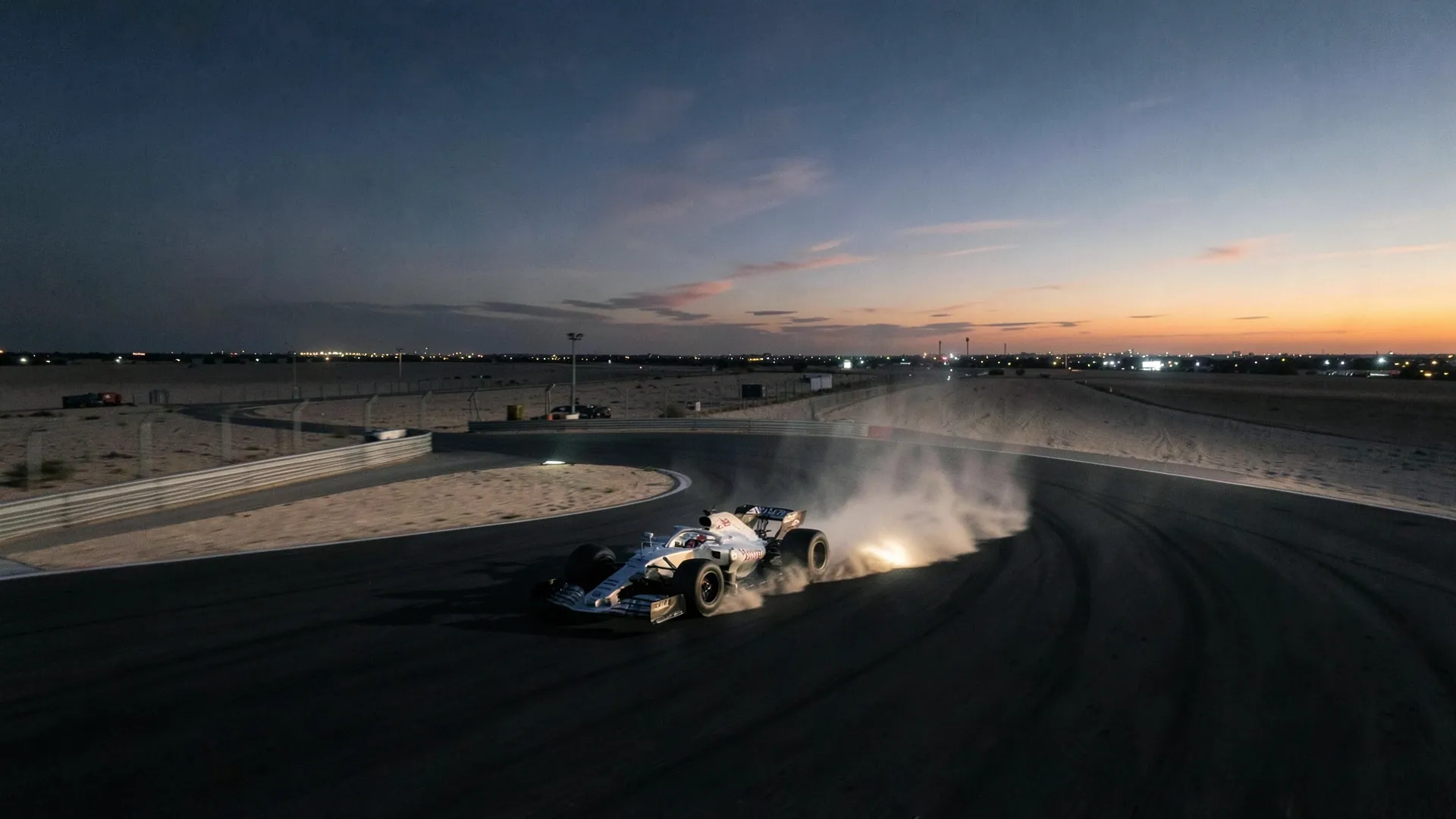
Many in the Formula 1 paddock have serious misgivings about the final two races of the 2026 season in the Middle East, according to BBC Sport’s Andrew Benson. Benson, whose report was relayed by GPfans, described the concerns as widespread. The report lands two days after Max Verstappen won in Mexico City and five days before the Brazilian Grand Prix opens the season’s last four-race stretch.
The timing matters. Rounds 22 and 23 in Qatar and Abu Dhabi are the closing chapters of a season whose headline story is largely written. That changes the calculation F1 faces, though not in the direction its commercial instincts might prefer.
Unease that has not yet become a stand
Precision helps here. What has been reported is concern, characterised as serious and broadly held. It is not a boycott, a formal objection from a team or a statement from the drivers’ association. Nobody has publicly demanded that the races be moved or cancelled, and the decision rests with Formula One Management and the FIA, not with the people expressing doubts.
Still, “widespread” is a meaningful word from a correspondent of Benson’s standing. Paddock grumbling about a venue is routine: the heat in Qatar, the logistics, the length of the season. That kind of complaint rarely makes the BBC. A report that frames the unease as serious misgivings, rather than ordinary fatigue, suggests the questions being asked are about whether the sport should be there at all, and on what assurances.
That distinction will shape how F1 responds. Fatigue can be dismissed with a reminder about contracts. Doubts about safety and the political environment cannot, because they go to the sport’s duty of care towards the thousands of staff who travel with it, most of whom have no say in where the calendar sends them.
A title all but decided, a table still alive
The sporting stakes in Qatar and Abu Dhabi are lower than at most recent finales, at least at the very top. Andrea Kimi Antonelli leads the drivers’ championship on 380 points with nine wins. Verstappen, second on 261, is 119 behind with four rounds to run. Winning all four remaining Grands Prix would bring him only 100 points. The drivers’ title is all but decided.
The fight for second place is far from decided, and it is one of the closest battles in the standings:
| Position | Driver | Team | Points |
|---|---|---|---|
| 2 | Max Verstappen | Red Bull | 261 |
| 3 | Lewis Hamilton | Ferrari | 259 |
| 4 | George Russell | Mercedes | 250 |
| 5 | Charles Leclerc | Ferrari | 245 |
Mexico reshuffled the order. Verstappen won from fifth on the grid, Hamilton converted pole into second and Leclerc took fourth ahead of Lando Norris, while Russell slipped from second on the grid to sixth at the flag. Sixteen points now cover four drivers.
The constructors’ table carries the sharper consequences, because it decides prize money. Mercedes lead Ferrari by 126 points, and with a maximum of 43 available to a team each weekend, that title is not yet mathematically secure, though it is close. Further down, the margins are thin. Red Bull sit 17 points ahead of McLaren for third. Haas lead Audi by four for seventh. Williams are five clear of Aston Martin in ninth, and Cadillac have yet to score in their debut season.
Each of those positions carries a different share of the prize fund. If either Gulf race were lost, the standings would be frozen earlier than planned, and a team chasing a place would lose its chance to close the gap. That is the real sporting cost of any change, and it falls hardest on the teams with the least money to spare.
The Gulf has tested F1 before
The sport has been here before, and its record is mixed.
In 2011, the Bahrain Grand Prix was called off amid political unrest in the kingdom, after a period of postponement and uncertainty that satisfied almost nobody. The following year, the race went ahead against a backdrop of continuing protests. Members of the Force India team were caught near an incident involving a petrol bomb while travelling back from the circuit, and the team skipped the second practice session so its staff could leave before dark. The race happened, but the episode damaged the sport’s credibility.
The clearest precedent is Jeddah in 2022. During first practice, a missile struck an oil storage facility a few miles from the circuit, with smoke visible from the track. Drivers met late into the night before agreeing to continue, persuaded by assurances from organisers and local authorities. The race went ahead without further incident, but the process looked improvised. Drivers had to be talked round after the fact, rather than consulted beforehand under criteria anyone could see.
The pattern across all three episodes is consistent. F1’s default is to race, relying on host-government assurances, and to treat objections as something to be managed rather than a signal to reassess. Sometimes that judgement is vindicated. It nevertheless leaves the sport exposed whenever the assurances are tested, and it puts drivers and team staff in the position of deciding, under pressure and at short notice, whether to trust them.
The money on the other side of the scales
The concern carries weight because the commercial ties are so strong. The Middle East is not a peripheral market for F1. Hosting fees in the region are among the highest on the calendar, the race contracts are long, and several of the sport’s most prominent commercial partners have roots in the Gulf. Abu Dhabi has served as the season’s showpiece finale for most of the past decade, and Yas Marina’s twilight setting has become part of the sport’s end-of-year identity. Qatar has quickly established itself as a fixture since returning to the calendar.
None of that is inherently sinister. F1 is a commercial enterprise, its revenues fund the prize pot the teams depend on, and long-term host agreements are what make a 23-round season viable. The difficulty lies in perception. When a sport earns so much from a region, every decision to race there invites the suspicion that the contract weighed more heavily than the risk assessment, even when it did not.
That is why the process matters as much as the outcome. A decision to race in Qatar and Abu Dhabi might be entirely defensible on the security evidence. If it is taken behind closed doors and simply announced, though, nobody outside the decision-making circle can tell whether it was driven by that evidence or by obligation.
What F1 should settle before the freight ships
F1 and the FIA have a window, but it is narrow. Freight for the final rounds has to move on a fixed schedule, and the longer a decision is left, the more any change costs in money, logistics and goodwill. The worst outcome would be a repeat of Jeddah: crews already in place, a late-night briefing, and drivers asked to accept reassurances they had no part in testing.
The better course is easy to describe, even if it is harder to deliver. The sport should take independent security advice rather than rely solely on the hosts’, and share its conclusions with the teams and the Grand Prix Drivers’ Association before departure rather than after arrival. It should set out the conditions under which it would withdraw and commit to a decision point that leaves room to act. If the sporting cost of cancellation is the freezing of constructors’ positions, it should agree in advance how that would be handled, so that no team feels it is being asked to choose between its staff and its prize money.
The season’s competitive shape gives F1 unusual freedom. With Antonelli’s title all but secure, there is no championship decider to protect and little risk of a crown being won or lost because of a calendar change. If the sport cannot put safety and transparency first in a year when the drivers’ title is barely in play, the misgivings Benson describes will deserve to outlast the Abu Dhabi fireworks. The test is less whether F1 races in the Gulf this season than whether it can show its workings before it does.