
From 'One or Two' to 40: Inside the FIA's Expanded Penalty Watch
The FIA now has 40 people watching 22 drivers for penalties, yet Carlos Sainz and Fernando Alonso cannot agree on driving standards, a sign that more scrutiny has not produced more consistent verdicts.
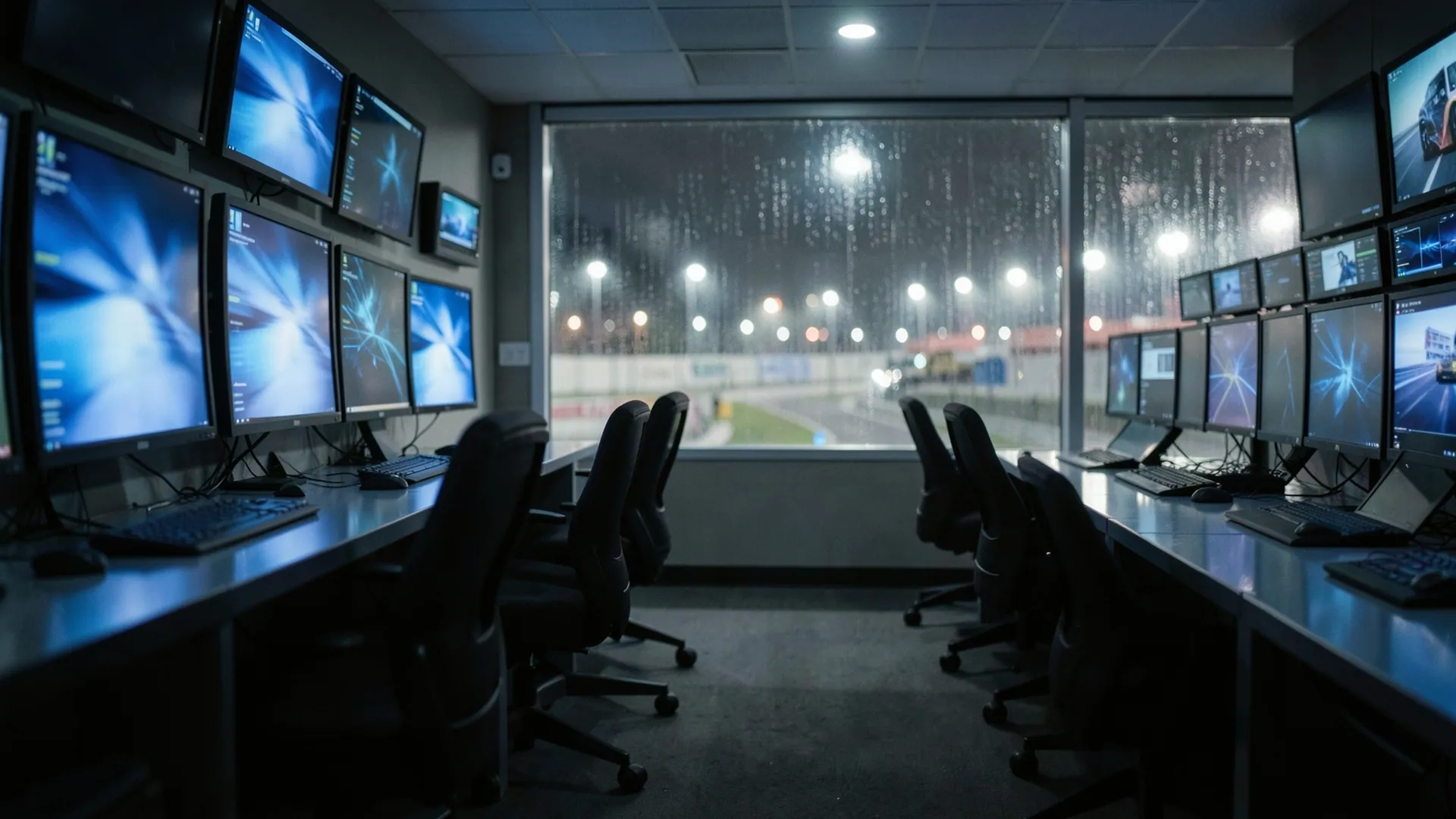
The FIA has revealed that 40 staff now monitor the 22 Formula 1 drivers for potential penalties, compared with the “one or two” who once did the job. The figure, set out in an FIA video reported by RaceFans, emerged in the same week that Carlos Sainz accused Arvid Lindblad of a “dangerous” move at the United States Grand Prix, while rejecting Fernando Alonso’s view that the quality of driving in the field is “very low”. The two stories belong together. Formula 1 has scaled up its policing enormously, yet the drivers still cannot agree on what good racing looks like or how bad racing should be punished.
40 observers watching 22 cars
The headline number is striking because of how quickly the operation has grown. For most of the sport’s modern history, policing a Grand Prix meant a race director, a small panel of stewards and a bank of television feeds. Incidents were often noticed because they were obvious or because a team complained over the radio.
The FIA rebuilt that model after the 2021 Abu Dhabi Grand Prix. It created the Remote Operations Centre in Geneva, which supports race control in much the same way a video assistant referee supports a football official, and introduced more structured procedures for reviewing incidents. A staff of 40 is the mature version of that idea. Every car is watched for the whole race, track limits are monitored at every corner, and onboard and trackside footage can be checked from several angles before an incident is passed to the stewards.
The benefit is real. Fewer offences go unseen, and drivers who once escaped attention in the midfield now face the same scrutiny as the leaders. A more thorough watch also takes some of the luck out of who gets investigated.
What 40 monitors cannot do is decide. They gather evidence and flag incidents. The verdict still belongs to a panel of stewards, which includes a former driver and changes from race to race. That distinction explains most of the frustration drivers still voice.
Sainz, Lindblad and two theories of bad driving
The Austin race was difficult at the back of the field. Sainz started 16th and finished 18th, a lap down. Lindblad, the RB rookie, went from 14th to 12th, also lapped. Neither scored. For Williams, who are ninth in the constructors’ standings on 12 points, every lost position in a race like that hurts.
Sainz was clear about whom he blamed. His reported description of Lindblad’s driving as “dangerous” is strong language from a driver who sits on the board of the Grand Prix Drivers’ Association and usually chooses his words carefully. Yet he declined to support Alonso’s broader complaint, made after the Aston Martin driver fell from 12th on the grid to 16th at the flag, that overall standards in the field are “very low”.
The disagreement is one of substance rather than tone. Sainz argues that individual drivers make individual errors and should answer for them. Alonso’s case, taken at face value, is that the problem is cultural: a generation of drivers has learned that aggressive moves cost little, and the field as a whole has adjusted accordingly.
The two views lead to different solutions. If Sainz is right, the answer is sharper enforcement in specific cases, and an expanded monitoring team should help, because it makes a reckless lunge harder to get away with. If Alonso is right, enforcement matters less than consistency. Drivers will only change their behaviour when they can predict the consequence of a move before they make it.
Why seeing more does not mean judging more consistently
This is where the 40-person operation exposes the system’s weakness. Better detection increases the number of incidents that reach the stewards. More cases mean more verdicts, and more verdicts give the paddock more chances to compare them and find contradictions.
The first lap shows the problem most clearly. Stewards have long given drivers extra latitude in the opening corners, where cars are bunched together, tyres are cold and visibility is poor. That leniency is reasonable in principle. The difficulty is that it has never been set down in writing. How much contact is acceptable on lap one compared with lap 30, and whether a rookie gets the same benefit of the doubt as a world champion, depend largely on which panel is sitting that weekend.
The FIA has tried to close that gap before. Its overtaking and defending guidelines were tightened after the 2024 Mexico City Grand Prix, when Max Verstappen received two 10-second penalties for incidents with Lando Norris, a week after Norris had been penalised in Austin for passing Verstappen off the track. Those guidelines brought more clarity to wheel-to-wheel battles in the middle of a race. They did much less for the chaotic opening lap, where most incidents do not fit neatly into rules about who was ahead at the apex.
The structure of the stewarding panel adds to the problem. A panel that changes each weekend brings fresh eyes but uneven judgement. Football refereeing illustrates the trade-off: video review reduced clear errors but increased arguments about marginal calls. Formula 1 has followed a similar path. Most observers would accept that verdicts are better informed than they were in 2019. Few would claim they are more predictable.
There is also a competitive reason the problem is sharper at the back. Cadillac have yet to score, Aston Martin have seven points and Williams have 12, so for those teams the opening lap is often the best chance of gaining places all afternoon. On race pace they rarely move forward. That creates an incentive to take risks at Turn 1 that a midfield team with a quicker car does not face. Where points are scarce, drivers will keep making high-risk moves on the opening lap unless the penalty for doing so is certain.
Mexico’s long run to Turn 1 will test the system
The next test comes quickly. Round 19 is the Mexico City Grand Prix on 1 November, at a circuit with one of the longest runs to a first corner on the calendar. The slipstream on the start straight draws cars three abreast into a tight right-hander, and the opening lap has produced repeated flashpoints, including Sergio Pérez’s first-lap exit after contact with Charles Leclerc in 2023.
The stakes are high at the front, too. Andrea Kimi Antonelli won in Austin from pole and leads the championship on 365 points, 123 clear of his Mercedes team-mate George Russell with five rounds remaining. Behind him, the fight for second is extremely close. Lewis Hamilton is one point behind Russell on 241, Verstappen has 236 and Leclerc 233, leaving four drivers separated by nine points. In the constructors’ standings, Red Bull and McLaren are level on 355 points in the race for third.
In fights that close, a single stewarding decision on lap one in Mexico could settle second place in the drivers’ championship or third in the constructors’. Leclerc gained two places to finish second in Austin, and Hamilton converted fifth on the grid into fourth. Points earned that way can disappear just as quickly with a five-second penalty that a different panel might not have given.
What the FIA should do with its 40 staff
The investment in monitoring is justified. The next step should be to use that data to make decisions more predictable, not to issue more penalties. In practice that means three things:
- Publish a first-lap framework. It should state in writing what level of contact is tolerated in the opening corners and when that tolerance ends, rather than leaving it to custom and to the judgement of each panel.
- Use precedent openly. With full coverage of every car, the FIA now holds a library of comparable incidents. Stewards’ decisions should cite earlier cases where relevant, so drivers can see the reasoning carry over from one weekend to the next.
- Reduce variation between panels. A small group of permanent lead stewards, working alongside the rotating former drivers, would keep the benefit of different perspectives while limiting how much verdicts swing between events.
Sainz and Alonso disagree on the cause, but both would probably accept a system in which a driver knows the price of a move before making it. The FIA has built the surveillance needed for that. What it lacks is a consistent set of rules for applying it. If Mexico’s first corner produces another verdict that nobody could have predicted, the main lesson of 2026 will be that the sport’s problem was never how many incidents it could see.