
Verstappen and Alonso Weigh In as F1's Next Engine Rules Debate Intensifies
Max Verstappen wants energy deployment out of the lap-time equation and Fernando Alonso warns a V10 revival ignores a changed world, as drivers press F1 on its post-2026 power unit direction.
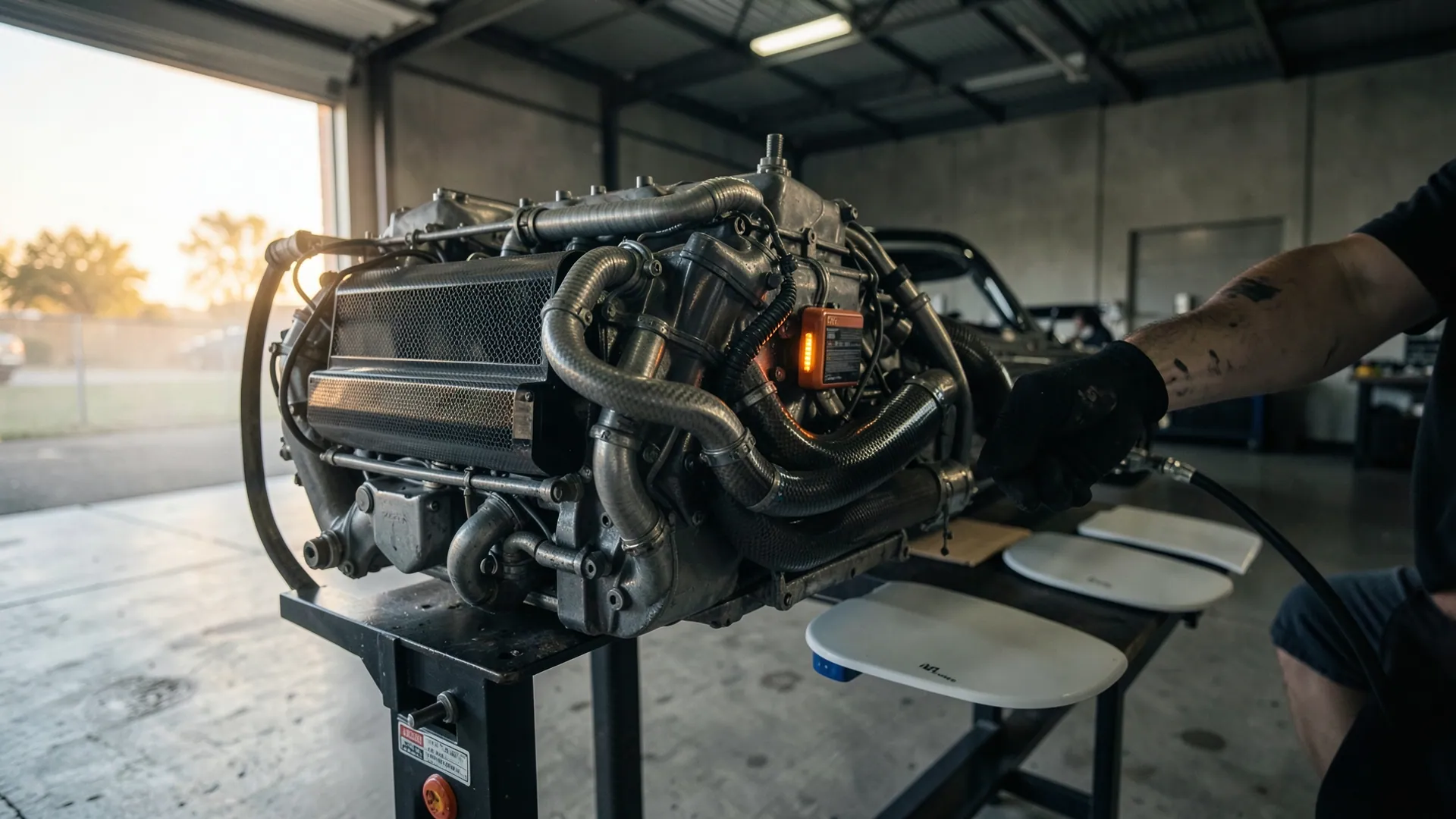
Max Verstappen and Fernando Alonso have both spoken out on Formula 1’s next set of power unit regulations ahead of this weekend’s United States Grand Prix, sharpening a debate that has run through the first season of the new hybrid formula. Verstappen, as reported by RacingNews365, has proposed what he frames as an old-fashioned remedy for energy deployment “deciding lap time”. Alonso, quoted by PlanetF1, responded to talk of a V10 return by saying that “the world has changed”. A driver leaving the grid at the end of the year has gone further still, urging the sport in a direction quite unlike either.
The battery problem Verstappen wants solved
The power units introduced this season split their output roughly evenly between the combustion engine and the electrical system. The MGU-K now delivers up to 350kW, close to three times the 120kW of the previous generation. The MGU-H has gone, and the engines run on fully sustainable fuel. On paper, it is a bold and coherent package. On track, it has changed what a quick lap is made of.
With so much of the car’s performance stored in the battery, how much energy a driver harvests and where he spends it has become one of the biggest determinants of lap time. A lap is now partly a budgeting exercise. Drivers manage deployment to avoid running short before the end of a straight, and the most efficient use of energy is not always the most committed way through a corner. Engineers have always shaped how drivers attack a lap. The difference now is the scale of that influence, and how much of it the driver can no longer overcome with skill alone.
That is the heart of Verstappen’s complaint, and it is easy to see why it lands hardest with him. His reputation rests on extracting the final tenth through braking, rotation and commitment. His most recent victory, from pole in Singapore on 11 October, came at a circuit of slow corners and short straights. Mechanical grip and precision count for more there than straight-line deployment, and it is no coincidence that Marina Bay is where he won.
He has called his fix old-fashioned, and that is the honest word for it. Rule-makers who want the driver back at the centre of lap time have familiar levers available. They can lean harder on the combustion engine, cut the electrical share, or loosen harvesting limits so drivers stop rationing energy on the straights. None of those ideas is new. The question is whether the manufacturers who signed up to this formula will accept moving away from it.
Alonso has driven the V10s and is not sentimental about them
If any current driver had licence to romanticise the V10 era, it would be Alonso. He made his debut with Minardi in 2001, when three-litre V10s were mandatory, and won his first world title with a V10-powered Renault in 2005 before moving into the V8 era to defend it in 2006. He knows exactly what those engines sounded like and how they felt at 19,000rpm.
His answer, nonetheless, was that the world has changed. The arithmetic behind that line is not hard to reconstruct. The V10 idea gained momentum in 2025, when FIA president Mohammed Ben Sulayem floated a return to naturally aspirated engines running on sustainable fuel. The manufacturers stuck with the 2026 regulations, and for good reason. The current formula brought Audi in as a works entrant, tied Ford to Red Bull’s new in-house power unit programme and kept Honda in the sport with Aston Martin. Those boardroom decisions were justified on hybrid relevance and sustainable fuel. A screaming V10 would be cheaper, lighter and louder. It would also ask those companies to explain why they are funding an engine their road divisions abandoned years ago.
Alonso’s caution is all the more notable given his own circumstances. Aston Martin sit 10th in the constructors’ championship with seven points, and he finished 16th, a lap down, in Singapore, while team-mate Lance Stroll retired. A driver in that position has every reason to want the rulebook torn up. Instead, he is pointing out the constraint that any next-generation formula has to respect.
Where the loudest voices sit in the standings
The obvious charge against any driver criticising the regulations is self-interest, and this season’s numbers make that charge easy to level. Mercedes have won 11 of the 17 grands prix and lead the constructors’ championship on 578 points, 134 clear of Ferrari. Andrea Kimi Antonelli has won eight of them and leads George Russell by 102 points with six rounds remaining. Anyone who watched Mercedes dominate after the 2014 hybrid rules change will recognise the pattern.
Verstappen, by contrast, is fourth in the drivers’ standings on 221 points, 119 behind Antonelli. Red Bull, in their first season building their own power unit, are fourth among the constructors on 332, seven points behind McLaren. A driver who has spent much of the year chasing a silver car is not a neutral witness.
That reading is too simple, though. Mercedes power alone has not guaranteed anything this season. McLaren are third on 339 points with the German engine, while Alpine sit sixth on 68 and Williams are ninth on 12. The power unit is one part of a car, and teams with identical hardware are spread across the order. Verstappen’s argument is about how lap time is made, not who is making it. It would stand just as well if Red Bull were leading.
The departing driver’s contribution, reported by RacingNews365, is a useful corrective here. Someone with no stake in the next rule set has no reason to lobby for an advantage, and his suggestion sits well outside the V10-versus-hybrid framing that has dominated the discussion. Drivers on their way out have often been the bluntest critics of a formula, precisely because they have nothing left to protect.
Sustainable fuel without the battery budgeting
Verstappen is right about the symptom and Alonso is right about the constraint. The task for the FIA and Formula One Management is to address both without retreating into nostalgia.
A return to V10s should be seen for what it is: an appealing sound in search of a justification. The real technology story of this era is sustainable fuel. That is what lets manufacturers defend their budgets, and what gives the sport an answer when its environmental credentials are questioned. It does not require a battery to dictate how a driver attacks a lap. A formula built around sustainable fuel, with a smaller electrical share and less dependence on harvesting, would keep the manufacturers’ story intact while handing lap time back to the person in the cockpit. That combines Verstappen’s old-fashioned instinct with Alonso’s realism.
The timing matters. The next power unit regulations are expected around the end of the decade, and manufacturers need years of notice to design to them. The principles have to be settled long before anyone builds a prototype, which means the arguments drivers are making now carry more weight than paddock chatter usually does.
Austin this weekend will be a useful test case. The Circuit of the Americas pairs a long back straight with a demanding sequence of high-speed esses, so energy deployment and driver commitment will both be visible across a single lap. If the deciding moves come down to battery management rather than bravery, Verstappen’s case will only get louder. The governing body should take his complaint seriously and Alonso’s warning more seriously still. The next formula will succeed only if it keeps the manufacturers in the sport and puts lap time back in the driver’s hands.