
Red Bull Close In on Faltering McLaren in the Fight for Third
Lando Norris has offered a bleak verdict while Andrea Stella talks up a 'ping-pong' season, but Red Bull now sit seven points behind McLaren in the fight for third with six rounds left.
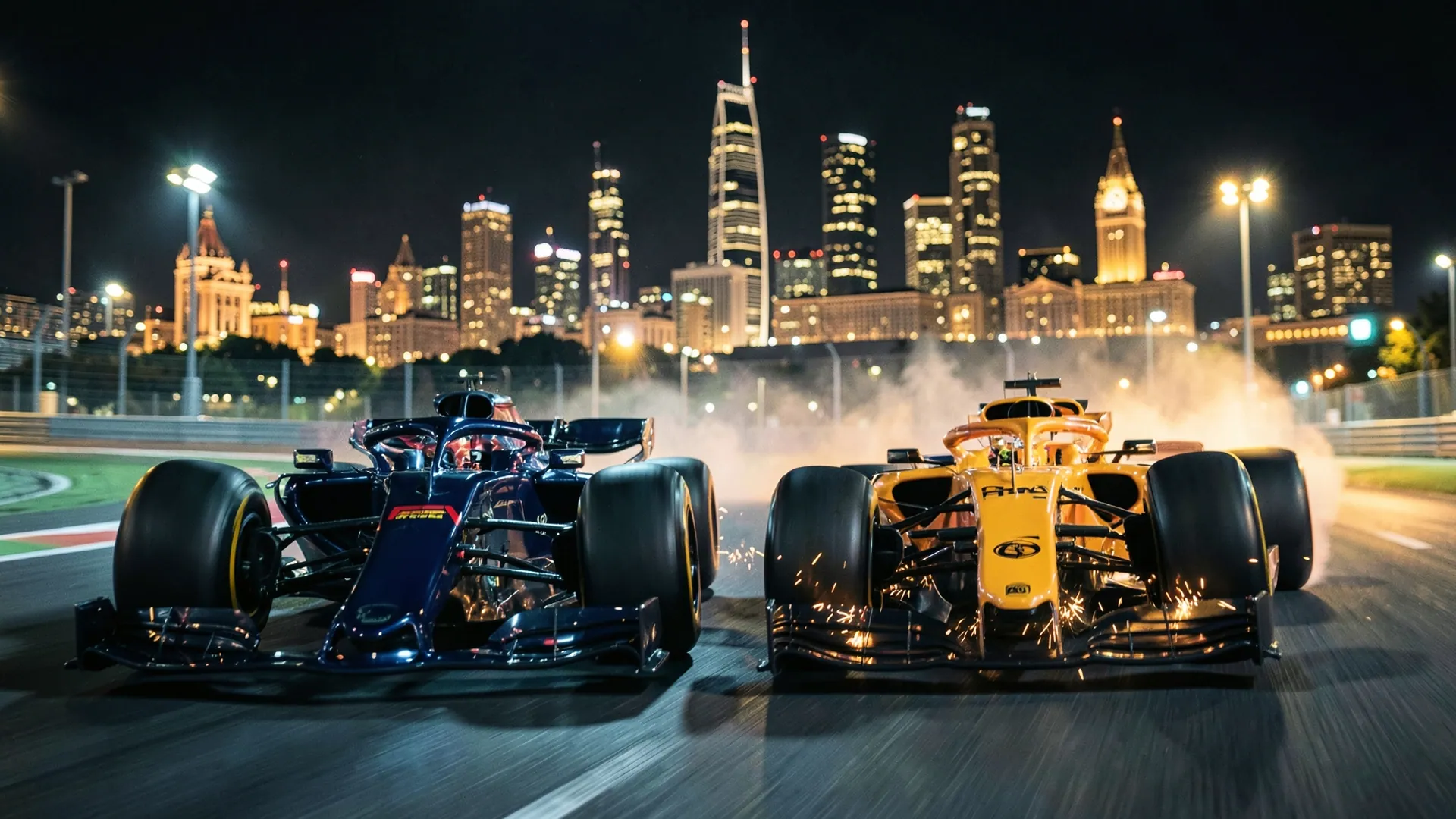
Lando Norris gave a downbeat assessment of McLaren’s competitiveness after finishing fourth at the Singapore Grand Prix on 11 October, a result that left the reigning constructors’ champions only seven points clear of Red Bull. Team principal Andrea Stella has taken a more hopeful line, telling RacingNews365 that the “ping-pong” nature of this season gives McLaren reason for reassurance. Both men are describing the same team, and with six rounds remaining, starting in Austin on 25 October, only one of their readings can be right.
Why fourth in Singapore felt like a defeat
On paper, McLaren’s Marina Bay weekend was respectable. Norris started fifth and finished fourth, and Oscar Piastri started sixth and finished fifth. That was 22 points and a clean double score on a circuit that punishes the smallest error. Plenty of teams further down the grid would take that every weekend.
The problem was what happened around them. Max Verstappen converted pole into victory and 25 points. Isack Hadjar, who started 22nd, picked his way through to 10th and added one more. Red Bull outscored McLaren 26 to 22, and the margin in the constructors’ championship shrank by four points to the current seven: McLaren on 339, Red Bull on 332.
PlanetF1 reported that Norris’s own view of the weekend was bleak, and the context explains why. Neither McLaren started nor finished in the top three, and the leading trio of Verstappen, Charles Leclerc and Andrea Kimi Antonelli were the cars setting the agenda. Fourth was partly a product of Lewis Hamilton slipping from third on the grid to sixth at the flag. A result built partly on a rival’s slide does not tell a driver his car is quick, and Norris knows the difference better than most.
His championship position underlines the point. Norris is sixth in the drivers’ standings on 201 points, 139 behind Antonelli and 20 behind Verstappen, with two wins to his name. Piastri, seventh on 138 points, has yet to win in 2026. For a team that dominated the constructors’ title race in each of the past two seasons, that is a steep fall.
Stella’s ‘ping-pong’ and the case for patience
Stella’s argument deserves a fair hearing, because it is grounded in how this season has unfolded. Behind Mercedes, the competitive order has swung from circuit to circuit. The table of race winners shows it plainly:
| Team | Wins in 2026 |
|---|---|
| Mercedes | 11 |
| Ferrari | 2 |
| McLaren | 2 |
| Red Bull | 2 |
Mercedes have won 11 of the 17 Grands Prix. The other six have been split evenly between Ferrari, McLaren and Red Bull. When the second tier is that compressed, a team that looks fourth-best at one venue can be the best of the rest at the next, depending on how the layout, surface and temperatures suit its car. If McLaren’s strong weekends cluster in the final six rounds, the “ping-pong” reading will prove a sound one.
There is also a structural argument in McLaren’s favour, and it may be what Stella is leaning on. McLaren score with both cars. In Singapore, the drivers finished fourth and fifth and lost nothing to unforced errors. Over a run of six races, a team with a reliable two-car haul tends to beat one that relies heavily on a single driver, because the second car’s points arrive even when the lead car has a bad day.
That logic has limits, though. Reassurance drawn from the volatility of the order is still reassurance drawn from something outside McLaren’s control. Stella is betting that the pendulum swings back, rather than that McLaren have found the pace to push it. Norris, who has to drive the car, appears less convinced.
The arithmetic that favours Red Bull
Seven points is a small margin, and the maths shows how quickly it could disappear. Red Bull need to outscore McLaren by eight points across six rounds to move ahead. That is fewer than two points per weekend.
Singapore offers the template. With Verstappen winning and McLaren running fourth and fifth, Red Bull gained four points even though Hadjar needed a recovery drive just to score one. Two more weekends of that shape would be enough, and McLaren would not have to make a mistake for it to happen. A Verstappen victory, worth 25 points, is the single most powerful scoring event available to either team. McLaren’s best route to a comparable haul is a double podium, which has not looked likely lately.
The danger for McLaren is that Red Bull’s weak point is becoming less of one. Hadjar sits eighth in the drivers’ standings on 97 points. He is not yet a regular threat to the McLarens on raw pace, but his drive from 22nd to 10th in Singapore was exactly the kind of damage limitation that decides close constructors’ fights. If Red Bull’s second car keeps picking up points at the bottom of the top 10, Verstappen does not need to win every weekend; he only needs to finish ahead of Norris.
Red Bull technical director Pierre Waché has also told RacingNews365 that the team will not be satisfied until it reaches a key target. That is the language of a team still adding performance. Red Bull’s 2026 car carries its own in-house power unit, a first for the team, so its development curve is steeper than that of a customer outfit such as McLaren. Steep curves tend to bring late-season gains.
What should worry McLaren most is the comparison closer to home. They use the same Mercedes power unit that has carried the works team to 11 wins and a 578-point haul. If the engine is not the limiting factor, the deficit lies in the chassis and aerodynamic package. That is precisely the area McLaren mastered over the previous two seasons, and it is the hardest to fix in-season under a cost cap, with next year’s car competing for the same resources.
A mirror image of 2024
The parallel will not be lost on either team. In 2024, Red Bull began the year as the dominant force, watched their advantage erode as rivals developed faster, and ended the season third in the constructors’ table, behind McLaren and Ferrari. The defining feature of that slide was a team leaning on one driver while its second car struggled to contribute. McLaren, with two drivers scoring heavily, overtook them and took the title.
Two years on, the roles have partly reversed. McLaren are the incumbents whose car has fallen back, and Red Bull are the side with momentum. The difference is that Red Bull’s 2024 decline was relative: they were still winning races, simply not enough of them. McLaren’s current problem is that they look like the fourth-fastest team on too many weekends, which is why Norris’s tone matters more than any single result.
The stakes are not trivial. Ferrari, on 444 points, are 105 clear of McLaren, a gap that looks beyond reach with six rounds left. The fight is for third, and each place in the constructors’ championship is worth a significant sum in prize money, which feeds directly into how teams spend under the cost cap. Losing third to Red Bull would also hand a symbolic victory to a rival McLaren comprehensively beat in 2024 and 2025, and it would set the tone heading into the winter.
Austin will show who is right
The United States Grand Prix is the first real test of Stella’s theory. If McLaren’s pace returns at the Circuit of the Americas, the “ping-pong” reading will look prescient, and their two-car consistency should be enough to hold Red Bull off. If Verstappen again finishes clear of both orange cars, the seven-point cushion could be gone before the paddock leaves Texas.
Our view is that Red Bull are now favourites for third. The trend is with them, their technical leadership is openly chasing more performance, and they have the driver most capable of turning a strong weekend into maximum points. McLaren’s defence rests on hoping the order swings back in their favour, and hope is a thin strategy over six races. Unless Norris and Piastri start finishing on the podium rather than just behind it, the reigning champions should expect to end the year in fourth.