
Russell Holds Off Verstappen in Baku Thriller to Extend Mercedes Form
Recap of Russell's lights-to-flag victory and his tense battle with Verstappen in Azerbaijan.
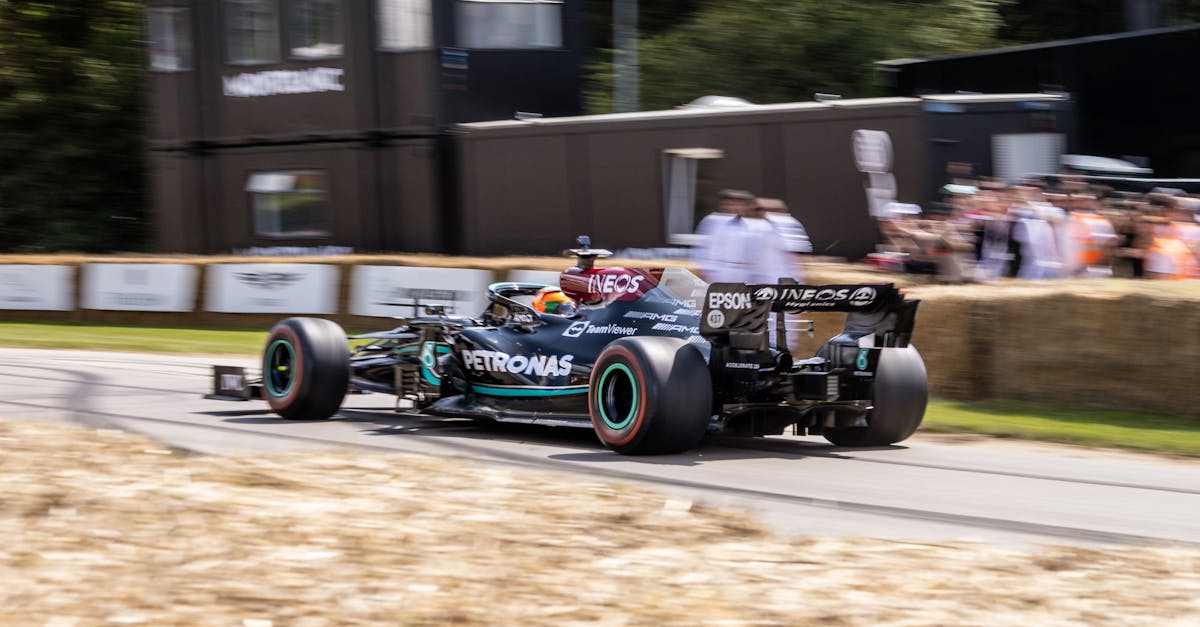
George Russell’s third victory of the 2026 season was won three times over — once at the start, once again after each of two safety car interruptions had erased the advantage he had spent all afternoon building. That he still crossed the line just a tenth of a second clear of Max Verstappen tells you everything about how ruthlessly Baku, a circuit that punishes hesitation and rewards nerve, tested both men in the closing laps.
What happened in Baku
Russell’s weekend was built on a foundation laid on Saturday, when he took pole by around eight-tenths of a second — the kind of margin that, on a street circuit as unforgiving as Baku, tends to settle a race before it has even started. He converted that into a clean getaway and controlled the opening stint from the front, doing precisely what pole-sitters are supposed to do on a track where overtaking chances are scarce and mistakes are terminal.
But this was never going to be a straightforward cruise to the flag. Two separate safety car periods intervened, and each time the gap Russell had painstakingly constructed was wiped out at a stroke, compressing the field and handing Verstappen a fresh run at him under racing conditions rather than the clear air Russell had earned. Red Bull’s driver duly made the most of it, closing right onto Russell’s gearbox in the final laps and mounting a sustained, probing charge that had the look of a man convinced an opportunity was there to be taken. It very nearly was. Russell held the line, defended with precision rather than desperation, and took the chequered flag by just a tenth of a second — as tight a finish as Baku’s long straight and heavy braking zones are ever likely to produce.
Behind that headline duel, the picture was considerably grimmer for others. McLaren endured what has been described as a double disaster, a result that will sting given the team’s ambitions this season, while Lewis Hamilton’s difficult run of form continued with yet another chastening afternoon. Neither situation should be read in isolation — both speak to a season where competitive order is being redrawn week by week.
Why this result matters
On the surface, a Mercedes one-driver masterclass with Verstappen a close second doesn’t reshape the destination of the championship in any dramatic sense — as has been noted elsewhere, this wasn’t a title-defining afternoon, and Russell’s own probability of ultimately winning the drivers’ championship has moved only marginally as a result. That framing is fair and worth keeping in mind before anyone gets carried away.
But championship mathematics are only part of the story. What Baku confirmed is that Russell and Mercedes are not merely capable of winning when circumstances align in their favour — they can win under sustained pressure, with a rival of Verstappen’s calibre attacking every braking zone in the final stint. That distinction matters enormously. Plenty of drivers can convert a comfortable pole into a comfortable win. Converting a comfortable pole into a race that gets progressively less comfortable, twice reset by safety cars, and still coming out ahead by a tenth — that requires composure under a different kind of scrutiny entirely. It’s the sort of result that tends to stick in a driver’s ledger as evidence of genuine title-winning temperament, regardless of what it does to the points table on any given Sunday.
For Verstappen and Red Bull, there is plenty to take from the weekend too. A near-miss of this kind, built on a genuine late-race charge rather than free positions handed over by others’ misfortune, is the sort of form line that keeps a team believing it’s only a small margin away from turning defeats into wins. The concern for Red Bull will be the qualifying deficit that put Verstappen on the back foot in the first place — eight-tenths in Baku is not a gap papered over by strategy alone.
The wider context
This is Russell’s third win of the season, and results of this nature — pole, control, resilience under safety car resets, a tight but successful defence against Verstappen specifically — build a pattern rather than a one-off. Mercedes’ competitiveness this year has not always been framed as title-threatening, but a driver capable of repeatedly delivering lights-to-flag victories, and holding firm when the timing sheet says it should be closer, is exactly the sort of form that shifts a team’s internal expectations even if it doesn’t yet shift the outright championship picture.
Equally significant is what didn’t happen elsewhere. McLaren’s difficult weekend and Hamilton’s continued struggles are reminders that current form in F1 is rarely settled — team fortunes can invert from race to race, and no one at the front should assume today’s order is next month’s order.
GP Headlines’ take
Judged purely on points, Baku changes little. Judged on substance, it changes rather more. Russell didn’t just win from the front — he won from the front twice, after the race reset the clock on him, against a driver who does not surrender ground easily. That is a more meaningful data point about where Mercedes and Russell currently stand than the margin of victory alone suggests, and it is exactly the kind of result a driver builds a genuine championship campaign around, even in a season not yet framed as a two-horse fight.