
Engine Penalties Drop Hamilton and Verstappen to 20th and 21st at Interlagos
Lewis Hamilton and Max Verstappen start the Brazilian Grand Prix near the back after engine penalties, reshaping the fight for second on a weekend of rain-hit qualifying and uncertainty over Liam Lawson's future.
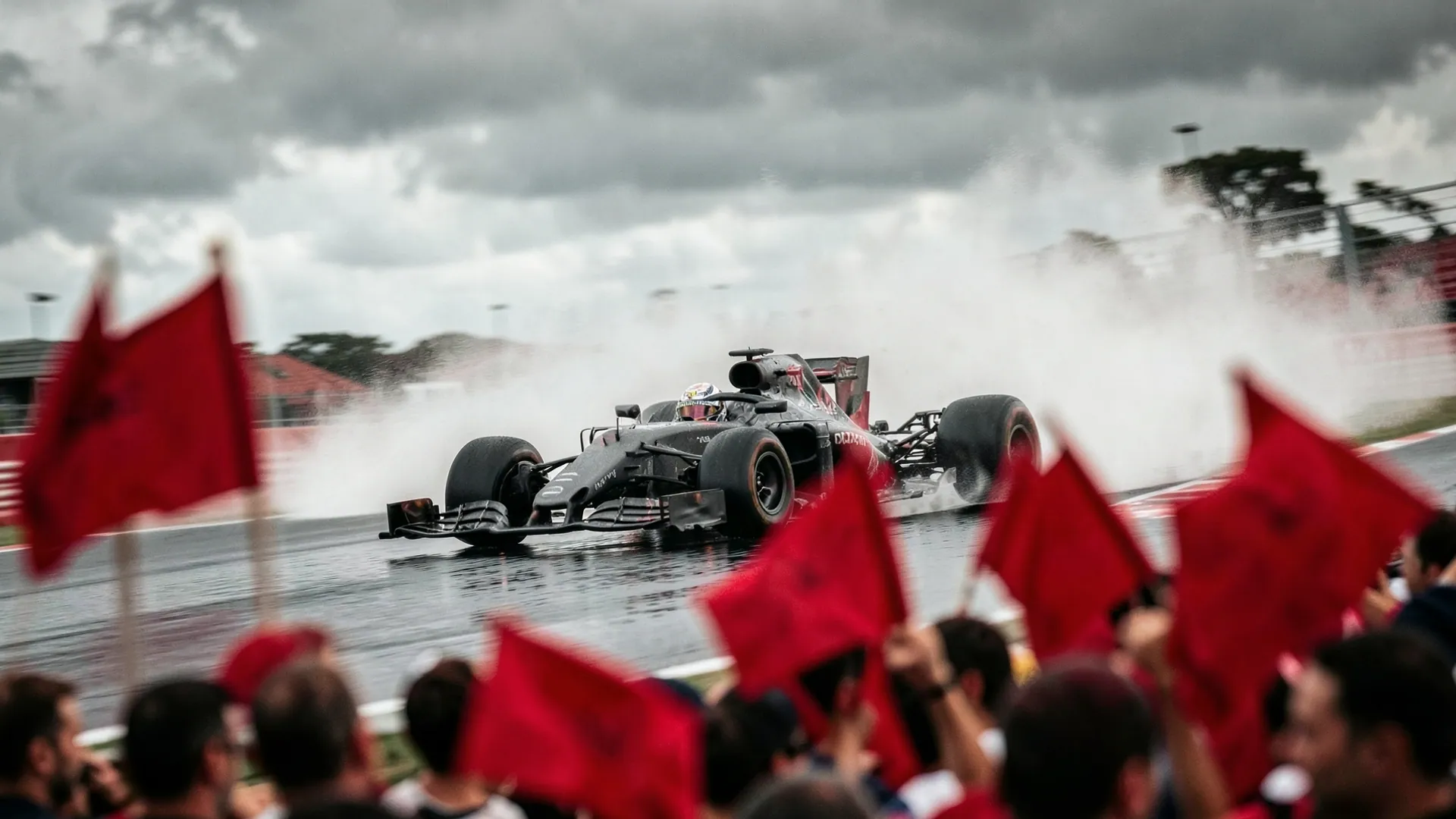
Lewis Hamilton and Max Verstappen will start today’s Brazilian Grand Prix from 20th and 21st on the grid after taking engine penalties at Interlagos. They head a heavily reshuffled field: two more drivers have been penalised, and a rain-interrupted qualifying session left several regulars out of position. A week after the pair finished first and second in Mexico City, Round 20 of 23 begins with two of the sport’s most decorated drivers needing to pass almost everyone.
Why Interlagos is the place to take the hit
Late-season engine penalties are rarely accidents of timing. Every driver has a fixed allocation of power unit components for the year. Exceeding it triggers grid drops, and once the drop is large enough the driver is sent to the back regardless. That rule shapes team strategy. A team that knows it will need fresh parts before Abu Dhabi does better to fit several at once, take a single heavy penalty and serve it where recovery is easiest.
Interlagos is about as good as it gets for that. The lap is short, the run from Junção up the hill to Turn 1 provides a long acceleration zone, and the Senna S rewards a car that gets a good exit from the final corner. This year’s electrical override, which replaced DRS, rewards exactly that kind of straight-line opportunity. A car with a fresh power unit and a full deployment budget is well placed to work through slower traffic there.
There is also precedent, and both men supplied it. Hamilton won here in 2021 from 10th on the Sunday grid, having started the sprint from last and then served an engine penalty. Verstappen won from 17th in the rain in 2024, one of the defining drives of his career. Neither result guarantees anything this afternoon, but together they explain why both teams chose this circuit to pay the price.
Three things the comeback needs
- A clean first lap. Starting 20th and 21st puts both cars in the part of the pack most exposed to Turn 1 contact. Losing a front wing there ends the comeback before it begins.
- Strategic offset. Running long in the opening stint, or stopping early to find clear air, is often worth more than on-track passes in the first 15 laps.
- A neutralisation. Interlagos regularly produces safety cars. A well-timed one would compress the field and erase much of the deficit at a stroke.
Can either win? Mexico suggests both cars have the pace: Hamilton put his Ferrari on pole there, and Verstappen won from fifth. The realistic target is the podium, and anything beyond that would rank among the best drives of the year. The more useful question is what a finish in the lower half of the top 10 does to the standings.
The real fight is for second
Andrea Kimi Antonelli’s championship lead is not the story this weekend. The Mercedes driver has 380 points and nine wins. Verstappen, in second, is 119 behind, and the four remaining Grands Prix offer 100 points between them. For practical purposes, the title is Antonelli’s. The question now is how he chooses to close it out, and whether he can add to a tally of victories that already makes this a landmark season for a driver so young.
Behind him, the order is far less settled:
| Pos | Driver | Team | Points | Gap to 2nd |
|---|---|---|---|---|
| 2 | Max Verstappen | Red Bull | 261 | — |
| 3 | Lewis Hamilton | Ferrari | 259 | 2 |
| 4 | George Russell | Mercedes | 250 | 11 |
| 5 | Charles Leclerc | Ferrari | 245 | 16 |
| 6 | Lando Norris | McLaren | 221 | 40 |
Sixteen points cover four drivers, and the two at the top of that group start today near the back. That gives Russell and Leclerc an opening. A Russell podium while Verstappen and Hamilton scrap for minor points would lift the Mercedes driver into second, or very close to it, with three rounds left.
Runner-up is not a hollow prize this year. For Verstappen, finishing second to Antonelli’s Mercedes would show that he can still extract results from a Red Bull that has won three races. For Hamilton, second place in his second Ferrari season would be the clearest evidence yet that the move has worked, even with only one victory. Russell has a more pointed reason: finishing second behind his own team-mate would at least show he is the next-best driver in the strongest car.
The penalties also matter in the constructors’ standings. Mercedes (630 points) are out of reach and Ferrari are a secure second on 504, but third place is genuinely contested. Red Bull have 382 points and McLaren 365, a margin of 17. With Verstappen starting 21st, McLaren have a chance to close most of that gap in a single afternoon, provided they get both cars into the points.
Rain in qualifying, perhaps not on Sunday
Saturday’s weather did as much to reshape this grid as the penalties. Oscar Piastri had looked comfortable all weekend until rain arrived during qualifying. A red flag then left him exposed, and he was eliminated early. Piastri has explained the effect the stoppage had on his session. Red-flag timing in changing conditions is often decisive: a driver who has not yet banked a lap on the better surface can find the track has turned when running resumes, and there is no second chance.
For McLaren, it extends a difficult season for their Australian. He is seventh in the championship on 144 points without a win, 77 behind team-mate Lando Norris, and he finished 13th in Mexico. On a weekend when the constructors’ fight with Red Bull has suddenly opened up, a compromised grid slot for Piastri limits how much McLaren can take from Verstappen’s penalty.
Leclerc, by contrast, has spoken about his surprise at how much he has improved in the wet. Wet conditions have long been regarded as his weakest area at Ferrari, a strange gap in the armoury of one of the fastest qualifiers of his generation. Any real improvement there matters for Ferrari beyond this weekend.
The awkward twist is that the rain many expected for Sunday may not arrive. A dry race after wet running creates genuine problems for teams. Set-up choices lean one way or the other, and once the cars are in parc fermé they cannot be fully undone. A team that added downforce for a wet race will be slower on the straights in the dry. That could help drivers starting near the back with fresh power units and good straight-line speed, which makes the forecast relevant to Hamilton and Verstappen too.
Lawson’s future and the logic of the Red Bull ladder
Ted Kravitz has questioned Racing Bulls over the uncertainty surrounding Liam Lawson. His remarks for Sky Sports summed up the situation: “You can’t drop Liam Lawson now. Well, they can. They might.”
The numbers support Lawson. He is ninth in the drivers’ championship on 83 points, the best of anyone outside the four leading teams and 45 clear of team-mate Arvid Lindblad. In Mexico he started 22nd and finished seventh, the kind of drive that earns respect up and down the pit lane. On a weekend when two of the sport’s biggest names start from the back, his Mexico result is a reminder that recovering from the rear in a midfield car is harder still.
The difficulty is structural. Red Bull’s two-team model exists to move young drivers through, and seats at Racing Bulls are valued partly for their ability to reveal who is next. Isack Hadjar has already moved up to the senior team, Lindblad occupies the other seat, and the programme always has juniors waiting. A driver like Lawson, established and consistent but not obviously destined for the senior Red Bull, can find that his performances matter less than the queue behind him.
Our view is that Lawson has done what the programme asks of a driver in his position. He has scored heavily, beaten his team-mate and delivered on difficult weekends. Replacing him now would tell young drivers that results at Racing Bulls do not secure a place. It would also cost a team lying fifth in the constructors’ championship its most reliable points scorer.
Vasseur, Ocon and the price of a first seat
A revealing story from 2016 has resurfaced this week. Fred Vasseur, now Ferrari team principal, personally put up the missing money that secured Esteban Ocon’s Formula 1 debut with Manor. The sum was reportedly $1 million.
The background matters. Vasseur ran Ocon at ART in GP3, where the Frenchman won the 2015 title. Despite that record and his backing from Mercedes, Ocon still needed a funding shortfall covered when Manor’s seat came up mid-season. That a team owner from the junior categories chose to bridge the gap himself says a good deal about how highly Vasseur rated him, and about how close a future race winner came to never starting a Grand Prix.
The episode also bears on the Lawson debate. Talent alone has rarely been enough to reach or keep a seat in Formula 1; money, timing and the judgement of one influential figure often decide it. Ocon got his chance because someone with power decided he was worth the risk. Lawson’s future may come down to the same kind of decision.
Stroll’s steering, Wolff’s defence and Bortoleto’s home crowd
- The other penalties. Two more drivers besides Hamilton and Verstappen have been given grid penalties, making this one of the most heavily adjusted grids of the season. Expect the midfield order to look unfamiliar at the start.
- Stroll’s FP1 struggle. Karun Chandhok described footage of Lance Stroll wrestling his Aston Martin’s steering wheel in first practice as “bizarre”, saying he had never seen anything like it. Aston Martin have seven points all season, and a car that hard to drive goes some way to explaining it.
- Wolff defends Liberty again. Toto Wolff has once more spoken up for Liberty Media over Qatar, this time criticising MotoGP riders. It is an unusual role for a team principal, and one to watch as next year’s calendar takes shape.
- Bortoleto’s home race. Gabriel Bortoleto arrives at Interlagos after scoring four points for Audi with eighth from 13th in Mexico. With Audi on 27 points, four behind Haas, another result in front of the home crowd would bring them into a real fight.
- New face at Sky. Sky Sports F1 has added Alexa Rendell to its coverage team as an F1 multimedia journalist, starting this weekend.
- Audi off-track. Bortoleto’s partner, Isabella Bernardini, arrived in the paddock wearing a one-off dress made from Audi’s special adidas range for the race. It is a small but telling sign of how the German manufacturer is building its presence ahead of its next steps in the sport.
Today’s race will settle little about the title but plenty about the order behind Antonelli. If Hamilton and Verstappen both reach the top six from 20th and 21st, the fight for second will stay open until Abu Dhabi. If Russell capitalises on their penalties, he will leave São Paulo as the favourite to finish runner-up to his own team-mate.