
Russell Takes Five-Place Brazil Grid Penalty as Fight for Second Tightens
George Russell arrives at Interlagos with a five-place grid penalty and a Mercedes fine from Mexico, while Ferrari's internal rivalry and Honda's response to Aston Martin's struggles shape the weekend.
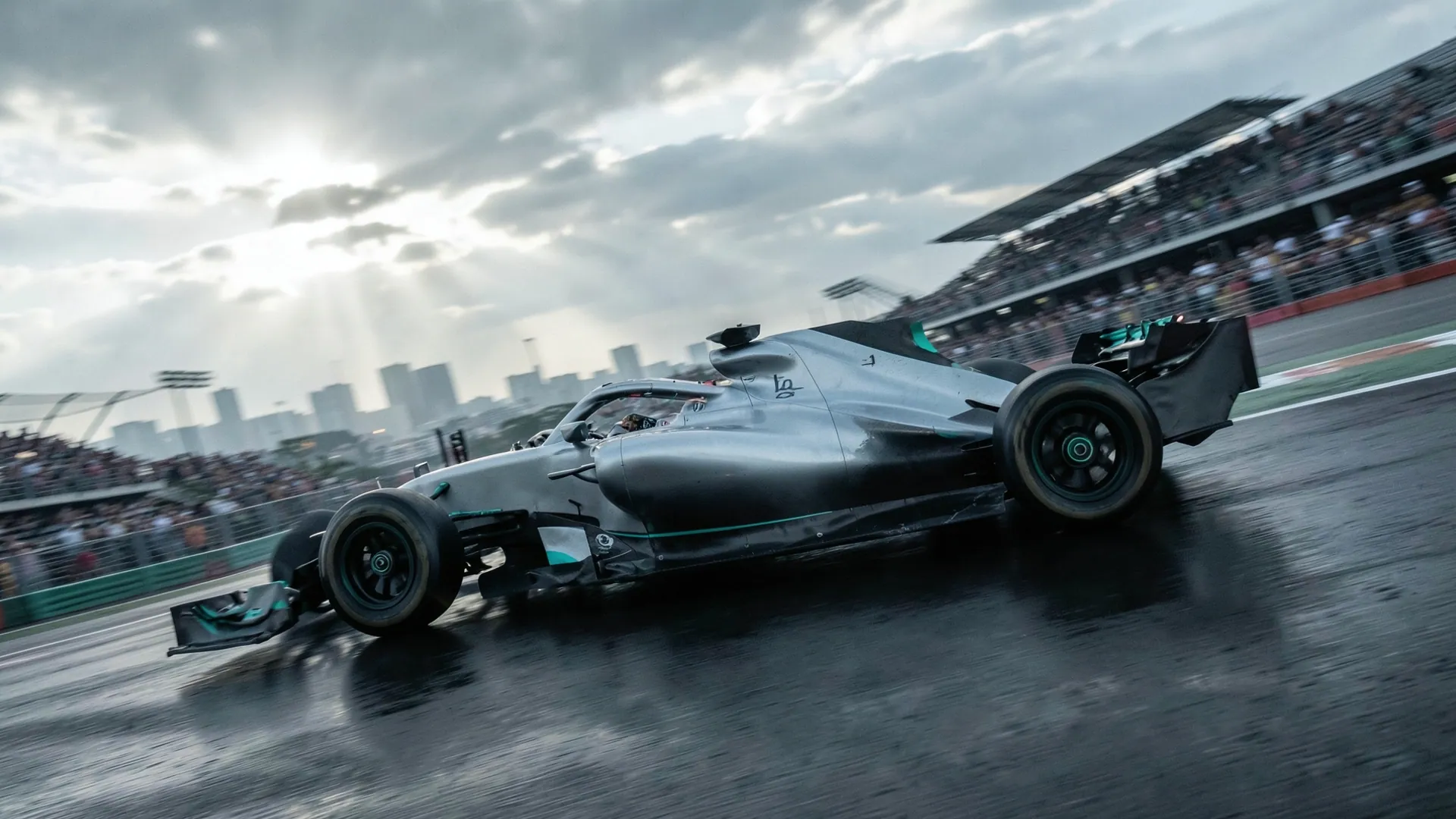
George Russell will lose five places on the grid for Sunday’s Brazilian Grand Prix after Mercedes fitted his sixth internal combustion engine of the season. The penalty follows a difficult Mexico City weekend in which he finished sixth from the front row and then left the circuit without fulfilling his post-race media duties, earning Mercedes a fine. With Andrea Kimi Antonelli already champion, the consequences fall mainly on the scramble for second, where four drivers are covered by 16 points with four rounds to run.
Russell’s five places, and why Interlagos is the place to take them
Mercedes has not hidden the cause. Autosport and Motorsport.com both trace the extra engine to a pair of power unit problems earlier in the year, which ate into Russell’s allocation. Once a driver is in that position, the question is no longer whether to take a penalty but where. A team that waits risks a failure at a circuit where a grid drop is far more expensive, or a failure in the race itself, which costs everything.
Interlagos is a sensible choice, and history supports it. The lap is short, the climb from Junção to the line produces a long run on the straight, and the circuit has repeatedly rewarded drivers who start out of position. Lewis Hamilton won here in 2021 from 10th on the Sunday grid after his own engine penalty. Max Verstappen went further in 2024, converting 17th on the grid, also after a five-place engine penalty, into victory in the wet. Neither precedent guarantees anything for Russell, but both show that a five-place drop in São Paulo is a handicap, not a sentence.
The Mexico absence
The engine news arrives on top of a story that has followed Russell from Mexico. He left the circuit shortly after Sunday’s race, missed his media commitments, and Mercedes was fined. He has since spoken publicly about the decision.
It stood out because it was so unlike him. Russell is a director of the Grand Prix Drivers’ Association and has generally been one of the more available and articulate voices in the paddock. The fine is proportionate and the principle is sound. Media duties are part of the contract between the sport and the people who follow it, and they apply after bad days as much as good ones. One missed session does not define a driver. The sensible outcome is for everyone to treat the matter as closed and judge him on what he does from Friday onwards.
Sixteen points cover second to fifth
Mexico reshuffled the order behind Antonelli. Before that race Russell was second on 242 points, a point ahead of Hamilton, with Verstappen on 236 and Charles Leclerc on 233. Verstappen won from fifth on the grid, Hamilton converted pole into second, Leclerc finished fourth and Russell slipped to sixth. The order now reads:
| Position | Driver | Team | Points | Gap to second |
|---|---|---|---|---|
| 2 | Max Verstappen | Red Bull | 261 | — |
| 3 | Lewis Hamilton | Ferrari | 259 | 2 |
| 4 | George Russell | Mercedes | 250 | 11 |
| 5 | Charles Leclerc | Ferrari | 245 | 16 |
| 6 | Lando Norris | McLaren | 221 | 40 |
Verstappen also holds the edge over Hamilton on wins, with three to one. That matters if the two finish the season level. More important is the shape of his campaign: Red Bull’s points have come overwhelmingly through him. Isack Hadjar finished ninth in Mexico and sits eighth in the standings on 107 points. Verstappen has often been up against faster cars, and with little help from a team-mate who rarely takes points off the front-runners.
Russell’s penalty makes him the underdog in Brazil, though it does not put him out of the fight. Norris, 40 points behind Verstappen, needs others to falter repeatedly. A fourth place for Hamilton or Leclerc behind Verstappen, or a Russell recovery that stalls in the midfield, could decide the order before the final round.
The constructors’ arithmetic
Mercedes leads Ferrari by 126 points. The title is not yet mathematically settled, but Ferrari would need to outscore Mercedes by more than 31 points per weekend to overturn it. That would mean finishing first and second while both Mercedes struggle, every time. Behind them, Red Bull’s 17-point lead over McLaren for third is the live contest, and it depends almost entirely on whether Verstappen keeps winning.
Ferrari’s two-driver tension resurfaces in Mexico
Hamilton and Leclerc renewed their rivalry in Mexico City, and it has prompted a fresh round of commentary. Damon Hill, speaking as a pundit and quoted by Crash.net and RacingNews365, has offered Ferrari a solution he believes would end the debate.
Ferrari’s dilemma is a familiar one. With both drivers in the fight for second, separated by 14 points, there are two broad options. The team could nominate one driver, which on current points would mean favouring Hamilton, or it could let them race and accept that they will occasionally cost each other. Neither is obviously right. Nominating a driver delivers clarity, but it tells the other his season is over with a month to go. Free racing keeps both engaged, but it invites the kind of wheel-to-wheel moments that fill the post-race news cycle.
What the Rosberg story tells Ferrari
It is a coincidence of timing that Nico Rosberg has chosen this week to reflect on his years alongside Hamilton. As reported by GPfans, Rosberg says Hamilton would occasionally believe there was a “conspiracy” against him at Mercedes, after a controversial team decision before their 2016 title fight.
Whatever one makes of that account, the dynamic it describes is universal. Suspicion grows when drivers do not understand why decisions are made. Mercedes in 2016 had two drivers fighting for a world title and won the constructors’ championship anyway. Ferrari’s stakes are lower: second in the constructors’ standings looks secure, with Red Bull 122 points behind.
That gives Ferrari room to let its drivers race. The condition is that the rules of engagement are agreed in a briefing room before the lights go out, not improvised over the radio at 300km/h. If both drivers know exactly what is permitted, a race between them becomes an asset to the team rather than a liability.
Honda and Audi’s uncomfortable first season
Two of the sport’s biggest manufacturer projects are ending the first season of the new power unit regulations on uncomfortable terms.
Honda moves quickly for Aston Martin
Aston Martin left Mexico without a classified finisher, and GPfans describes the weekend as a disaster. The team has seven points from 19 rounds and is 10th in the constructors’ standings, with only newcomer Cadillac behind it. For a team that has invested heavily in new facilities and senior technical talent, and which began the year as Honda’s works partner, that is a long way short of expectations.
Honda’s F1 boss Shintaro Orihara has delivered positive news ahead of Brazil, with the manufacturer taking immediate action on its power unit. A rapid response is welcome, and it matters for morale in the garage as well as for the stopwatch. Realistically, though, the judgement on this partnership will be made over the winter. Four races remain to recover some respectability. The real test is whether the fixes Honda finds now feed into a power unit that is competitive from the first race of 2027.
Audi’s Friday problem
Audi’s Friday was disrupted again. Freddie Slater, the British rookie, brought out a red flag in first practice at Interlagos when another technical fault struck his car. As RacingNews365 noted, it has become a pattern for his outings.
Lost practice running is costly for both parties. The rookie loses mileage he cannot easily replace, and the team loses data that would otherwise inform its set-up for the weekend. For a manufacturer in its first season running its own works operation, repeated failures in practice also raise questions about how well its components are holding up, whoever is driving.
There is a championship cost too. Audi has 27 points and sits eighth, four behind Haas. Gabriel Bortoleto’s eighth place from 13th on the grid in Mexico was a strong result. However, the weekend also featured Nico Hülkenberg’s collision with Oliver Bearman, which forced the Haas driver out of the race. According to RacingNews365, Hülkenberg sought Bearman out to apologise, calling his move “misjudged” and describing it as giving him a “shove”. That was the right response, but the incident also shows how fragile the battle for seventh will be with points so scarce.
Nice guys and title fights: Wolff and Brundle disagree
The most philosophical exchange of the week concerns Antonelli himself. Toto Wolff has suggested that Formula 1 would benefit from more people like his new champion: nice, positive and free of needle. Martin Brundle, as reported by GPfans, has cautioned against that vision.
Both men have a point. Antonelli’s season has been extraordinary: nine wins, 380 points and a 119-point lead over Verstappen with four rounds remaining. His composure under pressure has clearly been a competitive advantage, and there is nothing naive about a driver who wins this often while staying on good terms with his rivals.
Brundle’s caution is about what the sport needs as a spectacle. Rivalries with a sharp edge have always been part of Formula 1’s appeal, from Senna and Prost to Hamilton and Rosberg, and this week’s Ferrari headlines show that audiences still respond to that tension. Temperament cannot be designed by a team principal or regulated by the governing body. It is also easier to celebrate harmony when your driver has won nine races and the title is decided.
The best answer is that the sport needs both kinds of driver, and Antonelli has shown that a pleasant personality is no barrier to ruthless results. That is the one thing a rival cannot complain about.
Lawson, Hirakawa and the rest of the Mexico order
- Lawson’s charge: Liam Lawson went from 22nd on the grid to seventh in Mexico, the drive of the race by places gained. His team, RB, is fifth in the constructors’ standings on 108 points, 39 clear of Alpine.
- Hirakawa’s point: Ryo Hirakawa took 10th for Haas from 18th on the grid. That single point helps keep the team four points ahead of Audi in the fight for seventh.
- Piastri’s slide: Oscar Piastri finished 13th in Mexico and remains winless this season on 144 points, 77 behind team-mate Norris. He has four races left to turn round a deeply disappointing campaign.
- Lindblad versus Gasly: Arvid Lindblad retired from eighth on the grid in Mexico. He sits 11th in the drivers’ standings on 38 points, four behind Pierre Gasly.
- Cadillac’s first point: Cadillac is still on zero after Sergio Pérez finished 16th and Valtteri Bottas retired in Mexico. A rain-affected or chaotic Interlagos race may be the newcomer’s best remaining chance to get off the mark.
Sunday’s race at Interlagos will show whether Verstappen can extend his narrow lead over Hamilton, whether Ferrari can manage its drivers without a public row, and how far Russell can climb after his five-place drop. If Verstappen leaves Brazil still ahead and Russell has made little progress from his penalty, the fight for second will effectively be between a Red Bull and the two Ferraris.