
Pérez Commits to Cadillac Until 2029 Ahead of His 300th Grand Prix
Sergio Pérez's new Cadillac contract leads a busy week that also brought fresh criticism of Ferrari's Austin strategy and a candid verdict on Red Bull from Max Verstappen before Mexico City.
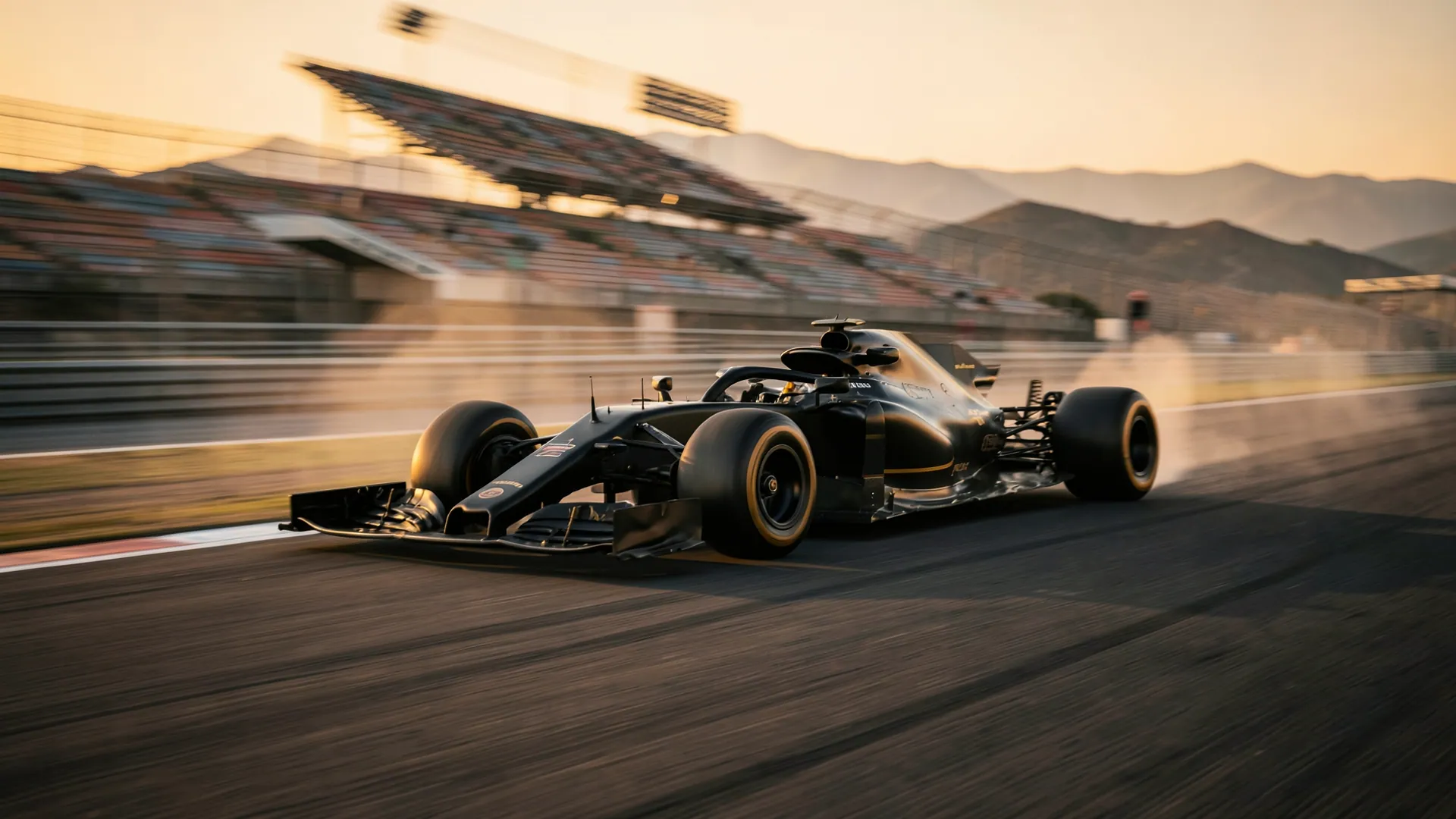
Cadillac has handed Sergio Pérez a new contract that keeps him at the American team until at least 2029, days before he starts his 300th grand prix in front of his home crowd in Mexico City. The deal gives Formula 1’s newest outfit a fixed point for the years ahead, but it leaves the identity of his team-mate unresolved. Elsewhere, Ferrari’s strategy in Austin is under scrutiny again, Max Verstappen has offered a blunt assessment of Red Bull’s form, and the sport has published its first social impact report.
Why Cadillac has bet on Pérez for the long haul
Pérez joined Cadillac for its debut season after his Red Bull exit cost him his place on the grid. His return to F1 has been hard going. After 18 rounds, Cadillac is the only team without a point. In Austin, Pérez finished 19th and a lap down after starting 18th, while Valtteri Bottas retired from 19th on the grid. Aston Martin, on seven points, and Williams, on 12, are the nearest teams, and neither has had a season to boast about.
So why commit to a driver until he is approaching 40? The answer lies in what an expansion team needs most, which is continuity. A new outfit is building its processes, its simulation tools and its correlation between factory and track all at once. A driver who has raced for Sauber, McLaren, Force India, Racing Point and Red Bull knows what a functioning top-team operation looks like. That reference point is valuable when engineers are trying to work out which problems are fundamental and which are teething troubles. Pérez has won grands prix with two different teams, and his feedback carries the weight of that experience.
There is a commercial logic too, and Cadillac would be foolish to pretend otherwise. Pérez commands one of the largest national followings on the grid, and an American-owned team chasing audiences across the Americas gains a great deal from having Mexico’s driver in its colours. Announcing the deal days before his home race maximises that effect.
History supports patience. Of the three teams that entered in 2010, HRT and the outfit that became Caterham never scored a point, while Virgin, later Marussia, scored only once, through Jules Bianchi at Monaco in 2014. The 2016 entry fared far better: Haas, built with an experienced driver at its core, scored in its very first race. Cadillac has not matched that start, but the lesson stands. New teams rarely improve by constantly reinventing their driver line-up.
The empty seat beside him
Several outlets report that Bottas’s future is far from settled, and the team has given no indication of its plans for the second car in 2027. Cadillac faces the classic expansion-team dilemma. A second seasoned driver would give it two reliable development voices. A younger driver could grow with the project and potentially become its long-term leader. An American-owned team will inevitably be asked about an American driver, too. With Pérez now locked in, the second seat is where Cadillac can take a calculated risk.
Hamilton’s lost podium and Ferrari’s strategic reputation
Lewis Hamilton finished fourth in Austin after starting fifth, while Charles Leclerc climbed from fourth to second. Ferrari’s 30-point haul looks respectable on paper, but the veteran observer Peter Windsor, quoted by GPfans, has described the team’s strategy for Hamilton as “ludicrous” and argued that it cost him a podium.
The arithmetic shows why the point matters. Third place would have put Hamilton on 244 points, two clear of George Russell in second. Instead he sits on 241, one point behind. He did gain eight points on Russell over the weekend, but in a fight this tight, any points left on the table by Ferrari’s pit wall will be remembered.
Judging strategy from outside always carries a caveat. Teams balance tyre data, traffic and the interests of two cars in ways that broadcasts rarely capture, and a call that looks poor for one driver can be sound for the team. Yet the criticism lands because of Ferrari’s record. Leclerc’s lost wins at Monaco and Silverstone in 2022, and the hard-tyre gamble in Hungary that same summer, still shape how the team’s calls are read. Fair or not, Ferrari’s strategists start every race with less benefit of the doubt than their rivals.
Second place in the constructors’ championship is not under serious threat. On 474 points, Ferrari is 119 clear of Red Bull and McLaren, though 133 behind Mercedes.
What the 2027 odds say about Ferrari
The opening betting odds for 2027, highlighted by GPfans, make discouraging reading for Ferrari. That is hardly surprising after a season in which Mercedes has won 12 of 18 races and Ferrari only two, one apiece for Hamilton and Leclerc.
Precedent offers little comfort. The dominant team in the first year of a new rule set has often extended its advantage in the second, as Mercedes did in 2015 and Red Bull did in 2023. The counter-example is 2009, when Brawn’s double-diffuser advantage evaporated over the season as rivals caught up. Ferrari’s last drivers’ title came in 2007 and its last constructors’ crown in 2008. The bookmakers are not predicting that drought will end soon.
Verstappen’s ‘average’ Red Bull and a four-way scrap for second
According to RacingNews365, Verstappen described Red Bull’s showing in Austin as “average”, a marked step back from the form the team had shown in the preceding rounds. On the face of it, third place from second on the grid hardly looks like a crisis. The verdict says more about the standard Verstappen sets than about the result itself. Finishing behind a Ferrari that started behind him, and being unable to challenge Andrea Kimi Antonelli’s Mercedes, is not what he expects.
Isack Hadjar’s afternoon illustrates the problem more clearly. He qualified an excellent third but slipped to sixth, suggesting the car’s race pace did not match its one-lap speed. Even so, Red Bull outscored McLaren by 23 points to 16. That erased a seven-point deficit and drew the teams level on 355 points apiece in the battle for third.
Behind Antonelli, the drivers’ standings have compressed into one of the closest fights for runner-up in years:
| Position | Driver | Team | Points | Gap to second |
|---|---|---|---|---|
| 2 | George Russell | Mercedes | 242 | — |
| 3 | Lewis Hamilton | Ferrari | 241 | 1 |
| 4 | Max Verstappen | Red Bull | 236 | 6 |
| 5 | Charles Leclerc | Ferrari | 233 | 9 |
Nine points cover four drivers from three teams. Russell’s position looks the most precarious. He finished eighth in Austin from sixth on the grid, scoring four points while his team-mate won. Over the same weekend, Antonelli’s lead grew from 102 points to 123.
Second place in the championship is a consolation prize, but drivers value it. With Antonelli out of reach, this contest will shape the story of the final five rounds. Verstappen, who has turned modest machinery into results throughout his career, is the driver nobody in this group would want to see finding form.
A first report card for F1’s work off the track
Formula 1 has published its first sport-wide Social Impact Report, stating that more than half a million young people worldwide benefited from its programmes last year. Alongside the report came a multi-million-pound investment in STEM education aimed at young people from under-represented groups, and the renewal of a key student scholarship.
The report builds on a direction the sport has pursued since the launch of its We Race As One initiative in 2020 and the Hamilton Commission’s 2021 findings on the lack of diversity in motorsport’s workforce. Those findings made clear that the bottleneck lies as much in who reaches the design office, the garage and the factory floor as in who reaches the cockpit. Education programmes tackle that at its source.
A first report is a baseline, and its value will depend on what follows. Headline figures such as “half a million young people” need consistent definitions if progress is to be measured year on year. The real test is whether future editions track outcomes as well as reach: how many participants go on to engineering degrees, apprenticeships and jobs in the industry. If F1 commits to that level of transparency, this could become one of the more meaningful documents the sport produces.
Mexico City: altitude, a home hero and Antonelli’s arithmetic
The Autódromo Hermanos Rodríguez sits more than 2,000 metres above sea level, and the thin air shapes everything. Wings generate less downforce, so teams run their highest-drag configurations and still find the cars sliding. Cooling becomes a constant concern for power units and brakes, and the long run from the grid to Turn 1 makes the start unusually dramatic. PlanetF1 has examined the rain risk for the weekend, although dry conditions have been the norm at this event in recent seasons.
For Pérez, the weekend carries enormous emotional weight. His third place here in 2021 remains one of his most celebrated results, while his first-lap exit at Turn 1 in 2023 showed how heavily expectation can weigh on a home driver. In a Cadillac, a podium is not realistic. A clean race, a strong finish relative to Bottas and a run towards the lower points places would give the home crowd something to cheer and the team something tangible to build on.
At the front, Antonelli arrives with nine wins and a 123-point lead, almost five victories’ worth. The five remaining grands prix offer 125 points between them before any sprint points are added. Mexico City may not settle the title, but every point he takes out of Russell there shortens the countdown to his first crown.
Alonso’s damage, Bortoleto’s charge and the rest of the Austin fallout
- Alonso’s Austin damage. Fernando Alonso has detailed the extent of the damage his Aston Martin suffered in an opening-lap collision. He started 12th but finished 16th and a lap down. Aston Martin has seven points and holds 10th in the constructors’ championship by that margin over Cadillac.
- Bortoleto’s recovery drive. Gabriel Bortoleto climbed from 21st on the grid to 13th for Audi. It was one of the quieter strong performances of the weekend, though Audi remains eighth on 23 points.
- Alpine’s cushion. Pierre Gasly’s point for 10th takes Alpine to 69, a 39-point lead over Haas in the fight for sixth. Liam Lawson’s two points for ninth kept RB F1 Team comfortably fifth on 102.
- The contract tracker. PlanetF1’s grid-wide contract guide now has one fewer open question. Cadillac’s second seat has become one of the most intriguing vacancies of the winter.
- Lindblad’s progress. Arvid Lindblad gained two places from 14th to finish 12th. He sits 11th in the standings on 38 points, four behind Gasly.
- Russell under pressure. After only four points in Austin, Russell needs a strong Mexico City weekend. If Hamilton outscores him again, the talk will shift from Mercedes’ dominance to whether its senior driver can hold second against two Ferraris and Verstappen.