
F1 today: the stories everyone's talking about — 6 Oct 2026
GP Headlines' round-up and analysis of the biggest Formula 1 storylines making news right now.
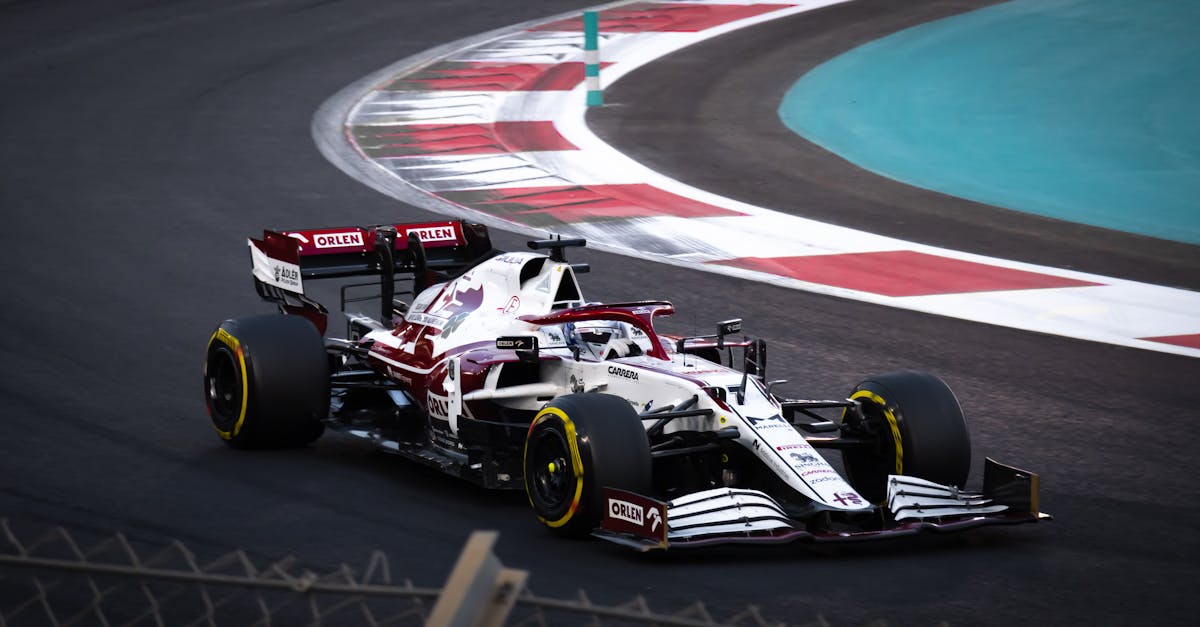
Singapore week always has a theatrical quality to it — the night race, the humidity, the sense that anything unresolved from the flyaway triple-header will boil over under the lights of Marina Bay. This year that drama arrives early. Formula 1 is dealing with the fallout from a software bug that’s already cost at least one driver a result and is now being scrutinised for its legal implications from a race ago, Red Bull is quietly putting itself back into podium contention against a Mercedes operation that’s set the pace of this new regulatory era, Ferrari’s two camps are airing their differences in public, and the sport’s long-term map is shifting with a first-ever African round now confirmed. Throw in a pair of eye-catching special liveries, an air-quality scare in Singapore itself, and Lewis Hamilton wading into the geopolitics of the calendar, and you have a news day that’s unusually heavy for a circuit that doesn’t even have practice running yet.
The formation lap bug that won’t go away
The story with the longest tail this week is the software issue that first reared its head around the Bahrain and Sepang rounds, and which is now generating consequences on two fronts. George Russell’s retirement last time out — while running a strong third under the safety car — has been confirmed as directly linked to the fault, and the penalty he picks up for Singapore is essentially administrative housekeeping that follows from how his Mercedes power unit had to be changed or reset as a result. It’s a frustrating outcome for a team that has generally been the benchmark of this new power unit formula; losing a near-certain podium to a software gremlin rather than a rival on track is the kind of result that gnaws at an engineering department far more than a straightforward defeat would.
More significant in the long run, though, is what Nikolas Tombazis has had to explain on behalf of the FIA: how a bug affecting cars on the formation lap went undetected until it was already causing real sporting consequences. Software validation in modern F1 is an enormous undertaking — these are cars with layers of control systems governing everything from hybrid deployment to clutch bite point, and the formation lap itself has become a far more electronically complex phase of a race weekend than it once was. Tombazis’s explanation will matter less for its technical detail than for whether it reassures the paddock that this was a one-off edge case rather than a symptom of rushed or under-tested software architecture arriving with the new regulations. New rules eras have a history of throwing up exactly this sort of teething trouble, and nobody serious will be surprised that something slipped through. The question is whether the governing body’s diagnostic and crisis-response process was fast enough once the problem appeared.
That question has real teeth because of the third strand of this story: the legality of Lewis Hamilton’s grid position at the Bahrain race in Malaysia is now being queried, specifically around the decision to reset the grid order after the formation lap chaos. Resetting a grid is not a trivial intervention — it affects everyone’s race, not just the drivers directly caught up in the malfunction — and if there’s ambiguity about whether the stewards had clear regulatory grounds to do so, that’s a more serious governance issue than the bug itself. Software faults happen; what teams and drivers need is confidence that the sporting remedy applied afterwards is consistent and defensible. This is one to watch closely over the coming days, because a finding against the legality of that reset would be awkward for the FIA on top of an already uncomfortable week.
Red Bull’s quiet surge puts Ferrari under the microscope
Away from the technical drama, the pecking order continues to reshape itself. Laurent Mekies’s comments about Red Bull targeting “a fight for the podium” are notable less for their ambition than for their honesty: he’s explicitly naming Mercedes as the benchmark the team is still chasing, rather than pretending Red Bull has already closed the gap. That’s a refreshingly candid admission from a team with Red Bull’s history of setting the pace, and it tells you something about how disruptive this regulatory cycle has been — the usual hierarchy has not simply reasserted itself. The gains Mekies points to across Monza, Madrid and Baku suggest a team doing the unglamorous but reliable work of incremental development rather than chasing a single silver-bullet upgrade, which is usually the more sustainable path through a long season.
Ferrari’s position looks shakier by comparison, and Charles Leclerc’s willingness to say so publicly is the more interesting story. Leclerc’s point — that Red Bull “gets it right most of the time with both cars” while Ferrari has made a “wrong decision” — reads as pointed criticism of strategic or development consistency rather than raw pace. That’s a familiar refrain from Maranello down the years: the car has often been competitive enough, but decision-making under pressure, and the discipline of applying updates evenly across both cars, has been where points have slipped away. For a driver of Leclerc’s standing to voice this kind of frustration in public, rather than keeping it behind closed doors, suggests patience inside the team is wearing thin, and it will inevitably be read as commentary on Fred Vasseur’s leadership even without naming him directly. It’s worth stressing that this isn’t a dressing-room explosion — Leclerc’s framing is specific and comparative, not inflammatory — but it does confirm that Ferrari’s self-diagnosis matches what outsiders have suspected: the raw machinery isn’t always the problem.
Marina Bay’s new look: liveries as statement pieces
On a lighter note, both Audi and Ferrari have used Singapore as the stage for special-edition liveries, continuing what’s become an established trend of marking the Marina Bay round with a visual flourish worthy of its status as F1’s original night race. Audi’s reveal matters particularly because this is still a team finding its identity in its first full season as a works manufacturer entry, and a striking Singapore look is as much about brand-building as it is about on-track performance — a chance to plant a flag in one of the sport’s most photogenic markets. Ferrari’s overhaul is the bolder move, given it reportedly steps away from the team’s signature red for this one weekend. Scuderia Ferrari departing from red, even temporarily, is always going to generate conversation among a fanbase that treats the colour as closer to religion than branding, but these one-off liveries have become a legitimate commercial tool for teams under the cost cap, where merchandise and special-edition kit offer revenue that doesn’t touch the sporting budget. Whether it lands well with purists is a separate question from whether it works commercially — and on recent evidence, these novelty liveries tend to sell regardless of the grumbling.
F1’s push into Africa — and the Middle East question Hamilton won’t let go
The bigger strategic story of the week is confirmation that Formula 1 will finally return to African soil with a brand-new grand prix. This has been one of the most conspicuous gaps on the calendar for years — F1 racing on every other inhabited continent while Africa remained absent — and Liberty Media has clearly judged the commercial and political groundwork now solid enough to commit. The real test will come in the execution: delivering a circuit and event infrastructure capable of meeting modern paddock expectations, and ensuring this isn’t a one-off novelty but a sustainable addition that survives beyond its opening edition, the way several recent additions to the calendar have struggled to.
That expansion sits awkwardly alongside Lewis Hamilton’s comments about what he sees as hypocrisy over the sport’s Middle East commitments, specifically around Qatar and Abu Dhabi, in the context of Iran. Hamilton has never been shy about using his platform to question F1’s relationships with hosts whose human rights records attract criticism, and his argument here is essentially one of consistency: if the sport is prepared to scrutinise or avoid certain nations on ethical grounds, it needs a coherent, evenly applied standard rather than one that bends to commercial convenience. It’s a legitimate challenge, and one that sits in obvious tension with a calendar strategy built around maximising global reach and sovereign investment. F1 doesn’t have to agree with Hamilton to take the point seriously — but the growing frequency with which this debate resurfaces suggests it isn’t going away quietly.
Singapore’s air quality adds a layer of uncertainty
Separately, and more immediately, reports of deteriorating air quality around Singapore in the days before the race are a reminder that this event carries environmental risk unlike most rounds on the calendar. Haze from seasonal land-clearing fires in the region has disrupted the Singapore Grand Prix before, and with a night race already demanding on driver physiology, any further degradation in air quality would raise genuine questions about visibility and health that go well beyond the usual pre-weekend storylines.
On the radar
- Lance Stroll’s Sepang frustration — his best result of the season arrived alongside visible anger before he’d even left the grid, suggesting Aston Martin’s execution issues run deeper than one result can fix.
- Williams’s reserve reshuffle — Victor Martins stepping in for Luke Browning in Singapore is a small change, but worth watching for how it shapes the junior pecking order at Williams.
- The Bahrain grid-reset ruling — any formal finding on its legality could have implications well beyond Hamilton’s result alone.
- Hamilton’s Ferrari F40 restoration video — a welcome personal-interest story amid the heavier news, and a reminder of the historical weight he now carries alongside his current team.
- Ferrari’s internal tone — watch whether Leclerc’s comments draw a response from Vasseur or team management before Singapore running begins.
The takeaway
Singapore arrives this year less as a fresh chapter than as a pressure point for stories already in motion — a software bug with sporting and legal consequences still unresolved, Ferrari’s patience visibly thinning as Red Bull closes in, and F1’s calendar ambitions colliding with uncomfortable questions about consistency. The liv