
F1 today: the stories everyone's talking about — 2 Oct 2026
GP Headlines' round-up and analysis of the biggest Formula 1 storylines making news right now.
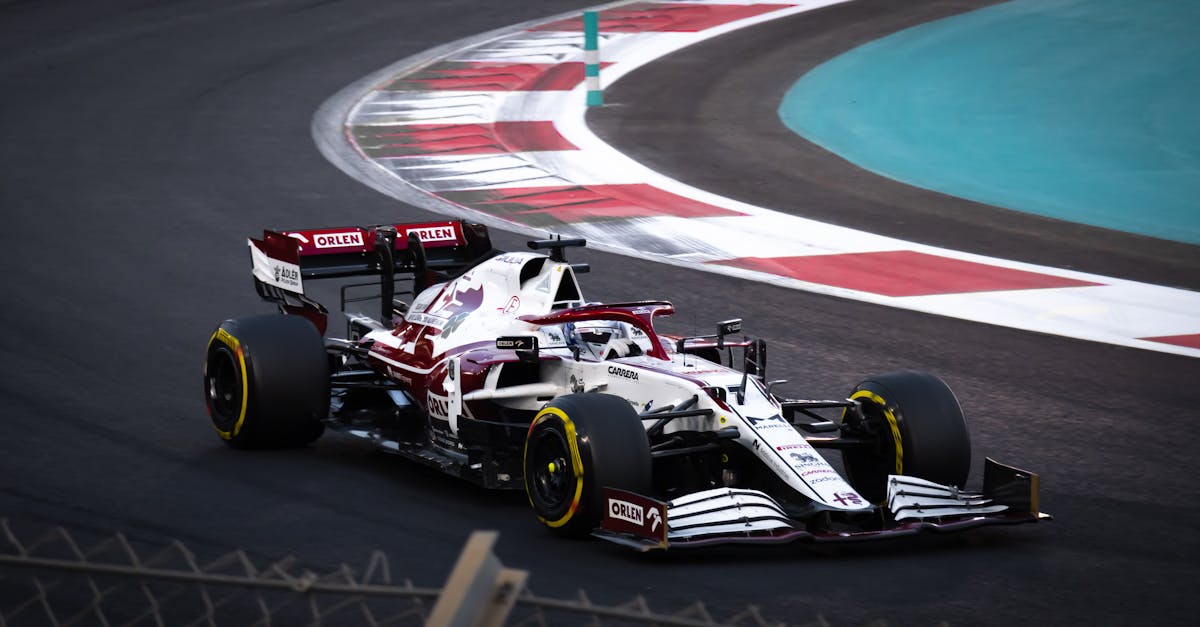
Formula 1’s return to Sepang after a nine-year absence was always going to be a step into the unknown, but few expected the unknown to be quite this literal: a circuit so weathered by the tropics that Friday practice unfolded four and a half seconds off Pirelli’s own simulations. Layer onto that a smouldering political subplot from Baku, a Ferrari team principal publicly acknowledging he’s “taken a beating”, a tax inquiry dragging Valtteri Bottas into an uncomfortable spotlight, and the ongoing fallout between Lando Norris and Franco Colapinto, and you have a paddock where the on-track unpredictability is almost the least complicated story of the week.
Sepang’s rogue surface is the real headline act
The defining theme out of Friday in Malaysia wasn’t a lap time, a strategy call or a driver conflict — it was the tarmac itself. Nine years of tropical heat, humidity and neglect have left the Sepang International Circuit in a state that caught even Pirelli off guard, with practice running some 4.5 seconds slower than the Italian manufacturer’s pre-event modelling. That’s not a rounding error; that’s a circuit behaving like a different place entirely, and it reshapes almost every strategic assumption teams had walked in with.
Max Verstappen’s approach to the opening session reflected exactly this uncertainty. Rather than running a conventional programme, Red Bull structured Friday around finding out what the surface actually does to tyres and aerodynamic platforms, rather than chasing representative lap time — an entirely reasonable response when the baseline data is this unreliable. It’s a reminder that in modern F1, where simulation tools are normally trusted to within tenths, a circuit that defies the model entirely becomes the greatest leveller on the calendar. Teams with strong correlation between real-world and simulated data suddenly find themselves guessing alongside everyone else.
Mercedes’ upgrade dilemma
George Russell’s concern is particularly instructive here. Mercedes arrived with a meaningful upgrade package, the sort of development teams pin hopes on to close a gap or consolidate an advantage. But a rough, low-grip, high-degradation surface doesn’t necessarily reward the fine aerodynamic gains an upgrade is designed to deliver — if the car is sliding and generating heat in ways nobody designed for, the marginal benefits of new floor or sidepod work can simply get swallowed by the chaos. Russell’s unease speaks to a wider truth: upgrades are optimised for conditions teams expect, and Sepang this weekend is actively hostile to that kind of precision engineering.
Why this matters beyond one weekend
There’s also a regulatory wrinkle worth flagging — the FIA having to confirm its stance on potential penalties connected to the Bahrain Grand Prix running at this Malaysian venue, with drivers facing harsher consequences than usual given the conditions. When a track surface degrades tyres and components faster than anticipated, the margin between a legal and an illegal car, or a defendable move and a dangerous one, narrows. It puts extra onus on race direction to apply common sense, and extra onus on teams to build in conservatism they wouldn’t normally need. For a one-off venue unlikely to host a recurring date in this form, it’s a fascinating one-weekend puzzle — but it’s also a useful case study in how fragile F1’s finely tuned simulation culture really is when the fundamental input data is wrong.
Red Bull’s team orders calculus in Baku
The decision not to impose team orders on Max Verstappen in Azerbaijan, with Laurent Mekies facing pointed questioning over how that call affected Isack Hadjar, is a quietly significant data point about where Red Bull sees itself right now. Team orders are never just a sporting decision — they’re a statement of priorities, and declining to use them tells you something about how the team is balancing its championship calculus against the development of its second driver.
There’s an obvious reading: with Verstappen still a factor in title contention, Red Bull would ordinarily have every incentive to maximise his result at a teammate’s expense. That they didn’t suggests either the points equation didn’t justify the intervention, or there’s a deliberate effort to let Hadjar race on merit and build confidence rather than be subordinated early in his Red Bull tenure. Both explanations carry weight, and neither is damning — but the fact Mekies was pushed hard on it in the paddock shows how sensitive the subject remains, especially given Red Bull’s history with explosive driver pairings. Teams that have burned a second driver’s morale in the past (and Red Bull’s own history offers precedent) tend to pay for it in the medium term through reduced motivation, trust issues, and occasionally through drivers looking for the exit. Mekies choosing restraint here, even under scrutiny, looks like a deliberate attempt to avoid repeating old mistakes.
Norris, Colapinto and the question of speaking freely
The coverage of the Norris-Colapinto incident from Baku has evolved into something bigger than a single clash of opinions. Colapinto’s response — that Norris “went too far” — keeps the story alive, but the more consequential strand is the broader debate about whether drivers should be discouraged from speaking candidly for fear of the social media backlash that follows.
This is where GP Headlines lands firmly on one side: drivers absolutely should be free to give honest assessments, including critical ones, of incidents involving other competitors. That’s part of being a credible voice in a results-driven, often ruthless sport. The problem isn’t Norris voicing an opinion — drivers have always done this, and the sport is more interesting and more honest for it. The problem is the disproportionate, often abusive response that can follow online, which risks creating a chilling effect where drivers retreat into bland media-trained platitudes purely to avoid becoming a target. If F1 wants authentic, compelling characters — and it clearly does, given how much the sport’s recent commercial growth has been built on personality and rivalry — it cannot simultaneously punish drivers, through the court of social media, for showing exactly that authenticity.
Colapinto, for his part, is entitled to push back on a characterisation he feels is unfair; that’s normal paddock business and part of a young driver establishing where his lines are. What matters is that the disagreement stays there — in robust, adult exchanges between competitors — rather than being hijacked by pile-ons that serve no one.
Vasseur’s defence of his drivers — and himself
Fred Vasseur’s comments about the importance of protecting his drivers, delivered against a backdrop of mounting questions over his own position at Ferrari, read as a man fighting on two fronts simultaneously. Ferrari’s season has generated enough underperformance and internal noise that Vasseur’s future has become a legitimate topic rather than paddock gossip, and his acknowledgement of “taking a beating” is a rare moment of candour from a senior team principal about the pressure of the job.
There’s something worth respecting in a team boss prioritising driver protection even while his own position is under the microscope — it suggests a leader thinking about team culture rather than purely self-preservation. But it also invites an obvious question: if Vasseur is spending political capital shielding his drivers from external criticism, who is shielding him? Ferrari’s scrutiny culture is practically a given — it comes with the job, has existed for decades, and isn’t going away regardless of who sits atop the technical and sporting structure. The real test of Vasseur’s tenure won’t be whether he survives individual flashpoints like this one, but whether Ferrari’s underlying competitiveness improves enough to make the scrutiny recede on its own. Results, not rhetoric, decide these situations in Maranello — they always have.
Bottas and the Imola tax inquiry
Valtteri Bottas clarifying his stance after comments about the tax situation around Imola — now folded into a wider story of Italian tax police targeting F1 drivers — is a reminder that the sport’s financial arrangements occasionally collide with national fiscal politics in ways that have nothing to do with performance on track. Bottas evidently felt his original remarks were being read in a way he didn’t intend, hence the clarification, and that’s understandable: tax residency and arrangements for high-earning sportspeople based partly in Italy is a loaded subject, and any comment risks being amplified beyond its original context.
The wider story — Italian authorities taking a direct interest in F1 drivers’ tax affairs — is one GP Headlines will be watching, not because of any suggestion of wrongdoing by Bottas specifically, but because these inquiries have a habit of rippling outward across a paddock full of high-net-worth individuals with complex residency situations. It’s a storyline that sits outside the normal rhythm of a race weekend, but one with the potential to become genuinely significant if it widens.
On the radar
- Andretti’s Formula E leadership change — a notable shift in team principal duties for one of the series’ most recognisable figures, worth tracking for what it signals about Andretti’s wider motorsport ambitions beyond its forthcoming F1 entry.
- Mercedes’ upgrade read-across — whether Sepang’s unusual surface masks or confirms genuine progress will only become clear once the team returns to a more conventional circuit.
- Verstappen’s championship mathematics — Red Bull’s Baku team orders restraint will be worth revisiting if the title fight tightens further.
- Hadjar’s development trajectory — how Red Bull manages its second seat against Verstappen remains one of the quieter but more important storylines of the year.
- FIA’s penalty guidance at Sepang — how strictly it’s applied this weekend could set a precedent for one-off or unconventional venues in future.
- Vasseur’s medium-term position — Ferrari’s next few results weekends will matter far more than any individual comment made under pressure.
The takeaway
Strip away the noise and this week’s real story is control — or the lack of it. A circuit nobody can accurately simulate, a team orders decision made under scrutiny, drivers navigating the line between honesty and backlash, and a team principal managing pressure from both outside and within. None of these are crises in isolation, but together they capture a sport wrestling, as ever, with the tension between unpredictability and the control everyone in the paddock is paid to impose on it.