
Leclerc Breaks Contract Silence to Deny Number One Status at Ferrari
Four days after spinning Lewis Hamilton in Las Vegas, Charles Leclerc said his contract gives him no priority, a public denial that makes Ferrari's undisclosed new rules of engagement harder to enforce.
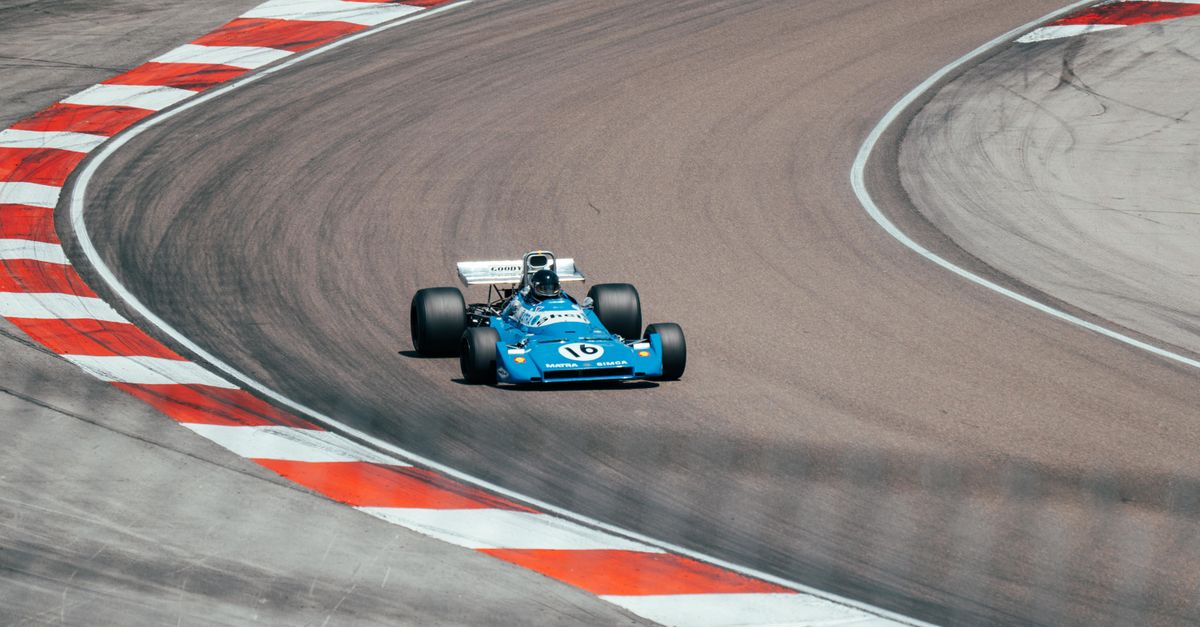
Charles Leclerc used Thursday’s FIA press conference at the Lusail International Circuit to deny that his Ferrari contract makes him the team’s number one driver. He took the unusual step of discussing the terms of his deal in public. The denial came four days after he spun team-mate Lewis Hamilton during the Las Vegas Grand Prix, the latest in a run of clashes between the pair. Leclerc said Ferrari had agreed new rules to stop it happening again, but that he was not allowed to say what they are.
Why Leclerc broke a near-universal silence
“I normally never disclose what I have in my contract, but I think this one is an important one to speak about,” Leclerc said, before dismissing the idea that his deal grants him priority over Hamilton. Drivers almost never discuss their contracts. The terms are commercially sensitive, they usually involve confidentiality obligations to sponsors and teams, and any detail a driver offers invites follow-up questions he has no wish to answer. Leclerc has been at Maranello since 2019 and has guarded that line as carefully as anyone.
He broke it because the alternative had become worse. The theory he was rebutting is that the Las Vegas incident, and the earlier ones, were the behaviour of a driver who believes the team belongs to him. Autosport and Motorsport.com both report that Leclerc was furious at people questioning his integrity and his love for Ferrari. For a driver whose public identity is bound up with the Scuderia, that accusation clearly landed harder than any criticism of his racecraft.
The denial has a consequence he may not have weighed. If there is no number one at Ferrari, hierarchy no longer explains the collisions. What remains is two equally ranked drivers repeatedly failing to share the same piece of track, and a team that has not yet found a way to stop them. Leclerc has defended his reputation by putting the problem squarely on Ferrari’s process.
Las Vegas, and a fix that had already failed
The numbers from Las Vegas show the cost. Leclerc and Hamilton started 10th and 11th, one directly behind the other, which put them in the same pack of midfield traffic from the first corner. Hamilton still finished seventh. Leclerc came home 10th with a single point. Ferrari left Nevada with seven points on a night when Max Verstappen won for Red Bull and McLaren took 33 from Lando Norris’s second place and Oscar Piastri’s charge from 17th on the grid to third.
The more significant admission came in Leclerc’s comments reported by RaceFans. He accepted that Ferrari’s previous efforts to prevent clashes between its drivers had failed, and said: “We need to find another solution.” The phrase “another solution” matters. Ferrari had already intervened after an earlier and costly collision between the two, and whatever it put in place did not survive the next race weekend. The new arrangement is therefore Ferrari’s second attempt in a matter of weeks, and the team’s credibility on intra-team management now depends on it working at the first time of asking.
The rules nobody will describe
Neither driver would reveal the content of the new arrangement. Leclerc said he was “not allowed” to. Hamilton, according to RacingNews365, was equally guarded after what was described as a crunch round of talks. The one detail he volunteered was that the pair remain “free to race”, and he said he was confident they would “figure it out”.
Those two positions are not identical. Hamilton’s message stresses freedom and trust between experienced drivers. Leclerc’s implies that trust has been tried and found wanting, and that something more structured is needed. Both can be true if the new rules govern how they race rather than whether they race: perhaps clearer limits on contact, or defined moments when the pit wall takes control. The public, though, has no way of knowing.
There is a sound reason for keeping such rules private. Published rules invite rivals to exploit them, and they turn every wheel-to-wheel moment into a referendum on compliance. But secrecy has a cost too. Every future skirmish between the two will be judged against a code that nobody outside the garage can see, and the drivers will judge each other the same way. When one believes the other has broken an unwritten understanding, the row tends to be worse than the original collision.
Leclerc has seen this before. At Sochi in 2019 he gave Sebastian Vettel a tow at the start under a pre-race agreement that Vettel would return the place. Vettel did not, Ferrari reshuffled them through pit strategy, and the bad feeling ran on for weeks. Four races later the two collided at Interlagos and both retired. Private deals at Ferrari have a poor record of holding under racing pressure.
Hamilton knows the other side of this from Mercedes. His rivalry with Nico Rosberg produced the Spa collision in 2014, the first-lap double retirement in Barcelona in 2016 and the last-lap contact in Austria weeks later. Mercedes responded with rules of engagement that were tightened each time and backed by an explicit threat of team orders. The difference was that Mercedes was fighting for championships, which gave management leverage. Ferrari’s leverage at the end of 2026 is weaker.
Third place, and second for the team
The championship picture explains why the timing is so awkward. Andrea Kimi Antonelli’s 98-point lead over Verstappen is beyond reach with two rounds remaining, and Mercedes’s 666 points put the constructors’ title out of Ferrari’s range. What remains for Ferrari’s drivers is a fight for third.
| Position | Driver | Team | Points |
|---|---|---|---|
| 3 | Lewis Hamilton | Ferrari | 267 |
| 4 | George Russell | Mercedes | 264 |
| 5 | Lando Norris | McLaren | 264 |
| 6 | Charles Leclerc | Ferrari | 250 |
Hamilton holds third by three points. Leclerc is 17 behind him and 14 behind Russell and Norris, close enough to believe that third is still possible over the Qatar weekend and the season finale. Both Ferrari drivers have a single win this season. Both have a personal claim to finishing as the team’s leading driver, and every point one takes off the other helps Russell and Norris, who sit between them.
The team’s interest points the other way. Ferrari sits second in the constructors’ standings on 517 points, 77 clear of Red Bull and 86 clear of McLaren. That is a comfortable margin, but it is not mathematically safe, and Las Vegas showed how quickly it can erode: Red Bull outscored Ferrari by 18 points there, and McLaren did so by 26. Another weekend of Ferrari’s drivers taking points off each other while Verstappen wins would make the final round more uncomfortable than it needs to be.
That is the bind. Rules of engagement work best when individual and team goals align. In these last two races they diverge, and both drivers have now said publicly that they stand on equal terms.
Why the denial raises the stakes in Qatar
Leclerc’s contract disclosure was meant to close a question about his character. Its practical effect is to narrow Ferrari’s options. Having heard one of its drivers state that his contract confers no priority, the team cannot easily issue an order favouring him without appearing to contradict him. It cannot favour Hamilton without seeming to confirm the suspicion that Leclerc’s status was always informal rather than contractual. Equal treatment is now the public baseline, and the new rules have to deliver it in full view.
Lusail is a demanding place to test them. It is fast and flowing, with long, high-speed corners where following closely is costly and a lunge carries real risk. A clean race there, with the two cars either separated by strategy or racing hard without contact, would go a long way towards proving that the second fix has worked where the first did not.
The more important judgement will come over the winter. Ferrari has been trying to manage this rivalry one incident at a time, with arrangements that stay private and are revised after each failure. If the pair touch again in Qatar or at the final round, that approach will have run its course. The team will then need to begin 2027 with a written, enforceable policy that both drivers accept before the first race, rather than another solution negotiated behind closed doors after the damage is done.