
Hadjar Shrugs Off Seat Threat, but Red Bull's Second Car Has a Long Memory
Isack Hadjar says he is not threatened by the drivers chasing his Red Bull seat, but history suggests a Brazilian podium buys little security in F1's most unforgiving drive.
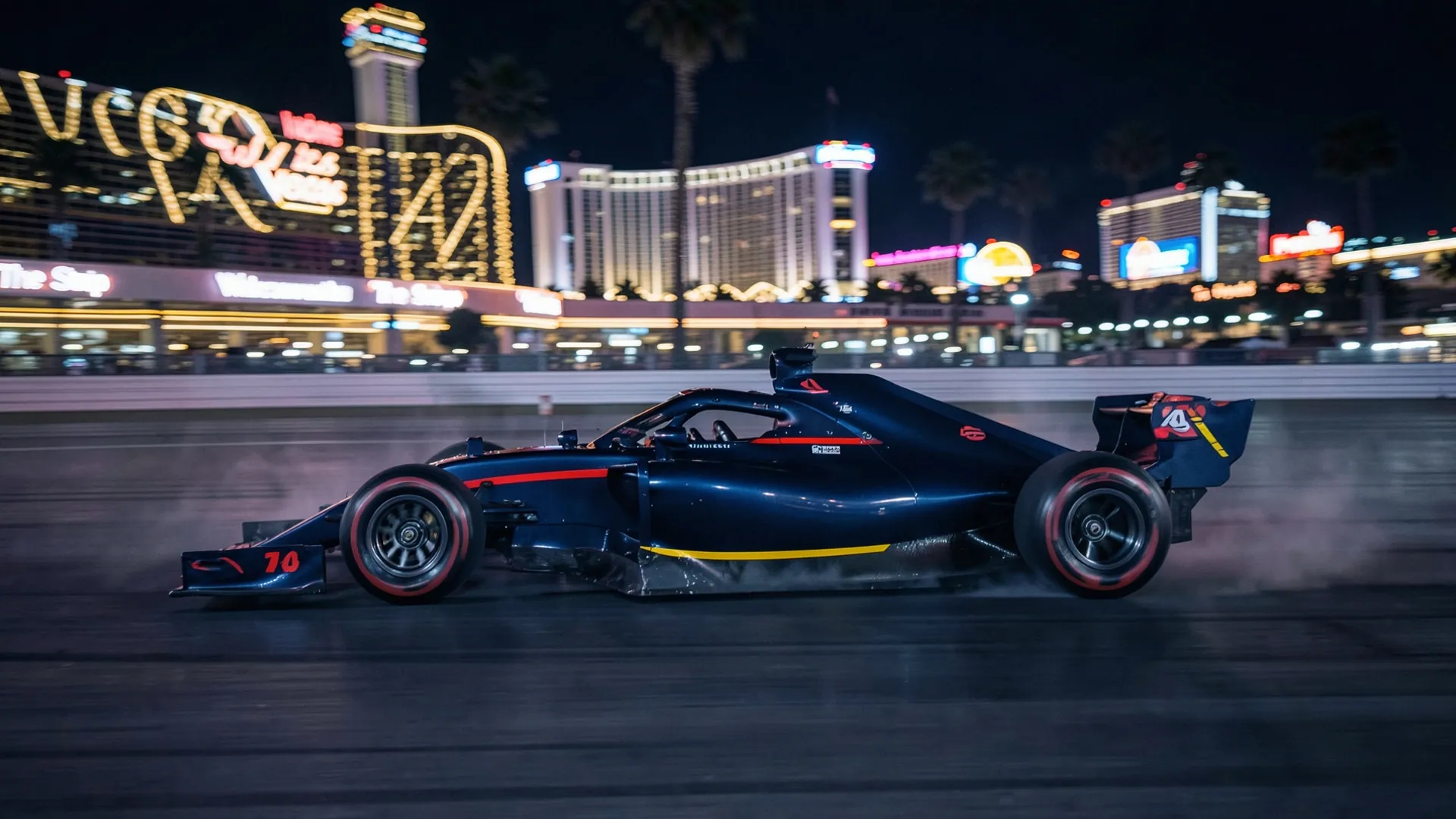
Isack Hadjar has insisted he does not feel threatened by the drivers who covet his seat alongside Max Verstappen, after finishing third in Brazil and ahead of this weekend’s Las Vegas Grand Prix. According to RacingNews365, the Frenchman also said he was happy for his former team-mate Liam Lawson, while making it clear he sees no reason to look over his shoulder. The confidence is understandable after a podium, but it sits uneasily with the history of a drive that has ended more careers than it has made.
Third place from fifth, overshadowed from 21st
On paper, Interlagos was one of Hadjar’s better afternoons of the season. He started fifth, finished third and banked 15 points. He also beat both Mercedes cars, including the champion-elect Andrea Kimi Antonelli, who started second and slipped to fifth. It was a tidy, mistake-free drive at a circuit that punishes anything less.
The trouble for any Red Bull second driver is that he is never judged in isolation. Verstappen started 21st and finished second, one place ahead of his team-mate. A driver who out-qualified Verstappen by 16 places still crossed the line behind him. Within Red Bull, the conversation after a weekend like that tends to be about what the lead car achieved rather than the second car’s podium.
That is the structural problem Hadjar inherited. His results are measured against a four-time world champion who routinely extracts more from the car than anyone else has managed. Verstappen’s recovery in Brazil showed why the yardstick is so brutal: if the car is quick enough to go from 21st to second, the team will ask why the other one did not win from fifth.
There was another detail on that grid that Red Bull will have noted. Lawson qualified third in the Racing Bulls car, two places ahead of Hadjar. He faded to seventh in the race, but on Saturday the junior team’s driver put together a lap that Red Bull’s own second driver could not match.
A seat that has consumed six drivers since 2016
Hadjar’s defiance has to be read against a decade of precedent. Daniil Kvyat lost the seat four races into 2016 to make way for Verstappen. Pierre Gasly was demoted after 12 rounds of 2019. Alexander Albon lasted until the end of 2020. Sergio Pérez survived longest, winning races and helping Red Bull to two constructors’ titles, yet was still let go after 2024 when his form collapsed. Lawson was moved back to the junior team after only two races of 2025, and Yuki Tsunoda, who replaced him, did not keep the drive for 2026.
The pattern is not simply that Red Bull is impatient, although it often has been. Its cars have repeatedly been developed around Verstappen’s preferences: a sharp, pointy front end that he can exploit and most others find unnerving. A driver who struggles with that balance has little time to adapt, because the team’s decision-makers have shown they will act mid-season when they feel the numbers justify it.
Hadjar has already outlasted Lawson’s tenure several times over, and he has done so without the public crisis that engulfed Gasly and Albon. That counts for something. However, the fact that he has felt compelled to say he is not threatened tells its own story. Drivers whose seats are secure are rarely asked the question.
What 122 points are worth to Red Bull
Hadjar sits eighth in the drivers’ championship with 122 points and no wins. Verstappen is second on 279, 157 points clear of his team-mate. In other words, Hadjar has scored a little under 44 per cent of Verstappen’s tally with three rounds still to run.
By recent standards, that is not a disaster. In 2024, Pérez finished with 152 points to Verstappen’s 437, roughly 35 per cent. On that crude measure, Hadjar is already doing a more competitive job than the man whose departure began this cycle of replacements. He has also comfortably outscored both Racing Bulls drivers, with Lawson on 89 and the rookie Arvid Lindblad on 38.
The more pressing measure is the constructors’ championship. Mercedes has the title wrapped up on 652 points, and Antonelli’s 111-point lead over Verstappen has effectively settled the drivers’ crown too. Behind them, the fight that still matters for Red Bull is for third:
| Position | Team | Points | Gap to car ahead |
|---|---|---|---|
| 2 | Ferrari | 510 | 142 |
| 3 | Red Bull | 415 | 95 |
| 4 | McLaren | 398 | 17 |
Seventeen points is barely more than a third-place finish is worth, and McLaren has the momentum after Lando Norris won from pole in Brazil with Oscar Piastri sixth. Piastri, on 152 points, has outscored Hadjar this season despite enduring a difficult year by his own standards. If Red Bull holds third, it will largely be because Verstappen has outscored Norris; if it loses it, the inquest will focus on the second car.
That is why Hadjar’s next three weekends carry real weight. Third place in the constructors’ standings is worth meaningful prize money, and a strong contribution from the second driver is precisely what Red Bull has lacked in recent years. A run of results like Brazil would strengthen his case more than any statement to the media.
Lawson, Lindblad and the queue at the door
The most obvious contenders for the seat sit at Racing Bulls. Lawson is ninth in the standings on 89 points, a respectable return after the blow of being demoted after two rounds in 2025. His rebuilding job has been quietly impressive, and his qualifying pace in Brazil will not have gone unnoticed. Hadjar’s warmth towards his former team-mate is generous, and it also reflects how closely their careers have been intertwined.
Lindblad represents the longer view. He has scored 38 points as a rookie and finished 11th in Brazil after starting 18th, just missing the points. He is not an immediate candidate, but Red Bull’s junior system has always been designed as a conveyor belt of talent, and the existence of a promising teenager is itself a form of pressure on whoever occupies the senior seat.
Then there are the drivers outside the Red Bull system who, as RacingNews365 reports, would happily take the drive. A seat alongside Verstappen in a car capable of podiums will always attract interest, whatever its reputation.
Lawson’s own story offers the clearest warning. Two races into his Red Bull career, he was judged and found wanting before he had any meaningful chance to understand the car. Hadjar has had a full season. Red Bull’s management can no longer claim it lacks the evidence to judge him, and that cuts both ways. A strong finish would be hard to dismiss. A weak one would arrive at exactly the moment the team is weighing its options.
Three races to make the case for 2027
Hadjar’s composure is the right public posture, and his season merits more credit than the second Red Bull seat usually earns. He has scored more consistently than Pérez did in his final year, kept clear of controversy and delivered a podium at one of the calendar’s most demanding circuits. On balance, he has done enough to deserve continuity.
Deserving it and receiving it are not the same thing at Red Bull, however. Las Vegas, with its long straights and cold track, has historically been a weekend where tyre warm-up and confidence on the brakes separate team-mates sharply. If Hadjar can finish within touching distance of Verstappen there and help Red Bull hold off McLaren for third over the final three rounds, he will have given the team every reason to keep him. If he ends the season as the reason Red Bull drops to fourth, his assurance that he is not threatened will be tested by a team that has rarely hesitated before.