
Komatsu's 'Professionalism' Defence of Camara Call Leaves Hirakawa Questions Unanswered
Haas have replaced Ryo Hirakawa with Ferrari junior Rafael Camara for the Brazilian Grand Prix despite Hirakawa scoring in Mexico, and Ayao Komatsu's explanation raises as many questions as it answers.
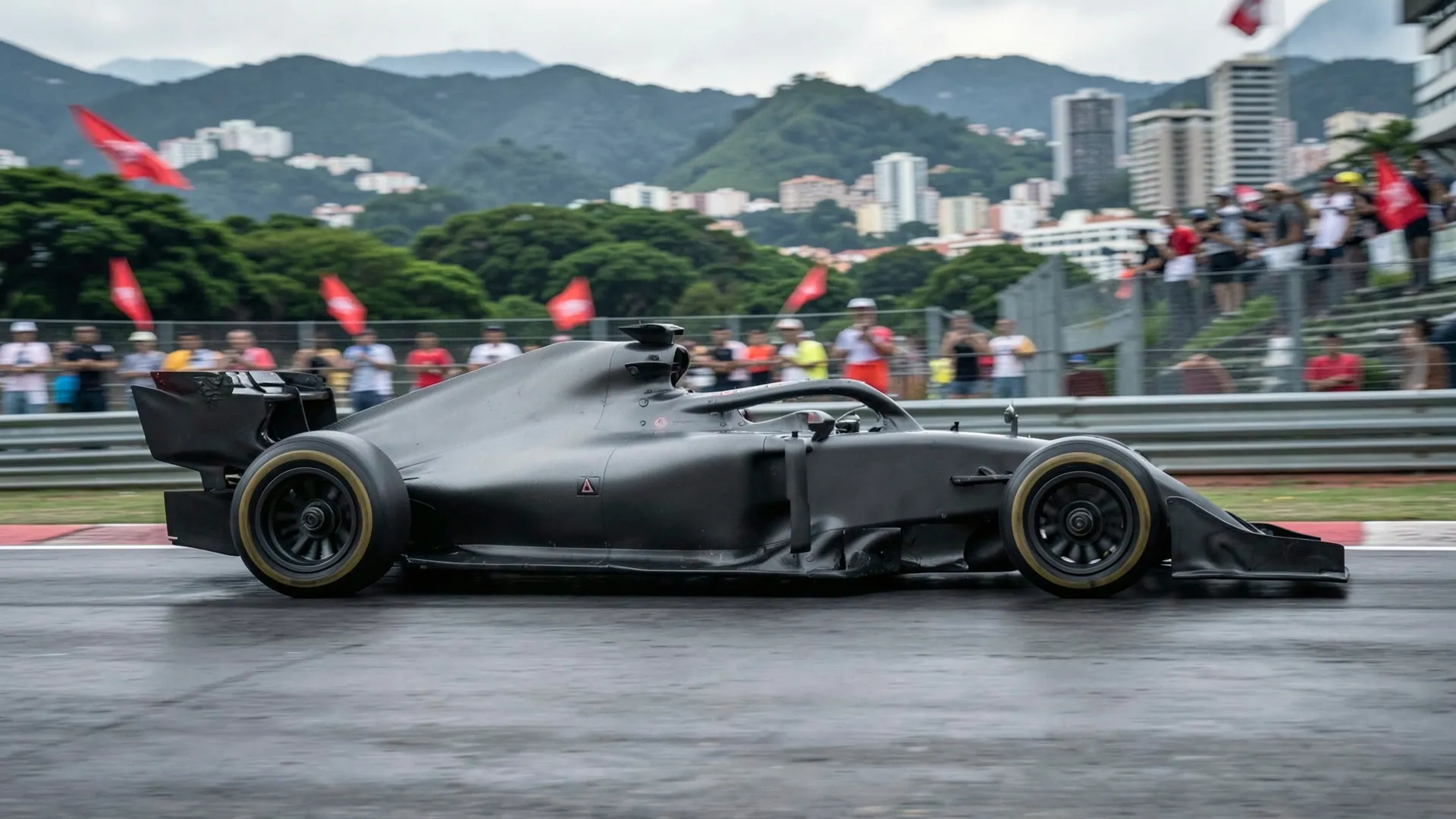
Haas team principal Ayao Komatsu has defended handing Rafael Camara his Formula 1 debut at this weekend’s Brazilian Grand Prix in place of Ryo Hirakawa, describing the decision as “purely based on professionalism”, according to Motorsport.com. The call means Hirakawa steps out of the car six days after scoring a point in Mexico City. Camara, a Ferrari junior, will race at Interlagos alongside Oliver Bearman as Haas fight to hold seventh in the constructors’ championship with four rounds remaining.
On its own, a team principal choosing a promising young driver for a race is unremarkable. The difficulty lies in the timing, the context and the word Komatsu chose to explain it.
A point that should have counted for more
Hirakawa’s afternoon at the Autódromo Hermanos Rodríguez was exactly what a team wants from a stand-in. He started 18th and finished 10th, gaining eight places and taking the last point on offer. He did it on a day when Bearman retired, so Haas left Mexico with something rather than nothing.
That single point matters more than its size suggests. Haas sit seventh in the constructors’ standings on 31 points, and Audi are directly behind on 27. Gabriel Bortoleto’s eighth place in Mexico was worth four points to Audi, which shows how quickly a margin of that size can disappear. Alpine are a distant sixth on 69, so seventh is the realistic ceiling for Haas. Williams, on 12, are the next threat from behind if things go badly wrong.
| Constructor | Points | Gap to Haas |
|---|---|---|
| Alpine | 69 | +38 |
| Haas | 31 | — |
| Audi | 27 | −4 |
| Williams | 12 | −19 |
Constructors’ positions are rewarded with prize money, and the difference between seventh and eighth is significant for a team of Haas’s size. With only Brazil and three further rounds left, every race is a chance to bank points or lose ground. Against that backdrop, removing a driver who has just shown he can bring the car home in the points is a choice that needs a clear rationale.
Why ‘professionalism’ is the wrong word
This is where Komatsu’s explanation runs into trouble. “Professionalism” is a poor word to defend this decision, because it suggests a judgement about conduct. Read literally, it implies that keeping Hirakawa would have been the less professional course, which is hard to square with what happened in Mexico. Hirakawa did his job. He kept the car out of trouble, made progress through the field and scored.
If Komatsu means that the team is honouring a prior arrangement, whether a commitment to Ferrari or a plan made before Mexico, that is a perfectly defensible position. Teams make promises, and keeping them is part of how F1 relationships work. The Ferrari connection is the foundation of Haas’s existence: power unit, gearbox and a steady flow of Maranello’s young drivers through the team’s practice sessions and race seats. Placing a Ferrari junior in a race seat is a familiar Haas move rather than a new one.
If the reasoning is about evaluation, that is defensible too. Ferrari will want to see how Camara copes with a full race weekend before deciding on his future, and a Grand Prix tells them far more than any simulator programme or practice outing. There is also an obvious appeal in a Brazilian making his debut at Interlagos, in front of his home crowd.
None of those are professionalism arguments, though. They are commercial, strategic and developmental arguments, and they are better for being stated plainly. By reaching for a word with moral weight, Komatsu leaves Hirakawa in an awkward position: a driver who performed well and lost his seat, under an explanation that sounds like a verdict on him.
Hirakawa is not some unproven junior. He is a Le Mans winner and world endurance champion with Toyota, the manufacturer that became Haas’s technical partner. His presence in a Haas race seat had a logic of its own, beyond simply filling a gap. Replacing him with a Ferrari junior has implications for how Haas balance those two relationships, and that balance is precisely what a vague explanation leaves unexamined.
Precedent says points rarely protect a stand-in
Formula 1 has seen this before, and recent history is not kind to substitutes who expect results to secure their place. Liam Lawson scored on his third start as a stand-in at AlphaTauri in Singapore in 2023 and still found himself without a 2024 race seat. A good weekend is evidence, not a contract. Teams make their seat decisions on longer horizons, and a single 10th place rarely changes plans that have already been made.
The more encouraging precedent for Camara is Bearman himself. Called up at short notice to replace Carlos Sainz at Ferrari in Saudi Arabia in 2024, Bearman finished seventh on debut. That performance did as much as anything to secure his Haas seat. Ferrari’s junior system has learned that throwing a well-prepared youngster into a race can produce a decisive answer quickly, and Camara now has the same kind of opportunity.
Lawson is relevant on the other side of the ledger too. He is now with RB, and his drive from 22nd on the grid to seventh in Mexico was one of the standout recoveries of the season. A substitute who is passed over does not always disappear. That should be some comfort to Hirakawa, but it does not make his situation this week any less frustrating.
The risk Haas are taking at Interlagos
Interlagos is a demanding place for a debutant. The lap is short, so qualifying gaps are compressed and a few hundredths can cost several grid places. The anticlockwise layout, the changes in elevation and São Paulo’s unpredictable weather all punish inexperience. Camara is talented, but he is being asked to learn a Formula 1 car’s behaviour in race conditions at one of the calendar’s least forgiving circuits.
The wider order also makes the task harder. Mercedes have dominated this season, with Andrea Kimi Antonelli on 380 points and nine wins, 119 clear of Max Verstappen. Below the leading quartet of Mercedes, Ferrari, Red Bull and McLaren, midfield points are scarce. In Mexico, three of the 10 points-paying places went to teams outside that group, and Hirakawa took one of them. Haas cannot assume a rookie will repeat that, and Audi, with Bortoleto racing at home and buoyed by Mexico, will be pushing hard to close a four-point gap.
There is a scenario in which Komatsu looks prescient. If Camara qualifies well, keeps the car clean and scores, the decision will be remembered as a shrewd piece of talent management that also served the team’s championship. Ferrari will have their answer, Haas will have their points and the questions over the explanation will fade.
There is an equally plausible scenario in which a rookie mistake or a quiet afternoon costs Haas ground while Audi score. Then the decision will be judged against Hirakawa’s Mexico result, and the word “professionalism” will be quoted back at the team.
What Komatsu owes his drivers
Komatsu has earned considerable credit since taking over at Haas for straight talking and for running the team with more stability than it had in previous years. That reputation is exactly why this explanation jars. The honest case for Camara is a reasonable one: Haas exist within Ferrari’s orbit, Ferrari need to evaluate their juniors, and a home Grand Prix is a sensible place to do it. Fans and drivers can accept that.
What is harder to accept is a framing that leaves a points-scorer looking as though he fell short of some standard. Hirakawa deserves a clearer account of why he is watching from the garage, and the team’s credibility depends on giving one.
The verdict on Camara will arrive on Sunday afternoon. The verdict on Komatsu’s decision will take longer. If Haas finish the season eighth, a point or two behind Audi, the Mexico result and the reasoning that followed it will be the first place anyone looks.