
Lawson's Mexico Qualifying Exclusion Shows How F1's 2026 Penalties Stack Too Heavily
Liam Lawson's exclusion from qualifying in Mexico City, on top of an existing grid penalty, shows how F1's sanctions pile up without regard to the scale of the offence.
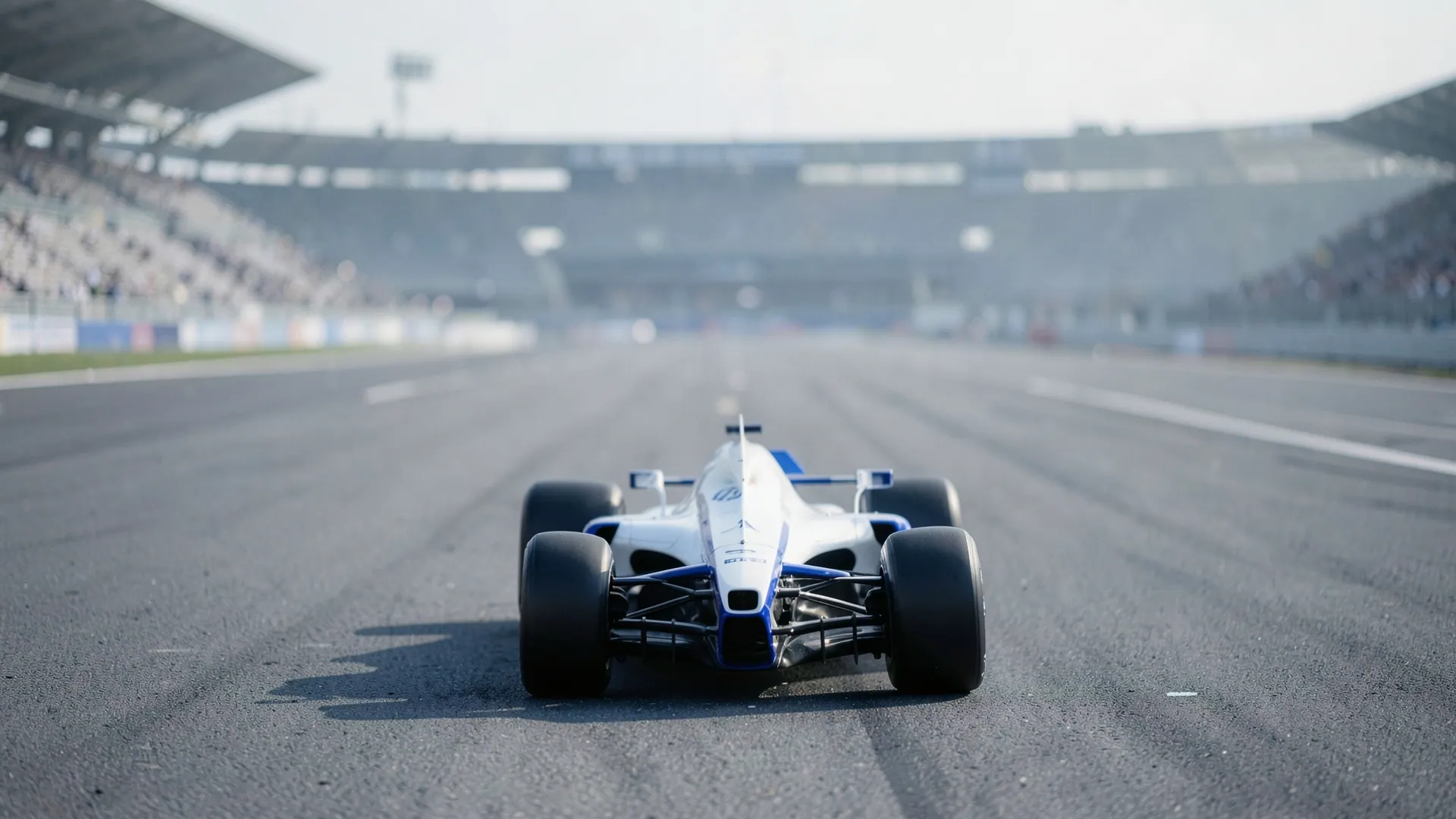
Liam Lawson was excluded from qualifying for the Mexico City Grand Prix on Saturday, a sanction that comes on top of a grid penalty he already faced. The RB F1 Team driver goes into today’s race at the Autódromo Hermanos Rodríguez with his Saturday work erased and his starting position decided by the stewards rather than the stopwatch. Crash.net has published the revised grid. The wider question is whether the 2026 rulebook has the right tools to punish infringements in proportion to what they are actually worth.
Two penalties, one weekend
Each sanction can be defended on its own terms. The trouble is how they combine. A grid penalty is designed to be served from wherever a driver qualifies, and a strong lap limits the damage. Exclusion removes that lap entirely. Once both apply, nothing Lawson did on Saturday can soften the blow, and much of the damage is done before the lights go out.
That is why the decision has drawn criticism beyond the RB garage. RaceFans chose a reader’s view as its featured comment and presented the episode as another flaw in the 2026 regulations, with the commenter calling the rules “plain stupid”. The language is blunt, but the complaint behind it deserves attention. Nobody seriously disputes that Lawson’s car broke a rule. The real question is whether the rulebook can tell a breach that changes the competitive picture from one that does not, and respond to each accordingly.
Lawson has spent two years trying to prove a point. He was dropped by Red Bull after just two rounds in 2025. Since then he has built a steady case at RB, and he arrives in Mexico ninth in the drivers’ championship with 77 points, more than double the 38 of his rookie team-mate, Arvid Lindblad. He scored again in Austin last weekend, starting ninth and finishing ninth for two points. This is the record of a driver who gets the job done, and exclusion takes away the main thing he does well: turning a midfield car’s qualifying pace into points.
Why exclusion is the bluntest tool F1 has
Formula 1’s technical rules have long worked on a simple principle. A car is either legal or it is not. Performance gained, intent and the size of the margin generally do not come into it. The FIA has good reasons for this. If the stewards had to judge whether a breach was big enough to matter, every millimetre and every gram would become a negotiation, and teams would test the edge of the rules knowing a small overstep might be excused.
Recent history shows how consistently that line has been held. Lewis Hamilton was excluded from qualifying in Brazil in 2021 because his DRS opening exceeded the permitted gap. That came on a weekend when he also took a five-place grid penalty for an engine change, the closest precedent to Lawson’s situation. Hamilton and Charles Leclerc were both disqualified after the 2023 United States Grand Prix for excessive plank wear. George Russell lost victory at Spa in 2024 because his car was underweight. Hamilton and Leclerc were thrown out of the 2025 Chinese Grand Prix for plank and weight infringements respectively. In every case the punishment was the same, whether the breach had been worth a tenth or nothing at all.
Hamilton’s 2021 Brazil weekend is often remembered as proof that stacked penalties can be overcome, because he drove through the field and won. But he did it in a championship-contending Mercedes with a large pace advantage over most of the cars he had to pass. A midfield driver has no such margin. The same combination of sanctions that Hamilton turned into a highlight reel leaves a driver in Lawson’s position with very little chance of recovery.
The 2026 regulations sharpen this tension. The new power units split output roughly evenly between combustion and electrical power. Active aerodynamics have replaced DRS. Fuel is now governed by energy flow, and the cars are smaller and lighter, with tighter margins against the weight limit. Each of those changes brings parameters that must be measured and policed, and each is another way to fall foul of the rules. Scrutineering has more to check than ever. The penalties, however, are still largely the all-or-nothing options inherited from a simpler era.
What it costs Lawson and RB in the run-in
Austin showed how narrow the opportunity is for anyone outside the leading four teams. The top eight finishers at the Circuit of the Americas all drove for Mercedes, Ferrari, Red Bull or McLaren. Lawson took ninth and Pierre Gasly took tenth. Nico Hülkenberg was 11th, the first driver home without a point. For the midfield, a race weekend often comes down to two scoring places, and qualifying decides who is in position to take them.
Starting from the back in Mexico, Lawson has to get past the entire midfield just to reach those places. The circuit gives him some help. The run from the grid to Turn 1 is one of the longest on the calendar, and the slipstream on that straight creates opportunities on the opening lap. The thin air at roughly 2,200 metres also changes how cars handle and cool, which can disrupt the usual order. But a long first straight rewards cars that have room to use it, and a car in the last rows usually finds that room taken up by the traffic ahead.
The championship stakes are real, if modest. Lawson is 28 points behind Isack Hadjar for eighth and 35 ahead of Gasly in tenth. In the constructors’ standings, RB sits fifth on 102 points, 33 clear of Alpine with five rounds left including today. Each position in the constructors’ table is worth a significant sum in prize money, and a 33-point lead can shrink quickly if one team’s drivers keep scoring while the other’s start from the back. RB should still finish fifth. Even so, losing a weekend’s points because of how the penalties combined, rather than because of what happened on track, is the kind of setback that makes a manageable gap feel much less secure.
A sliding scale, not a softer rulebook
None of this means the FIA should relax technical compliance. A car that is underweight, has too much plank wear or deploys more energy than permitted has broken a rule designed to keep the competition fair. Those breaches should be punished hard, and exclusion remains the right answer when a team has gained an advantage the rest of the field could not.
The flaw is that exclusion is often the only answer available. The sporting regulations already accept graduated penalties elsewhere. Track-limits offences start with lap deletions and warnings before moving to time penalties. Licence penalty points accumulate before they lead to a race ban. Technical infringements in qualifying could follow the same pattern. If a breach affected one run, the stewards could delete the laps set in that condition. If an infringement had no measurable effect, they could impose a fixed grid drop. And where a driver is already serving a grid penalty, the stewards should be allowed to judge whether a second sanction is needed at all, rather than applying both automatically.
The FIA will argue that discretion invites inconsistency, and that is a fair point. But a proportionate scale with clearly published criteria is simply a more detailed rule, and it leaves far less to the stewards’ judgement than critics might fear. Football did not stop sending players off when it introduced the yellow card. It gained a way to punish lesser offences without treating them as the most serious ones.
The timing matters too. Andrea Kimi Antonelli leads Russell by 123 points with five rounds left, so the title could be decided very soon. That leaves the FIA and the teams the quieter part of the year to consider how sanctions should work in this new rules era. Lawson’s case is the ideal test: a midfield driver, a modest haul of points at stake and no title riding on the outcome. The FIA should write a graduated scale for technical infringements into the 2027 sporting regulations now, because the next time these penalties stack up, the driver affected may be fighting for the championship, and the sport will face a much louder version of this argument.