
Leclerc Sweeps Mexico Practice, but Long Runs Suggest Mercedes Still Hold Race Edge
Ferrari's new power unit upgrade put Charles Leclerc on top in both Friday sessions in Mexico City, yet Fred Vasseur's caution and the high-fuel running suggest Mercedes remain favourites for Sunday.
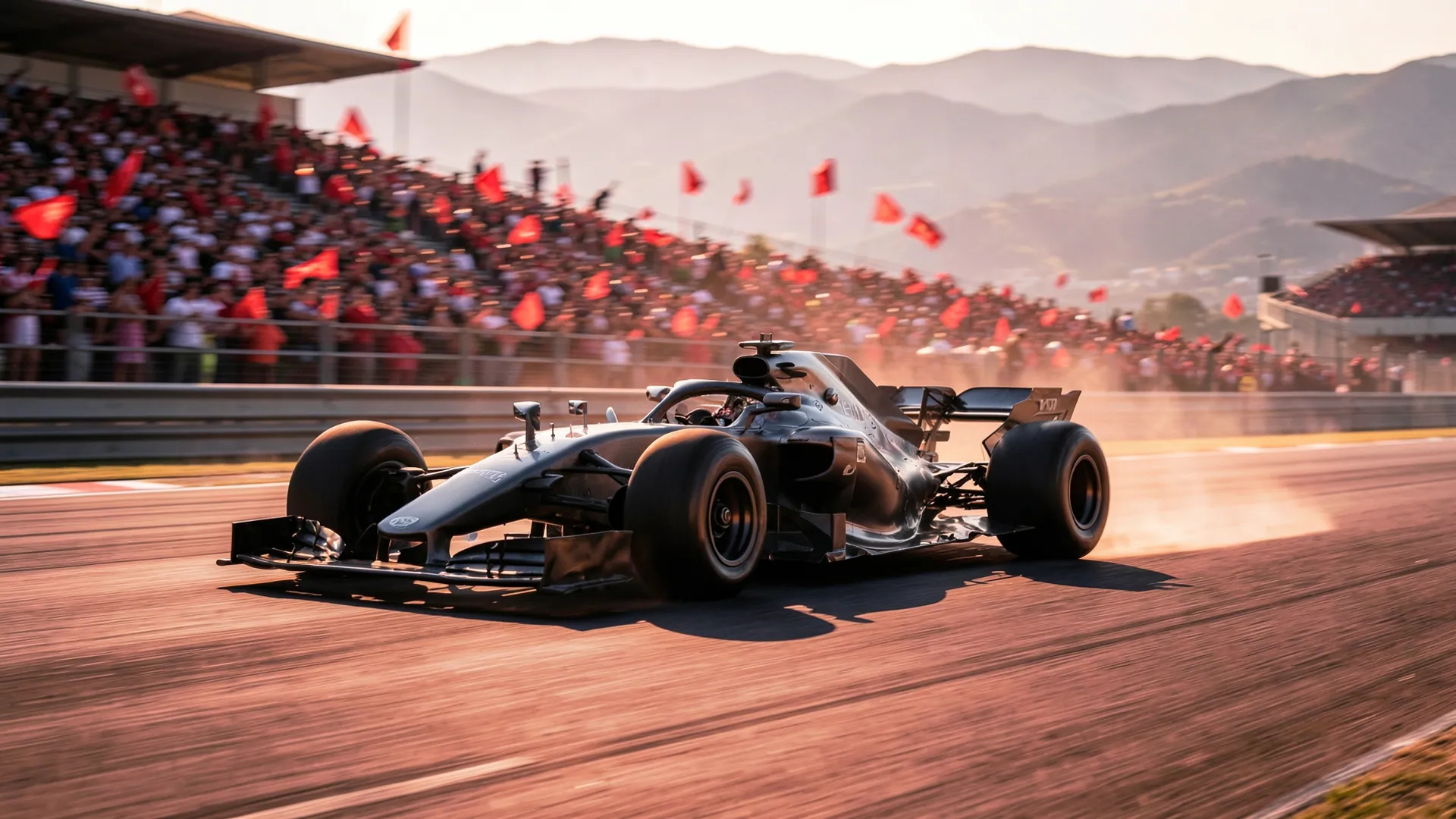
Charles Leclerc topped both Friday practice sessions for the Mexico City Grand Prix, setting a 1m18.128s in FP1 as Ferrari’s latest power unit upgrade made an immediate impression at the Autódromo Hermanos Rodríguez. Team principal Fred Vasseur spent the evening playing it down. Look past the headline times and he appears to have good reason.
Friday sweeps are easy to celebrate and easy to misread. The more useful questions are what the upgrade has actually changed, why this circuit would show it off, and whether the car that tops the timesheet on low fuel is the one that controls a race on Sunday. On the evidence of the long runs, Mercedes and Andrea Kimi Antonelli may still be the team to beat.
Why thin air flatters a stronger engine
Mexico City is a peculiar place to bring a power unit upgrade, and a revealing one. At roughly 2,200 metres above sea level, the air is around a fifth less dense than at a coastal circuit. That has three consequences, and all of them bear on engines.
The first is power. The turbocharger has to spin harder to force enough air into the combustion engine, which costs efficiency and generates heat. The second is cooling. Thinner air carries heat away less effectively, so teams open up the bodywork, accept the drag penalty and still have to nurse temperatures. The third is downforce. Even with the large wings the circuit demands, cars produce something closer to Monza levels of grip, which leaves them sliding and lightly loaded through the slow stadium section.
Under the 2026 regulations, where electrical deployment provides a far larger share of total output than before, the long main straight becomes a test of how well a car harvests and spends its energy over a lap. Altitude penalises only the combustion half of that equation, so any gain in efficiency on that side, or in how the energy budget is managed, is amplified here. RacingNews365 has reported that Ferrari’s upgrade is already paying dividends in Mexico, and the kilometre-plus run to Turn 1 is exactly where such a step would show most clearly.
Power unit development is tightly restricted under the current rules, so an in-season improvement of this kind is significant in its own right. A team does not get many chances to change the fundamentals of its engine during a year. If Ferrari’s step is genuine, it will matter well beyond this weekend.
The case for Vasseur’s caution
Motorsport.com reports that Vasseur deliberately lowered expectations after Friday’s running, and it is easy to see why a team principal would do so. Practice times are a poor guide for structural reasons that apply every weekend, and with particular force in Mexico.
Fuel loads and engine modes vary from team to team and from run to run, and nobody publishes them. A car that tops the timesheet may simply have been the lightest or the most aggressively mapped at the moment the track was quickest. The Mexico surface also changes considerably over a weekend. It is rarely used, often dusty and starts out slippery, so grip improves rapidly as rubber goes down. Times set on Friday describe a circuit that will not exist by Sunday afternoon.
The more telling detail is in the high-fuel work. PlanetF1’s analysis of the long runs suggests the picture is much less flattering to Ferrari than the single-lap order implies, with Mercedes looking stronger once the cars were heavy and the tyres were wearing. That fits the rest of the season. Mercedes have won 12 of the 18 grands prix, and Antonelli arrived in Mexico off the back of pole position and victory in Austin, his ninth win of the year.
Race pace in Mexico is largely about tyre management. With so little downforce, cars slide, the rubber overheats and the surface can grain the fronts, particularly in the early laps of a stint. A car that is kind to its tyres over 20 laps can comfortably beat one that is faster over a single lap. Ferrari’s upgrade helps on the straights. It does not obviously help the rear tyres through Turns 12 to 16, and that is where the race is likely to be decided.
What 2023 taught Ferrari about Mexico
Ferrari have been strong at this circuit for several years. That record is a reason for optimism and a warning at the same time.
In 2023 the team locked out the front row, with Leclerc on pole, and still finished the race well beaten. Max Verstappen won, Lewis Hamilton was second for Mercedes and Leclerc came home third. It was a typical example of the Ferrari problem of that era: a car that came alive on low fuel and new tyres but could not hold the same edge over a full race distance.
Since then the team has turned its Mexico speed into results. Carlos Sainz won from pole in 2024, with Leclerc on the podium in third, and Leclerc finished second behind Lando Norris last year. Those results show Ferrari can convert pace here into a strong Sunday. The 2023 race shows how quickly a Friday sweep and a front row can become a race lost to a car with better tyre management.
This season sits closer to the 2023 template than Ferrari would like. The team has won two grands prix out of 18, one each for Leclerc and Hamilton, and has generally been the clear second force behind Mercedes rather than a regular challenger. Austin was encouraging. Leclerc climbed from fourth on the grid to second and Hamilton finished fourth from fifth, but Antonelli still won from pole. Ferrari arrived in Mexico as the team closest to Mercedes, not as the team in control.
A nine-point scrap for second place
With five rounds remaining, both titles are close to settled. Antonelli leads the drivers’ championship on 365 points, 123 clear of team-mate George Russell. Mercedes have 607 points in the constructors’ standings, 133 ahead of Ferrari. Neither gap will be overturned by one strong weekend in Mexico City.
The value of Ferrari’s upgrade lies elsewhere. The fight behind Antonelli is extremely tight:
| Pos | Driver | Team | Points |
|---|---|---|---|
| 2 | George Russell | Mercedes | 242 |
| 3 | Lewis Hamilton | Ferrari | 241 |
| 4 | Max Verstappen | Red Bull | 236 |
| 5 | Charles Leclerc | Ferrari | 233 |
Nine points separate four drivers. Both Ferraris are in that group, and Russell’s eighth place in Austin, from sixth on the grid, kept the scrap wide open. A car that is quick on the straights at altitude could easily put both Ferrari drivers ahead of Russell on Sunday. Whether or not Mercedes win the race, that would reshape the order behind the runaway leader.
The constructors’ table tells a similar story. Ferrari’s 474 points leave them 119 clear of Red Bull and McLaren, who are tied on 355. Second place looks safe unless something goes badly wrong, but Ferrari will want to secure it early and show that the upgrade has moved them closer to Mercedes rather than merely further ahead of the chasing pack. With 2027 development now competing for resources, evidence that the power unit programme is heading in the right direction is worth almost as much as the points.
Antonelli’s route past a Ferrari front row
Expect Leclerc to be a strong candidate for pole. The upgrade suits the circuit, Ferrari’s single-lap pace looked genuine on Friday and the long run to Turn 1 rewards a car with straight-line speed. A front-row start would make Ferrari the team everyone has to pass in the first few hundred metres of the race.
The race itself still looks like Mercedes’ to lose. If the long-run data holds, Antonelli should be able to sit in Leclerc’s slipstream at the start, manage his tyres through the opening stint and use better degradation to gain at the stops. Vasseur’s caution reads less like modesty than a realistic assessment of a car that is faster over a lap than over a race.
The real measure of Ferrari’s upgrade in Mexico is whether both cars finish ahead of Russell, rather than whether Leclerc wins. If they do, the battle for runner-up becomes a straight contest between Hamilton and Leclerc over the final four rounds, and Ferrari’s engine step will have done its most important job.