
Verstappen and Epstein's Public Row Exposes Austin's Unsolved Bump Problem
The long-running complaints about Austin's bumps have become a public exchange between Max Verstappen and circuit owner Bobby Epstein, with Oscar Piastri warning of motocross-style conditions ahead of today's United States Grand Prix.
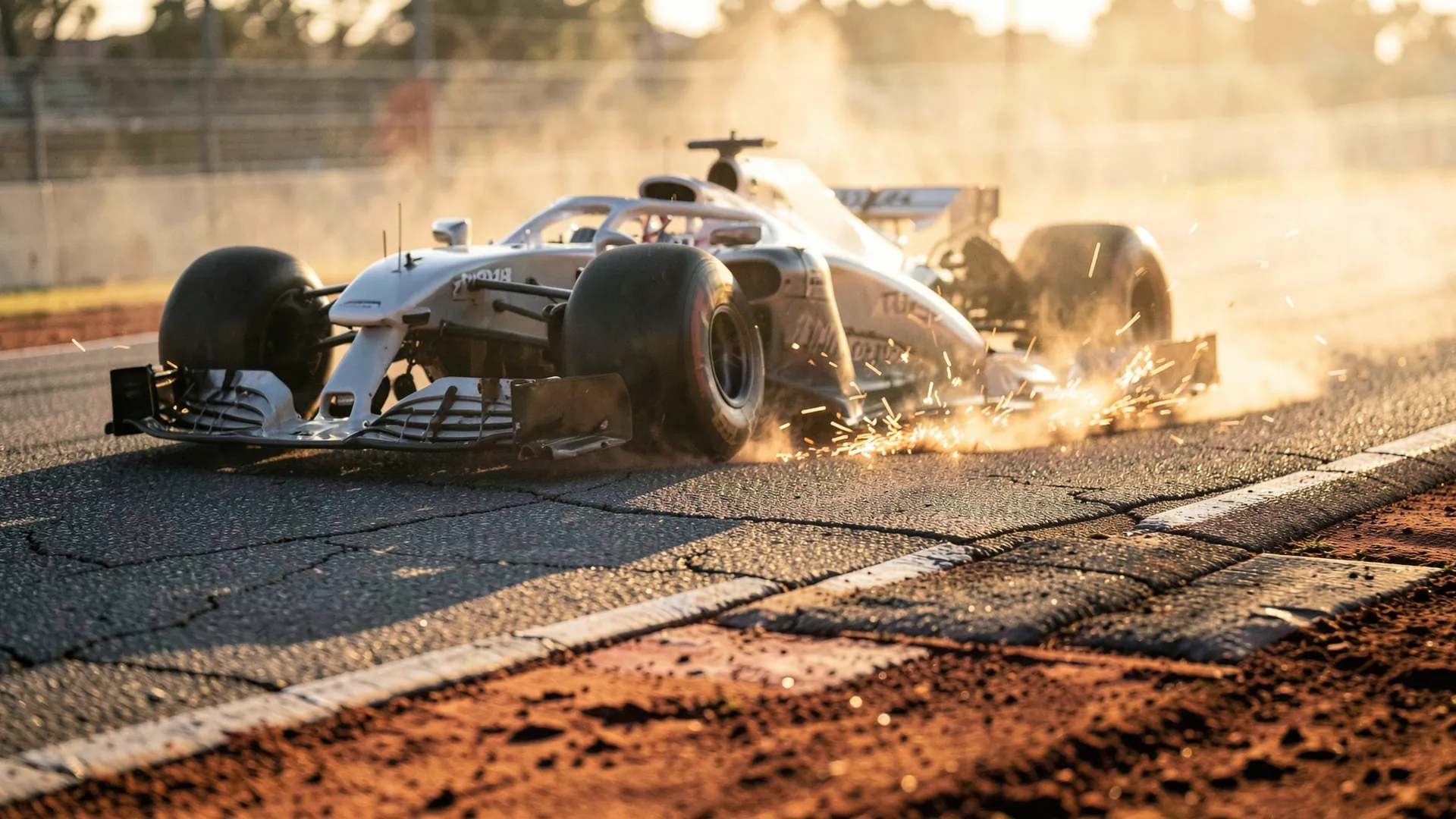
Max Verstappen and Circuit of the Americas chairman Bobby Epstein have traded public criticism over the state of the Austin track surface in the build-up to today’s United States Grand Prix. Verstappen criticised the bumps, Epstein hit back at the Red Bull driver, and Verstappen responded in turn. Oscar Piastri has added his own warning about one particularly severe bump, likening the experience to motocross.
Complaints about the surface at COTA are almost as old as the circuit itself. What is new this weekend is the tone. A technical grievance usually settled through the Grand Prix Drivers’ Association and the FIA’s circuit inspectors has become a back-and-forth between the sport’s most outspoken driver and the man who owns the venue.
How a surface complaint became a public row
The sequence matters. Drivers grumbling about Austin’s bumps on a Thursday is routine. Circuit owners usually absorb that criticism quietly, talk up whatever remedial work has been done and let the conversation move on once the cars are running. Epstein chose not to. As reported by Crash.net, he answered Verstappen directly, and by RacingNews365’s account Verstappen was unimpressed enough to fire back.
Once a promoter engages a driver in public, the exchange stops being about millimetres of asphalt and becomes about authority. Who gets to decide whether a Grade 1 circuit is fit for purpose: the people driving on it, the people who own it, or the governing body that licenses it? Formally the answer is the FIA, which homologates the track. In practice, the drivers’ view carries a great deal of weight, and Verstappen’s carries more than most.
Piastri’s intervention lends the complaint breadth. He is not a driver given to theatrics, and his comparison to motocross is the kind of image that sticks with fans and team principals alike. When a McLaren driver and a Red Bull driver, from teams separated by seven points in the fight for third in the constructors’ championship, are saying broadly the same thing, it becomes harder to dismiss the complaint as one man’s irritation.
Clay, heat and a circuit that will not sit still
The root of the problem lies underground. COTA was built on expansive clay soil, which swells when wet and shrinks when dry. Central Texas alternates between heavy rain and long, baking summers, so the ground beneath the circuit moves, and the asphalt moves with it. Bumps that are ground flat one year can reappear in a different form the next.
The circuit has not ignored this. After loud complaints in 2019 and again in 2021, sections of the track were resurfaced and bumps were ground down in the worst areas. Each round of work brought some relief, but none has delivered a permanent cure, because the cause is geological rather than a matter of maintenance.
COTA’s long-standing argument is that it is a multi-use venue, hosting MotoGP and other series alongside F1, and that every intervention involves trade-offs. Grinding a bump can change grip levels and create inconsistent patches. Full resurfacing is expensive, needs time to settle, and does not stop the clay from shifting again. MotoGP riders have raised their own concerns over the years, and what suits a two-wheeled machine on cold tyres is not always what suits a single-seater.
All of that is legitimate context. None of it changes the fact that a world championship venue staging its 14th Grand Prix is still dealing with the same fundamental complaint it faced at the start.
Why the bumps cost more than comfort
It would be easy to frame this as drivers disliking an uncomfortable ride. The real stakes are performance, legality and safety.
A big bump under braking can unload the tyres at the precise moment a driver needs maximum grip, inviting lock-ups and unpredictable behaviour. Through high-speed direction changes, it can unsettle a car mid-corner. The more a team has to raise ride height or soften the suspension to cope, the more performance it gives away elsewhere on the lap.
There is also a direct link to the rulebook. At the 2023 United States Grand Prix, Lewis Hamilton and Charles Leclerc were both disqualified after their cars’ skid blocks were found to have worn beyond the legal limit. The surface was not the only factor (the sprint format left teams little practice time to adjust set-ups), but the bumps played their part in grinding the planks down. A track that punishes the underside of the car turns a set-up question into a legality question.
The 2026 regulations stepped back from the extreme underfloor downforce of the previous generation, which in theory should let teams run their cars slightly higher and softer than they could between 2022 and 2025. That makes the volume of complaint this weekend more telling, not less. If drivers in this year’s cars are still describing the experience in motocross terms, the surface is not a marginal issue.
Verstappen has nothing to lose by speaking out
Verstappen’s willingness to take on a circuit owner publicly is not new. He has criticised the Las Vegas event’s emphasis on show over sport and has rarely softened his views to suit promoters. His standing in the championship gives him even more freedom this weekend.
He arrives in Austin fresh from victory in Singapore, where he converted pole into his second win of the season ahead of Leclerc and Andrea Kimi Antonelli. Yet he sits fourth in the drivers’ championship on 221 points, 119 behind Antonelli, with six rounds remaining including today’s race. The arithmetic has not quite closed the door, but Antonelli’s eight wins and the consistency behind his 340 points make a Verstappen title a near-impossibility. A driver chasing a championship might choose his battles carefully. A driver racing for wins and pride can say exactly what he thinks.
The constructors’ table raises the stakes further. Mercedes lead on 578 points, 134 clear of Ferrari, while McLaren (339) and Red Bull (332) are locked together in the fight for third. In a fight that tight, a lap-one incident or a mistake triggered by a bump can change the outcome. Piastri, seventh in the standings on 138 points and still without a win this season, has his own reasons to want a surface he can attack with confidence.
The fix belongs in the contract, not in the media
On substance, the drivers are right. A circuit that has hosted F1 since 2012 should not still be generating motocross comparisons from world championship drivers. COTA’s geological challenge is real, but it was known from the outset, and the sport’s tolerance for “we are working on it” has its limits.
Epstein’s frustration is understandable too. COTA took a risk on F1 in America when nobody else would, sustained the race through lean years and helped build the audience that made Miami and Las Vegas viable. Being told by a driver that his circuit is not good enough, after repeated spending on remedial work, will sting.
But answering Verstappen publicly was a misjudgement. It turned a solvable engineering problem into a personality clash, and personality clashes with Verstappen tend to have only one winner in the court of fan opinion. It also highlights how much COTA’s position has changed. When it was F1’s only American race, it held considerable leverage. With three US events on the calendar, that leverage has eroded, and every public row strengthens the case of those who argue the sport no longer needs Austin as much as it once did.
The sensible route is the unglamorous one. The FIA, F1 and COTA should agree a clear surface standard, a schedule for major resurfacing timed to avoid the worst of the Texan weather, and a requirement that the work is signed off well before next year’s event. Drivers should have a formal voice in that process through the GPDA, rather than relying on media sessions to force the issue.
Today’s race will be run on the track as it is, and the drivers will cope, as they always do. The real test comes in the winter. If COTA returns in 2027 with substantial resurfacing completed and verified, this weekend’s spat will be remembered as the push that finally solved an old problem. If the same complaints return next October, Austin’s place on the calendar will start to look far less secure than its history suggests.