
Ferrari's Austin Qualifying Slump Exposes a Tyre Window Too Narrow to Trust
Ferrari topped practice at the Circuit of the Americas but qualified only fourth and fifth, and Fred Vasseur's refusal to blame the tyres frames a pivotal race for Hamilton and Leclerc.
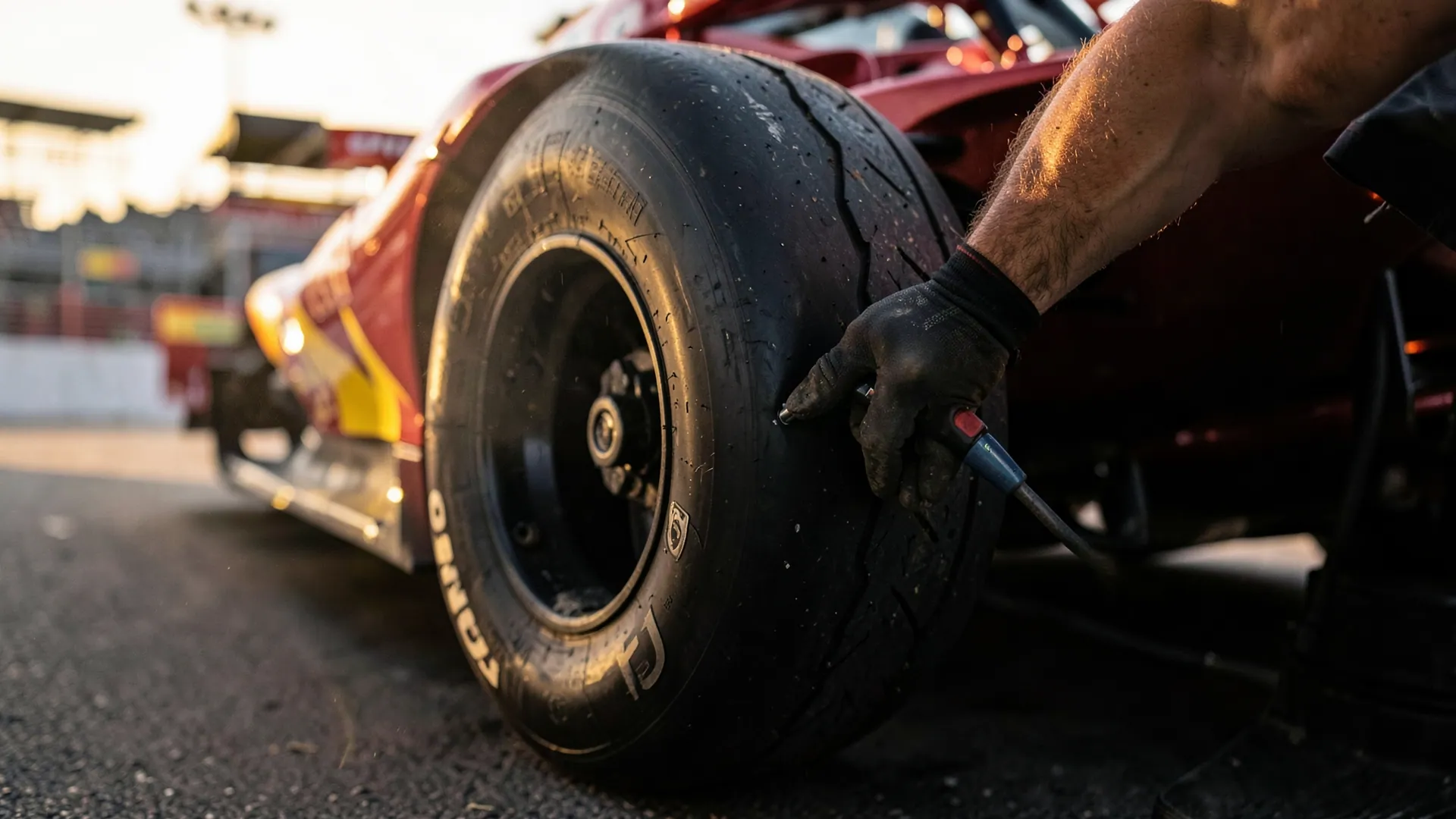
Ferrari qualified fourth and fifth for the United States Grand Prix at the Circuit of the Americas on Saturday, with Charles Leclerc ahead of Lewis Hamilton, after setting the pace in practice. The team had looked ready to contest pole. Instead, by PlanetF1’s reckoning, Leclerc lost around four tenths when it mattered, and the Monegasque’s untelevised radio verdict was brutal: “The tyres, for f*** sake, such a tiny window.”
Team principal Fred Vasseur has no interest in that explanation. According to RacingNews365, he dismissed the idea as “bulls**t”. The grid tells you who is right about the outcome; the more interesting question is who is right about the cause.
Fastest on Friday, fourth on Saturday
Practice pace flatters plenty of cars, but Ferrari’s did not look like a mirage. A team that tops the timesheets over a full Friday at a circuit as varied as Austin has usually got something fundamentally right: aerodynamic balance through the Turn 3 to Turn 6 esses, stability over the bumps, traction out of the slow final-sector corners. Those qualities do not evaporate overnight.
What does change between practice and qualifying is the margin for error. In practice a team can run a lap, adjust tyre pressures or the out-lap routine, and run again. Engineers can try two or three preparations on the same compound and bank whichever one produces the number. In qualifying each driver gets a handful of attempts across three segments, with the track evolving, the temperature shifting and traffic disrupting the run-up to the timed lap. A car that is fast only when everything is exactly right becomes a lottery ticket.
That is the pattern Leclerc described. Four tenths is not a set-up error or a scruffy corner. At this level it is the gap between a tyre working and a tyre not working.
Hamilton lines up behind his team-mate. RacingNews365 reports that he expects it to be “hard to compete” with Red Bull in the race. That is not the tone of a driver who believes his car’s Friday form will reappear on Sunday.
What a “tiny window” actually means at COTA
Every Formula 1 tyre has a temperature range in which the rubber generates its best grip. Below it, the compound is too stiff to key into the surface and the car slides. Above it, the tread overheats, grip falls away and the surface can start to degrade within a lap. The width of that range is set by Pirelli. How easily a car stays inside it is set by the car.
That second part is the crux. A car whose suspension, aerodynamic platform and weight distribution load the tyres evenly will keep the fronts and rears close to the same temperature through a lap. A car that leans hard on one axle will cook those tyres while leaving the others cold. The second car can still be faster at its peak, but it has a narrower band of conditions in which it reaches that peak.
Austin is an unforgiving place to have that trait. The lap is long, with high-energy direction changes early on, a long back straight that lets the tyres cool, and a stop-start final sector that asks for rear traction. Get the front tyres hot enough for the first sector and the rears may be past their best by the stadium section. Prepare the tyres for the final sector and the car may understeer through the esses. Small changes in track temperature or wind as the afternoon wears on move the target. Friday’s long runs and repeated attempts let Ferrari hit it; Saturday’s single shots did not.
The 2026 regulations sharpen all of this. The new generation of cars runs on narrower tyres, and teams are still learning how their designs load them across a lap. Some cars have proved forgiving. On Saturday’s evidence, Ferrari’s has not.
Vasseur is right to refuse the excuse
Leclerc’s anger is understandable. He had a car capable of fighting for pole, and it slipped through his fingers for reasons he could feel but not fix from the cockpit. Drivers vent on the radio; that is partly what the radio is for, and his outburst was not aired on the broadcast.
But Vasseur’s position is the correct one for a team principal to take, and for more than the sake of discipline. Every team runs the same tyres. If the window is tiny for Ferrari, that is a statement about Ferrari’s car and Ferrari’s ability to predict where the window will sit. Blaming the tyre turns an engineering problem into bad luck, and bad luck does not get fixed.
Ferrari has been here before. Much of the 2023 season was spent describing a car that was quick but difficult to keep in its operating window, and the team’s progress since then came from making its cars more predictable rather than simply faster. The same discipline is required now. The useful post-mortem from Austin will not be “the tyres were awkward”. It will be why the preparation that worked in practice failed in qualifying, and whether the simulation tools that set out-lap targets and tyre pressures failed to anticipate the shift in conditions.
There is also a cultural point. Ferrari has spent recent seasons trying to shed a reputation for public finger-pointing. A principal who closes off the easy excuse in public, while letting the driver’s frustration pass as heat-of-the-moment emotion, is protecting the people who will have to solve the problem. That is good management.
Why fourth and fifth hurts in the fight for second
The title itself is effectively gone. Andrea Kimi Antonelli leads the championship on 340 points with eight wins, 111 clear of Hamilton and 125 clear of Leclerc, with six grands prix remaining including this one. Mercedes leads the constructors’ standings by 134 points from Ferrari.
The fight that remains is for runner-up, and it is tight:
| Position | Driver | Points | Gap to second |
|---|---|---|---|
| 2 | George Russell (Mercedes) | 238 | — |
| 3 | Lewis Hamilton (Ferrari) | 229 | 9 |
| 4 | Max Verstappen (Red Bull) | 221 | 17 |
| 5 | Charles Leclerc (Ferrari) | 215 | 23 |
Four drivers are covered by 23 points, less than a single race win. This is why Saturday hurts. Verstappen arrived in Austin having won in Singapore from pole, beating Leclerc into second, and now starts ahead of both Ferraris. Hamilton’s position is especially fragile: he started third in Singapore and finished sixth, collecting eight points while Verstappen took 25 and Leclerc 18. Another weekend of slipping back would hand third, and possibly second, to the Red Bull driver.
Ferrari’s own constructors’ position is more comfortable. On 444 points, it holds a 105-point cushion over McLaren, with Red Bull a further seven points back. Second place in that table is Ferrari’s to lose. Two wins all season against Mercedes’ 11 is the more damning number, and the one that a car with genuine practice pace ought to be improving.
Austin will show whether the problem is single-lap or systemic
There is one encouraging precedent. Leclerc won this race in 2024, leading a Ferrari one-two, and the long run to Turn 1 and the overtaking chances into Turn 12 make Austin one of the better circuits on the calendar for recovering from a mediocre grid slot. A car that topped practice should, in principle, have race pace to work with.
The concern is that a narrow tyre window is rarely confined to qualifying. In a race the tyres cycle through warm and cool phases: after pit stops, behind safety cars and in dirty air. A car that struggles to find its window over one lap can struggle to hold it over a stint, and Austin’s bumps and long, high-load corners are hard on tyres. If Ferrari’s long-run pace from practice holds up, Saturday was an operational miss in an unforgiving format. If the cars fade, it is a design trait that will follow the team to Mexico City and beyond.
My judgement is that this is closer to the former, but only just. Ferrari found the window repeatedly on Friday, which suggests the issue is prediction rather than pure physics. That gives the team a fixable problem for the five races that follow Austin. What it cannot afford is for Hamilton and Leclerc to keep starting behind Verstappen while the runner-up fight is decided by single-figure margins. If the Red Bull driver leaves Texas ahead of both Ferraris in the standings, Vasseur’s refusal to accept excuses will need to be matched by a car that stops requiring them.