
Austin Qualifying Shows Red Bull's RB22 Can Beat Ferrari on an Off Day
Red Bull out-qualified both Ferraris at the Circuit of the Americas despite Max Verstappen losing grip in Q3, with Isack Hadjar third on the grid in a car that now looks far more complete.
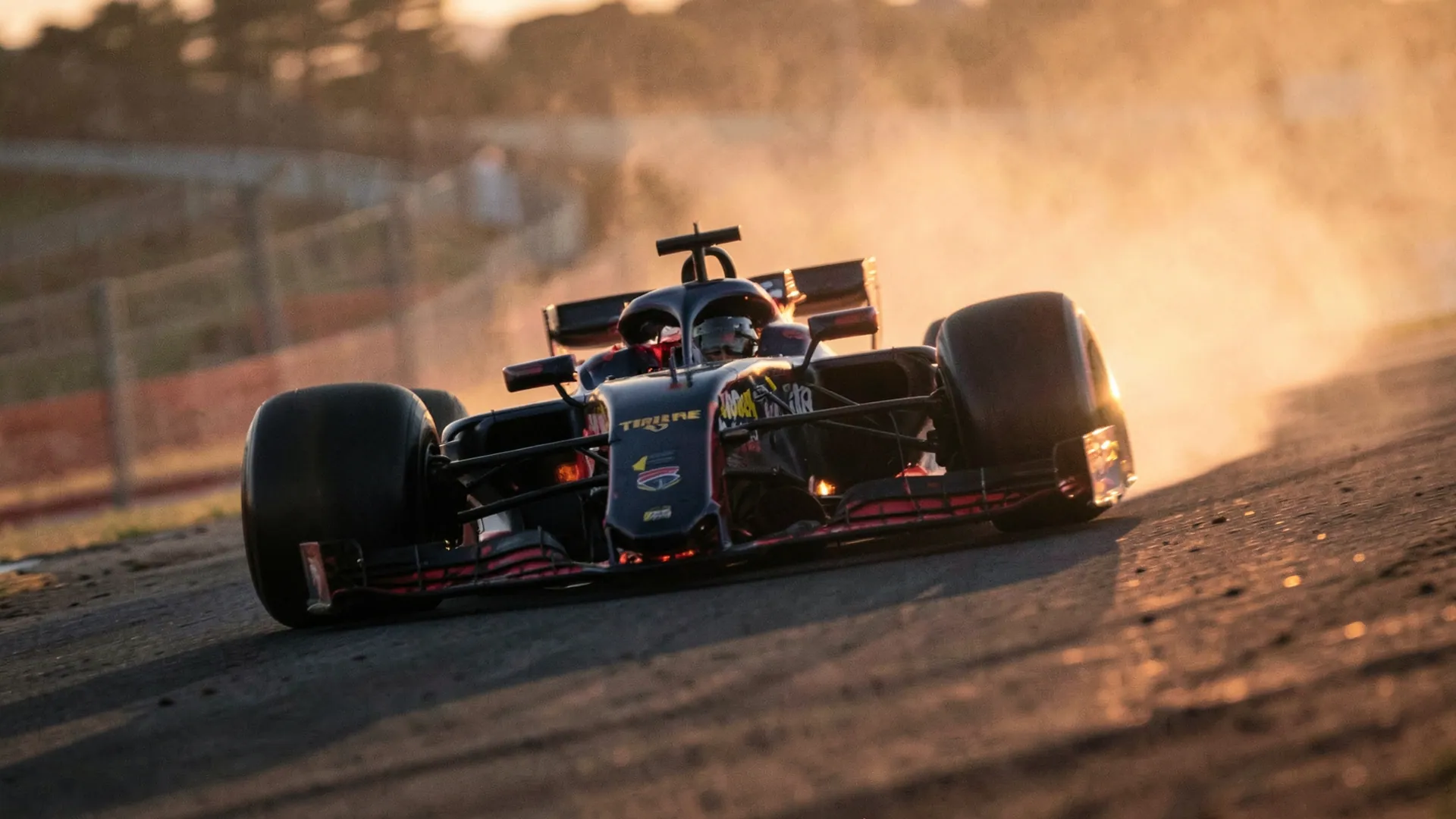
Red Bull out-qualified Ferrari for the United States Grand Prix at the Circuit of the Americas on Saturday, with Isack Hadjar taking third on the grid and neither Ferrari making the top three. For much of the session the pole fight looked like a contest between Max Verstappen and the Scuderia, until Verstappen lost grip in Q3 and Ferrari fell away altogether. Neither Red Bull driver left the circuit satisfied, and that dissatisfaction shows how far the team’s expectations have changed.
A pole fight that slipped away from Verstappen
Verstappen had looked like the man to beat through the early phases of qualifying. He arrived in Austin off the back of a win from pole in Singapore, where he finished ahead of Charles Leclerc and Andrea Kimi Antonelli, and the momentum seemed to carry over. Then, in the final part of the session, the car stopped gripping the way it had, and Verstappen was left openly puzzled by the loss of performance.
That puzzlement matters. A driver of his experience can usually tell within a lap whether a problem lies with him, the tyre or the car. When he cannot, the cause is often something that only shows up at the very edge of the performance window. On a final Q3 run, the usual suspects are tyre preparation on the out-lap, a shift in wind or track temperature as the session goes on and, under this year’s regulations, how and where electrical energy is deployed across the lap. None of these has been confirmed as the culprit, and Red Bull will want an answer before the race rather than after it.
Even so, Red Bull lost some lap time and still beat Ferrari. Earlier in the season, a Saturday that went wrong for Verstappen tended to become a weekend that went wrong for the team. In Austin, the second car was there to pick up the slack.
Hadjar’s “disaster” from third on the grid
Hadjar’s own verdict was blunt. Speaking after qualifying, he described his weekend as “a disaster”, which is an unusual thing to say from the second row of the grid.
There are two ways to read it. The first is that a driver’s assessment of a weekend covers far more than the final qualifying lap. Practice running, set-up direction and how comfortable he felt in the car on Friday all shape that judgement, and a strong result on Saturday can hide a lot of discomfort. The second reading is more revealing. A driver only calls third place a disaster when he believes more was available, and Hadjar evidently does.
That is a significant shift for a Red Bull team-mate. For two seasons, the second car was Red Bull’s weak point. Sergio Pérez’s form fell away badly through 2024, and in 2025 the seat changed hands early in the season, when Liam Lawson was moved aside after two rounds and Yuki Tsunoda then struggled to make the car work. The RB21 was famously narrow in its operating window, and Verstappen was largely the only driver who could live inside it. That cost Red Bull dearly: Verstappen lost the 2025 drivers’ title to Lando Norris by two points, and in the constructors’ standings the team was nowhere near the front.
Hadjar has 97 points to Verstappen’s 221 and sits eighth in the standings, which is still a sizeable gap between team-mates. But in Singapore he climbed from 22nd on the grid to score a point, and in Austin he qualified ahead of both Ferraris on a lap he considered compromised. A car that rewards a second-year driver in this way is more forgiving than the one Red Bull raced last year.
Why beating Ferrari matters more than pole
Pole would have made a better headline. Beating Ferrari provides a more useful data point.
Ferrari has been the clear second force of 2026. It sits second in the constructors’ championship on 444 points, 112 clear of Red Bull, and both its drivers are in the top five: Lewis Hamilton third on 229 and Leclerc fifth on 215. Leclerc finished second to Verstappen in Singapore. Austin looked set up for a straight Red Bull versus Ferrari pole fight, and by the end Ferrari was the team that had faded.
The circuit makes the result more meaningful. The Circuit of the Americas is a demanding all-round test. The high-speed sequence in the first sector rewards aerodynamic stability, the long back straight punishes any shortfall in straight-line efficiency, and the bumps across the lap expose a car that has to run stiff to protect its platform. A car with a narrow window tends to be found out here, either in the fast sweeps or over the bumps.
That is why the RB22’s showing stands out. Red Bull began this regulation cycle with a fresh chassis concept and, for the first time, its own power unit, built in partnership with Ford. Building an engine from scratch while the chassis rulebook was being rewritten was the biggest gamble any established team took into 2026. Mercedes has been the benchmark all year, with 11 wins from 17 rounds and Antonelli taking eight of them. Red Bull’s realistic target was always to be the best of the rest by the run-in, and qualifying in Austin suggested it is now close to that.
One qualifying session does not make a trend. Taken alongside Singapore, though, it points to a car that is now fast on more than one type of circuit, rather than one that happens to suit a particular layout.
Seven points to McLaren, 17 to Russell
Austin is the first of the six remaining rounds, which leaves up to 150 points available to any driver from the Grands Prix still to run. Antonelli leads George Russell by 102 points, so the drivers’ title is Mercedes’ to lose. Verstappen is 119 points adrift in fourth. On paper he is still in the fight, but in practice he would need a collapse from Antonelli that nothing this season has suggested.
The battles that remain open are closer, and they are where Red Bull’s improvement will be measured.
| Battle | Positions | Gap |
|---|---|---|
| Drivers’ championship, P2 to P5 | Russell 238, Hamilton 229, Verstappen 221, Leclerc 215 | 23 points cover four drivers |
| Constructors’ championship, P3 | McLaren 339, Red Bull 332 | 7 points |
The constructors’ fight with McLaren matters most to the team. Seven points is less than a single third-place finish, and it is exactly the kind of contest the old Red Bull would have lost. Third in the constructors’ standings depends on how many points both cars score each weekend, and the team has spent two years scoring through one driver. If Hadjar can turn third-place grid slots into regular podium contention, Red Bull will have an advantage that McLaren, with Oscar Piastri on 138 points and still without a win, may struggle to match.
Verstappen’s own target is second in the drivers’ championship. He is 17 points behind Russell and eight behind Hamilton, with Leclerc six points behind him. Having won twice this season, including the most recent round, he will fancy his chances of finishing as the leading driver behind Antonelli, which would be a creditable result in the first year of a new power unit.
Red Bull’s task in the race is to turn a strong grid position into a strong points haul without the second car drifting backwards, which it repeatedly failed to avoid through 2024 and 2025. If Hadjar holds his ground in the opening stint and Verstappen gets on top of whatever robbed him of grip on Saturday, Red Bull should leave Austin ahead of McLaren in the constructors’ table. On this evidence, it also has the stronger car for the remaining five rounds.