
F1 Faces Reckoning After Power Unit Software Meltdown Halts Bahrain Grand Prix
The FIA's formal review into the formation-lap power loss chaos raises questions about F1's increasingly complex hybrid power unit software ahead of the 2026 ru
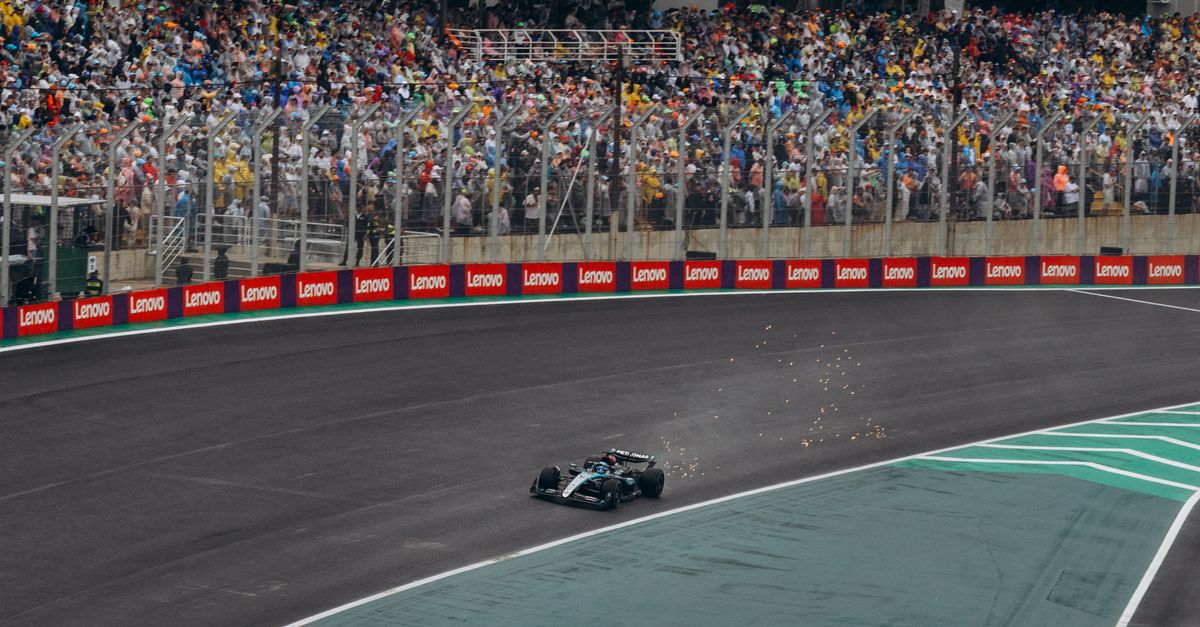
Formula 1’s new era was supposed to open with a statement of intent: simpler, louder, more raceable power units built around a 50-50 split between combustion and electrical power, with the unloved MGU-H consigned to history. Instead, the Bahrain Grand Prix — relocated this year to Sepang and already compromised by a 40-minute rain delay — produced scenes nobody in the paddock had seen before. Cars rolled to a halt on the formation lap, drivers sat confused on the grid asking over team radio what was happening, and race control was forced into an awkward, stop-start restart sequence before the lights eventually went out. The FIA has now confirmed a full review into what it describes as an “unprecedented” combination of circumstances, and the fallout has reopened one of the sport’s oldest unresolved arguments: has hybrid power unit technology become too clever for its own good?
What actually happened
According to the FIA’s own explanation, the stoppages stemmed from a software-level response to the wet conditions rather than any single mechanical failure. As cars circulated at low speed and low revs behind the Safety Car-style formation, the hybrid systems’ energy management logic — calibrated around harvesting and deploying electrical power within tight thermal and battery-state parameters — encountered a combination of inputs it hadn’t been designed to handle gracefully. The result was a cascading loss of power unit output across multiple cars simultaneously, catching drivers unaware mid-lap. Max Verstappen’s now-widely-shared radio message, questioning aloud whether the pack was waiting for him, captured the confusion neatly: this wasn’t a case of one team having a bad day, it was a systemic hiccup replicated across the grid. The farce deepened when race control had to effectively reset the formation procedure — what Lewis Hamilton later wryly dubbed the “Lego race” replay — before officials could restore order and get the field away cleanly.
Why it matters beyond one bad afternoon
It would be easy to file this under freak weather and move on, except for the timing. This is happening at the dawn of the most significant power unit regulation change in a decade, one explicitly sold to fans and manufacturers alike as a simplification. Removing the MGU-H was meant to strip out one of the most expensive and temperamental pieces of the puzzle; rebalancing the energy split toward electrical power was meant to make the units punchier and more relevant to road-car technology. What Bahrain exposed is that simplifying the hardware architecture does not automatically simplify the software that governs it. If anything, a power unit now leaning more heavily on electrical deployment demands more sophisticated, more conservative energy-management code — and conservative code written for dry-weather racing conditions can behave unpredictably once you introduce wet-track low-speed running, something teams and the FIA may simply not have stress-tested at this stage of the formula’s life.
That matters because formation laps and safety-car periods aren’t exotic edge cases. They are routine, recurring moments in almost every wet or disrupted race weekend. A software architecture that falters there isn’t a one-off bug; it’s a gap in validation that needed closing before lights-out of the season, not after.
The wider pattern
F1 has been here before, if never quite this publicly. Complaints about hybrid power unit complexity date back to the 2014 introduction of the current generation of turbo-hybrids, when drivers and fans alike bemoaned engines that were brilliant feats of thermal efficiency but baffling in their failure modes — a sensor glitch or software fault could end a race weekend as surely as a blown piston, often with far less clarity about why. The sport has spent a decade trying to balance two things that don’t always pull in the same direction: motorsport’s demand for raw, predictable raceability, and the manufacturers’ and regulators’ desire for power units that double as genuine technology showcases for road-relevant hybrid systems. Every reset of the rules — 2014, and now 2026 — has promised to ease that tension, and every reset has instead layered in new complexity somewhere else, usually in the software that has to arbitrate between combustion output, battery state, thermal limits and driver demand in real time. Bahrain was simply the most visible manifestation yet of a problem that’s been building under the surface for years.
GP Headlines’ take
The frustration from Norris, Hamilton and Verstappen is entirely justified, and it would be wrong to wave it away as drivers venting after an unusual afternoon. When the cars themselves stop responding to the pedal, on a Sunday, in front of a global audience, that’s not a minor technical footnote — it’s a fundamental failure of the product to do the one thing it absolutely must do. At the same time, some perspective is warranted: this is a new formula encountering a genuinely novel set of conditions, and teething problems with software calibration are not unprecedented in F1’s regulatory history. The FIA’s review needs to produce more than an explanation, though — it needs binding evidence that the energy-management logic has been re-validated across the full range of wet-weather, low-speed scenarios before the next race. Hybrid power units can be both cutting-edge and reliable; what Sepang proved is that right now, under pressure, they aren’t yet both at once. That’s the gap this review has to close, quickly and visibly, or the