
Norris Declares Himself Simply Better Than Piastri as McLaren Turns Up Heat on Antonelli
Norris's Hungary win and blunt comments about outclassing Piastri reshape the psychological battle inside McLaren and the wider title fight.
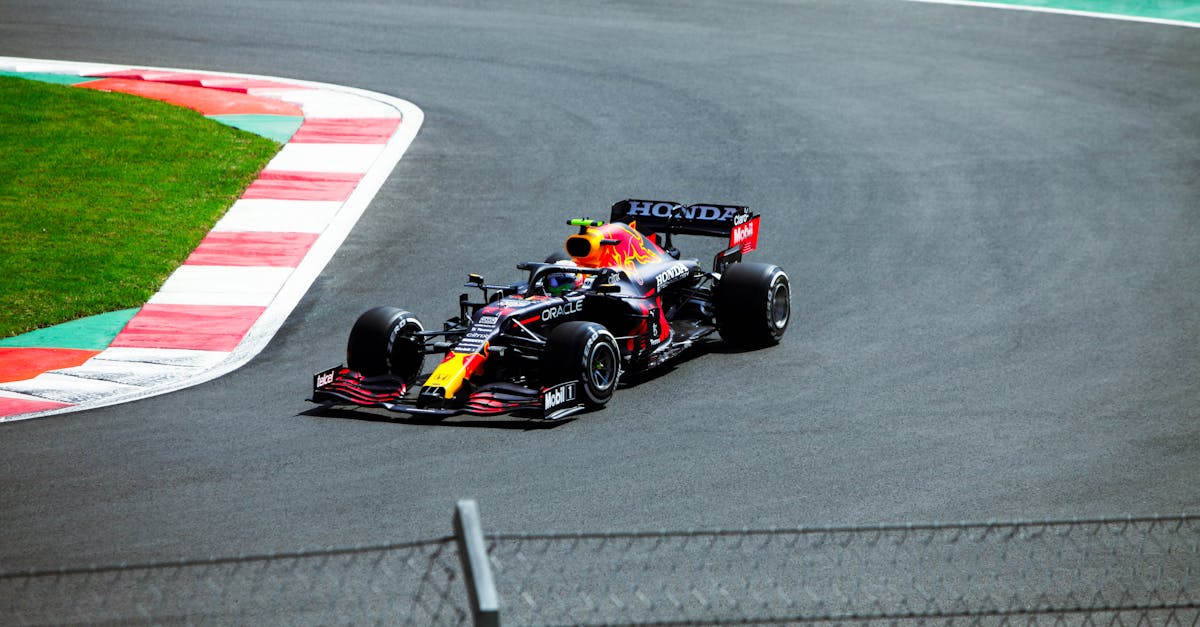
Lando Norris does not usually deal in absolutes. Across his career he has been the McLaren driver more inclined to spread credit, to talk up his team-mate, to frame contests in shades of grey. That is precisely why his post-race comments in Budapest carry so much weight. After converting a wafer-thin pole position — just 0.012 seconds clear of a fast-charging Ferrari — into a comprehensive Hungarian Grand Prix victory, Norris did not reach for diplomacy. He said he was “better in every sense” than Oscar Piastri all weekend, and he said it without qualification. In a sport where drivers are trained from karting to manage the message as carefully as the car, that kind of statement is a signal, not a slip.
What Actually Happened at the Hungaroring
Strip away the psychology for a moment and the on-track story is straightforward enough: Norris out-qualified the field by the smallest of margins, then controlled the race from the front in the manner of a driver entirely comfortable with his machinery and his rhythm. Piastri, by contrast, was a beaten man on merit rather than a victim of misfortune or strategy — there was no safety car controversy, no pit-wall error to point to, no obvious mechanical discrepancy between the two cars. That absence of an excuse is what gives Norris licence to be so direct. When a team-mate is beaten by circumstance, the beaten driver can rebuild the narrative quickly. When a team-mate is beaten straightforwardly, over a whole weekend, the words carry further and linger longer.
Norris’s added comment — that the pressure is now on Kimi Antonelli, and that he is not writing off his own title prospects — extends the story beyond an intra-team squabble into the wider championship picture. This was not simply a driver enjoying a good Sunday. It was a driver using a strong result to reposition himself in two contests simultaneously: the private one against Piastri, and the public one against Antonelli.
Why This Matters Inside McLaren
McLaren has, for the past two seasons, worked hard to project an image of even-handedness between its two drivers — no clear number one, papaya rules applied consistently, both men racing for the same prize with the team’s competitive position as the shared priority. That approach has generally served the constructors’ interests well, but it has always carried an obvious tension: eventually, in a title fight, one driver needs to establish clear ascendancy, and the longer that process is delayed, the more combustible it becomes when it finally happens.
Norris declaring himself unambiguously superior for a race weekend is the first real test of how durable that even-handed culture actually is. It puts Piastri in a position where he either has to accept the framing publicly, contest it, or simply let the results do the talking at the next race. Any of those responses tells us something. Silence from Piastri would suggest a driver choosing not to escalate, perhaps trusting that form is temporary. A pointed reply would suggest McLaren has a genuine rivalry brewing rather than a partnership. Given how close these two have generally run throughout their time as team-mates, and how significant a single weekend can be to momentum and confidence within a team, this is not a storyline McLaren will want dragging on without resolution.
There is also a broader team-management question buried in this. McLaren has generally preferred to let its drivers race and manage friction reactively rather than impose hierarchy. Norris’s comments test the limits of that philosophy. If Piastri responds with results rather than words, the team can let the competition self-regulate. If the atmosphere sours, McLaren will have to decide, as it has occasionally had to before, how much license two title-calibre team-mates can be given before intervention becomes necessary.
The Wider Championship Context
Norris’s refusal to concede the title fight, and his direct reference to Antonelli, reframes Hungary as more than a McLaren story. If Antonelli has been operating from a position of championship advantage, a dominant Norris victory — allied to Piastri’s below-par weekend — changes the mathematics of how that advantage can be defended. A single McLaren driver winning comfortably is one thing; two McLaren drivers taking points off each other while a Mercedes driver escapes relatively unscathed is quite another. Norris explicitly wants to avoid that second scenario, which is presumably why he was so keen to draw a clear line between himself and Piastri rather than treat the weekend as a shared team triumph. From his perspective, the fewer points Piastri takes off him at races like this, the more directly he can attack Antonelli’s advantage.
This is a familiar pattern in championship years where a team enjoys a clear performance edge: the psychological battle migrates from car-versus-car to driver-versus-driver, and results start being read not just for their raw value but for what they say about the internal pecking order. Norris, by speaking as plainly as he did, has accelerated that shift by several races.
GP Headlines’ Take
Norris’s Hungary comments were not reckless, but they were deliberate, and that distinction matters. He is a driver who understands exactly what he is doing when he abandons his usual careful phrasing — using a genuinely one-sided weekend to stake a psychological claim over his team-mate while simultaneously training his sights on Antonelli. It is measured self-confidence rather than provocation, but McLaren should not mistake it for something harmless. Piastri’s response — in results, not words — will tell us far more about the health of this title fight than anything said in a press conference. If he answers on track quickly, Hungary becomes a footnote. If he does not, Norris has just set the terms of a rivalry that McLaren will need to manage very carefully indeed.