
Antonelli Grabs Spa Pole as Red Bull's Grid Tactics and Hamilton's Crash Reshape the Belgian GP Lineup
A breakdown of how penalties, tactics and a Hamilton crash shuffled the final grid behind championship leader Antonelli's pole.
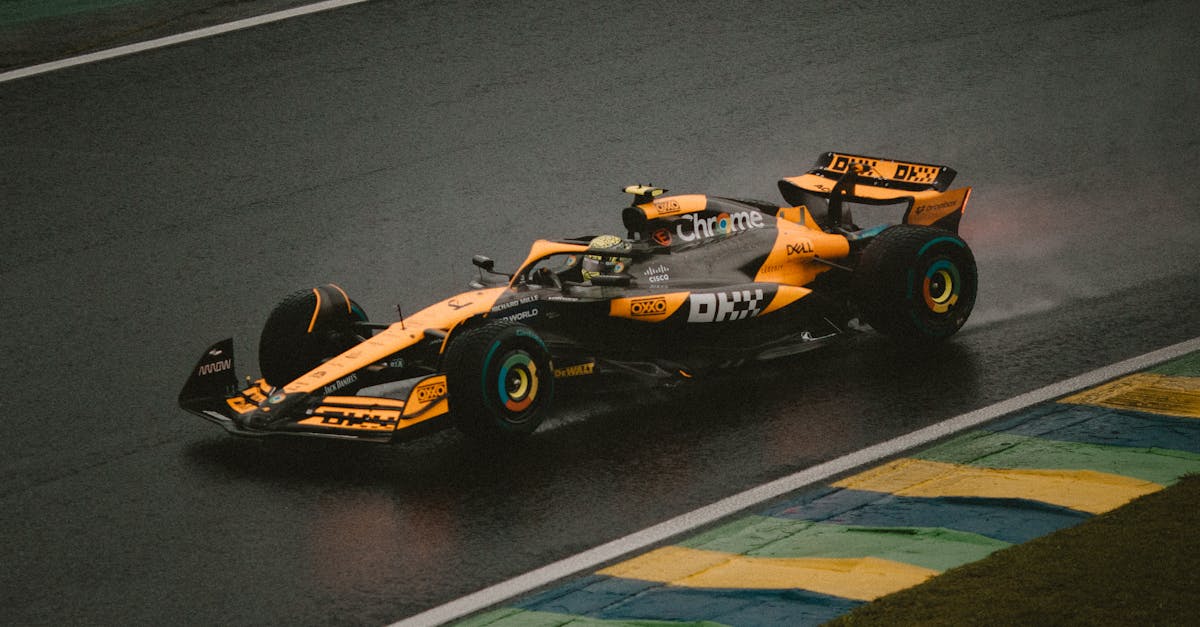
Kimi Antonelli’s pole position for the Belgian Grand Prix will be the headline number, and rightly so — a championship leader topping the times at Spa-Francorchamps, arguably the most demanding lap on the calendar, is a statement in itself. But the story of this grid is really a story of everything that happened around him: Red Bull working the system to get Max Verstappen onto the front row, a clutch of grid penalties reshuffling the order behind, and Lewis Hamilton’s qualifying crash leaving Ferrari to count the cost in both track position and outright pace. Pole is the easy line to write. The grid that actually forms on Sunday is far more interesting.
A Pole for the Championship Leader, a Grid Shaped by Everything Else
Antonelli’s lap stands on its own merits — Spa punishes hesitation more than almost any other circuit, from the blind commitment through Eau Rouge-Raidillon to the long, exposed run to Les Combes, and topping that session while leading the standings is exactly the kind of result title contenders are supposed to produce. It’s the sort of pole that does double duty: it’s a lap time, but it’s also a psychological marker, a reminder to the rest of the field of who currently has the measure of this championship.
Yet the final grid was never going to be a straight reflection of the ultimate qualifying order. Grid penalties applied after the session reshuffled the places behind Antonelli, moving some drivers backward and promoting others who might not have expected to inherit clean track position. That’s a mechanic of the sport that rarely gets the attention it deserves — a driver can qualify brilliantly and still start from further back than the timesheets suggest, while another can have a modest session and find themselves promoted several places purely on the back of other people’s penalties. It’s a reminder that in modern F1, the qualifying result and the grid result are two different documents, and it’s the second one that actually matters on Sunday afternoon.
Red Bull’s Tactical Reading of the Session
The more instructive story, though, is what Red Bull did to get Verstappen onto the front row alongside Antonelli. Spa’s layout rewards teams who understand exactly how to use track position and traffic in qualifying — the long lap time, the exposed nature of the final sector, and the value of a clear run through the Eau Rouge-Raidillon complex all mean that where you are in the queue, and who you’re following, can be worth more than a tenth here or there in raw car performance. Getting a driver out at the right moment, in clean air, with the track evolving favourably, is as much a part of the qualifying result as the setup work done earlier in the weekend.
That Red Bull managed to engineer this so effectively, in a season where Verstappen is chasing rather than leading the championship table, says something about the team’s continued sharpness on strategy even when the raw pace picture doesn’t always favour them. It’s not a new trait — Red Bull’s ability to extract the maximum from a session through smart use of track position has been a hallmark of the operation for years — but it’s worth noting precisely because it shows a team playing every available card rather than accepting whatever the car’s raw pace dictates. A front row start at Spa, alongside the championship leader, is a considerably stronger platform than the timesheets alone might have suggested Red Bull deserved this weekend.
Hamilton’s Crash and Ferrari’s Missing Tenths
The counterpoint is Ferrari, and specifically Hamilton’s session. A crash during qualifying is costly anywhere, but at Spa — with its long, high-speed sequences and the ever-present risk of contact with the barriers through the middle sector — it’s particularly punishing, both for the immediate loss of track time and for what it does to a driver’s rhythm and confidence for the remainder of the session. Hamilton’s own assessment afterwards, that the Ferrari was “missing a couple of tenths,” is a notable admission. It suggests the car itself wasn’t quite delivering what he needed even before the incident, and that the crash then compounded a session that was already going to be a fight rather than a formality.
For Ferrari, this matters beyond Saturday’s timesheet. A qualifying performance like this doesn’t just cost grid places for Sunday; it costs strategic flexibility. Starting further back at a circuit where overtaking, while more possible than at many modern venues, still comes with real risk and tyre-degradation trade-offs, narrows the routes to a strong result. It also adds pressure to Ferrari’s race strategists, who now have to build a Sunday plan around recovery rather than control.
GP Headlines’ Take
Strip away the noise and the story of this Spa grid is a fairly clear one: Antonelli did what championship leaders are supposed to do, Red Bull did what sharp operators are supposed to do, and Ferrari suffered the kind of session that title-chasing teams can ill afford. None of this settles the Belgian Grand Prix — Spa’s layout and its well-known appetite for weather drama mean Sunday’s grid order is a starting point, not a verdict. But as a snapshot of where each of these three operations currently stands, it’s a revealing one. Antonelli goes into the race with the platform to extend his advantage; Verstappen and Red Bull have manoeuvred themselves into position to make it a fight; and Hamilton and Ferrari now face a recovery drive with rather less margin for error than they’d have liked.