
F1 today: the stories everyone's talking about — 9 Oct 2026
GP Headlines' round-up and analysis of the biggest Formula 1 storylines making news right now.
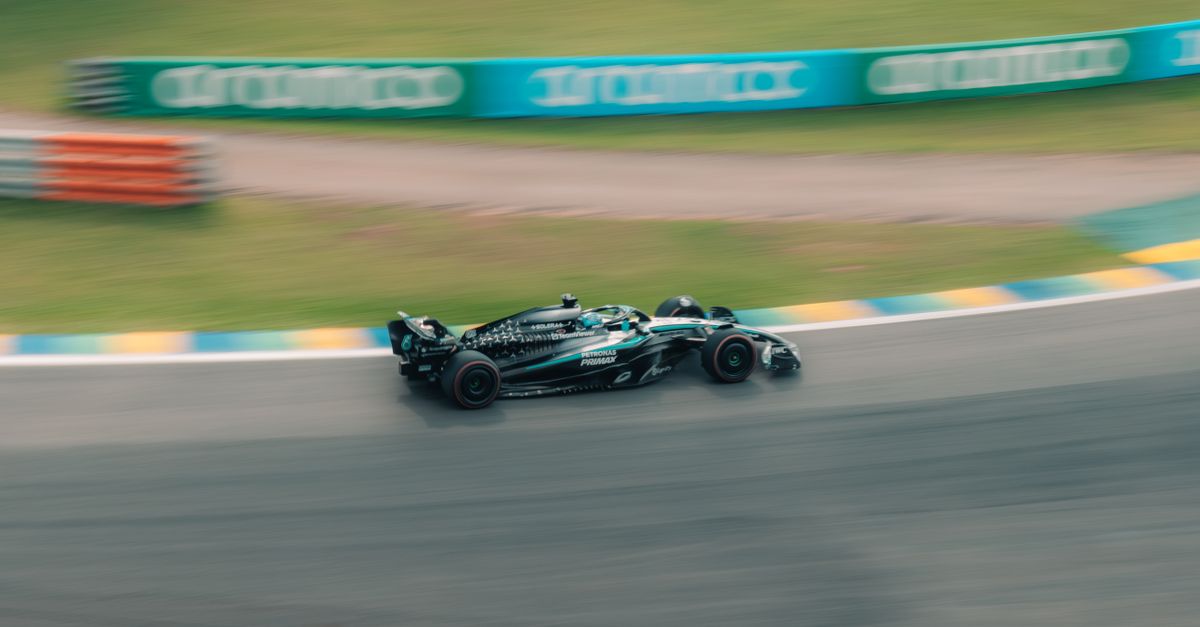
Singapore’s night race weekend has a habit of amplifying everything — the heat, the humidity, the floodlit tension of Marina Bay’s unforgiving walls — and this year it’s the governing body, not the drivers, finding itself under the hardest spotlight. A chaotic sprint qualifying session has left the FIA explaining not one but two separate errors, Carlos Sainz publicly questioning the sport’s commitment to fair competition, Lewis Hamilton owning up to a tactical misstep of his own, and Mercedes nursing a new upgrade package that has left even their championship leader unsettled. Add in a fresh stewards’ investigation involving Max Verstappen and Hamilton, and you have the ingredients of a weekend that was messy long before a wheel was turned in anger on track.
A session undone by its own technology
The headline story out of Singapore isn’t a driver error or a strategic masterstroke — it’s the sport’s own systems letting it down, twice over, in the same session. SQ1 had to be halted after a timing and scoring glitch meant some drivers’ lap times simply weren’t being displayed, a basic but serious failure in an environment where split-second information shapes who gets through to the next phase. That alone would have been an uncomfortable enough admission for race control. But the FIA then confirmed a second, unrelated issue: a software problem affecting Overtake Mode — the power deployment system that governs how much additional performance a driver can call upon — left some cars running with less power than others during the session.
Put simply, this wasn’t a case of one team finding an advantage through clever engineering or a driver exploiting a grey area in the rules. It was a flaw in the FIA’s own software handing an unearned and entirely arbitrary disparity to some runners over others, through no fault of the teams or drivers involved. The governing body has been commendably transparent in calling it what it is — “human error,” confirmed on the record rather than quietly smoothed over — and transparency of that kind deserves credit. But transparency after the fact is a very different thing from a session that was fair in real time, and it’s easy to understand why patience in the paddock is wearing thin.
Sainz’s frustration speaks for more than just Williams
Carlos Sainz’s response was pointed, and notably it wasn’t really about his own result — it was a broader complaint about “sporting equity,” the idea that a championship fought over tenths and hundredths of a second cannot tolerate a scenario where some competitors simply had less performance available to them through a glitch rather than a genuine shortfall in pace or preparation. That’s a legitimate grievance, and it’s one that will resonate well beyond his own garage. Sprint qualifying sessions are short, compressed, and unforgiving — there’s no time to recover from lost running or a mechanical quirk the way there might be across a longer qualifying hour. When the disparity comes from the sport’s own infrastructure rather than anything a team could have controlled or anticipated, the sense of injustice is sharper still.
The wider context matters here too. This is not the first time in the current era that timing systems, software-based performance aids, or race control decision-making have come under scrutiny for inconsistency — and each new incident, however honestly disclosed afterwards, chips away a little more at confidence in the reliability of the tools underpinning competition. The FIA’s willingness to own the mistake publicly is the right instinct. The next question, and the one that will matter far more in the long run, is what changes to prevent a repeat, because “human error” as an explanation only remains reassuring if it doesn’t become a recurring refrain.
Hamilton’s honest admission
Amid the technical drama, Lewis Hamilton’s sixth-place finish in sprint qualifying had a far more conventional explanation — one of his own making, and one he was refreshingly direct about afterwards. By his own account, a strategic choice around how to run the final session — specifically the decision-making around the soft-tyre qualifying run — shifted the car’s balance in a way that compromised his lap when it mattered most. There’s something notable in how quickly and plainly he took ownership of that, rather than reaching for any of the legitimate excuses floating around the paddock given everything else going on with Overtake Mode and timing glitches.
It’s a reminder that even in a season where the sport’s own infrastructure is under the microscope, the fundamentals of racecraft — tyre preparation, balance management, knowing when a particular approach to a short, high-pressure session is the right one — remain squarely on the driver and the team to get right. Hamilton has never been short of self-awareness when a weekend goes against him, and this was another example of that candour. Sixth isn’t a disaster in the context of a sprint weekend, but on a circuit where track position is everything and overtaking is a genuine challenge even with modern deployment systems, it’s a tangible dent to his sprint race prospects that he’ll have to recover from through strategy rather than pace alone.
Mercedes’ upgrade gamble is still unresolved
If Hamilton’s story was about an in-session misjudgement, Mercedes’ is about a longer-term bet that hasn’t yet paid off. The team arrived in Singapore with a new upgrade package, and both the tone and substance of their drivers’ comments afterwards suggest it hasn’t delivered the step they were hoping for — at least not yet, and not in a way that’s easy to predict from run to run. Kimi Antonelli, who has been the form driver of the field for much of the season and arrives in Singapore as championship leader, was candid in describing the car as “very unpredictable” with the new parts fitted, and distinctly pessimistic about his prospects after qualifying seventh in the sprint session — a result that, for a driver who has set the benchmark most weekends, represents a genuine underperformance rather than simply an off day.
This matters for two reasons. First, upgrades that introduce unpredictability rather than consistent gains are notoriously difficult to extract value from through a race weekend — teams typically need several sessions and often several events to properly understand a new characteristic, and Singapore’s unique demands (bumpy surface, heavy braking zones, long periods at full steering lock) are about as unforgiving a proving ground as exists on the calendar. If the car’s balance is shifting unpredictably lap to lap, that’s compounded tenfold around Marina Bay. Second, and more significantly for the title picture, Antonelli’s position at the top of the standings has been built on a run of strong, low-drama weekends. A sudden dip in form at precisely the circuit least able to forgive it is the kind of moment that can open a door for rivals who have otherwise been playing catch-up. Mercedes will need to decide quickly whether to persevere with the new specification through the sprint and into the grand prix, or whether a reversion to the previous package is the safer path to protect championship points — a decision complicated by the fact that it’s hard to fix what you don’t yet fully understand.
Verstappen and Hamilton back under the stewards’ lens
Layered on top of all this is confirmation that the stewards have opened an investigation into an incident involving Max Verstappen and Lewis Hamilton. Details of exactly what transpired haven’t been laid out in full, but the mere fact of an investigation involving these two names will inevitably draw attention, given their shared history of close-quarters battles that have, at various points over recent seasons, tested the patience of stewards and fans alike. Singapore’s circuit characteristics — narrow, wall-lined, with very little margin for error at the apex of several corners — mean incidents here often carry more weight than they might on a more forgiving layout, and contact or a racing-line dispute that might be waved away elsewhere can draw genuine scrutiny at Marina Bay.
Without wanting to pre-judge an outcome the stewards haven’t yet delivered, it’s worth noting that this is exactly the kind of flashpoint that tends to colour perception of a race weekend long after the chequered flag, regardless of the final verdict. Both drivers have enough history, and enough respect within the paddock, that this is unlikely to become anything resembling a feud — but it’s a storyline GP Headlines will be watching closely once the stewards report their findings.
The bigger picture
Stitch these threads together and Singapore 2025 is shaping up as a weekend defined less by what happens between the barriers and more by the systems and decisions surrounding the cars. A sport that increasingly leans on sophisticated power deployment technology and real-time data to settle competitive margins has to get the infrastructure right, every time, because the drivers and teams have no way to compensate for a fault that isn’t theirs. The FIA’s candour in disclosing both errors promptly is the correct approach and shouldn’t be understated — plenty of governing bodies in other sports are far less forthcoming when their own systems fail. But candour buys patience, not immunity, and Sainz’s reaction is a fair signal that the goodwill has limits.
On the radar
- How Mercedes respond strategically for the grand prix itself — stick with the new upgrade or revert, and what that means for Antonelli’s championship cushion.
- The stewards’ verdict on the Verstappen-Hamilton investigation, and whether it has any bearing on grid positions or penalty points.
- Whether the FIA outlines concrete process changes to prevent a repeat of the Overtake Mode and timing software issues at future events.
- Sainz’s and other drivers’ reaction once the dust settles — whether this becomes a wider push from the GPDA for stricter safeguards around software-based performance systems.
- How the various teams affected by the power disparity perform once back on a level footing in the grand prix itself, as a useful indicator of how much the glitch genuinely cost them.
- Hamilton’s recovery drive through the sprint race from sixth, and whether his tyre-balance misstep proves costly to his weekend points haul.
Singapore’s night races have long had a flair for drama, but this year the biggest talking points were generated before the lights even went fully green. The teams and drivers will get on with racing regardless — that’s what they do — but the credibility of the systems meant to ensure a fair fight is the story GP Headlines will keep returning to long after this particular sprint qualifying session is forgotten.