
Madrid's new circus arrives, and the paddock is bracing for chaos
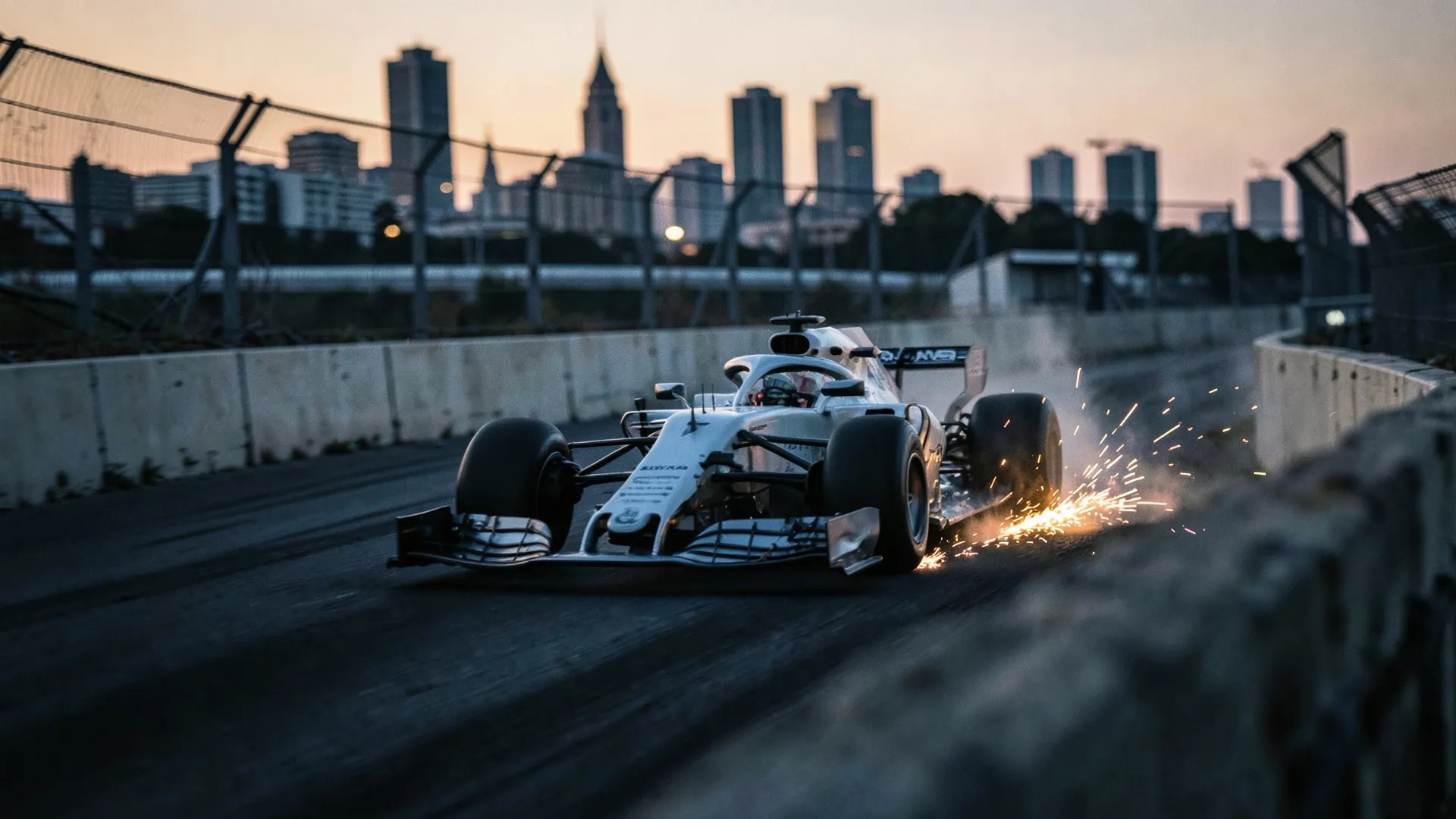
Formula 1 has a habit of talking itself into a state of nervous anticipation before a new venue, and the build-up to the inaugural Spanish Grand Prix at Madrid’s Madring circuit has followed that script to the letter. But this week feels different in tone — less curiosity, more genuine apprehension. Between drivers openly discussing red-flag probabilities, Honda flagging hazards, and a circuit already nicknamed “car killer” before a single competitive lap has been run, there’s a sense that Sunday could be one of those races the sport talks about for years. Layer on top of that a genuine medical worry over Charles Leclerc, a fresh aerodynamic retreat from McLaren, and Audi digging its heels in over a stewarding decision from Monza, and you have a weekend with more subplots than headline race.
Madring: the track everyone fears and nobody can quite explain
The volume of pre-event warnings about a brand-new circuit is unusual even by F1’s hype-hungry standards. Drivers rarely commit to strong public statements before they’ve driven a lap in anger, yet the language coming out of the paddock — “scary”, “car killer”, talk of a red flag being a near-certainty — suggests this isn’t the usual manufactured tension.
Max Verstappen’s first exploratory look at the layout, described as “incident-filled,” is a useful data point in itself. Verstappen is not a driver prone to dramatizing a circuit walk or a install lap; when he flags a track as tricky, it’s generally because the sensations back it up. RacingNews365’s rundown of the layout’s specific danger points reinforces that this isn’t vague anxiety — there appear to be concrete characteristics, blind sections or convergence points, that are genuinely testing the limits of what modern F1 machinery and run-off design can absorb safely.
Honda’s involvement adds a different, more technical lens. Power unit manufacturers don’t usually comment on circuit safety unless something in the car’s operating envelope is genuinely being stressed — cooling, braking energy dissipation, or a section where the engine is under sustained load in a way that exposes a weakness nobody anticipated on the simulator. A “hidden hazard” flagged by a manufacturer rather than a driver suggests problems that may only reveal themselves once 20 cars are running in close proximity, rather than in a single lonely installation lap.
Why this matters beyond one weekend
New circuits are always judged on a longer curve than their first Grand Prix. Bahrain, Turkey, Sochi, Miami and Las Vegas all arrived with teething issues that were smoothed — or in some cases never fully resolved — over subsequent seasons. Madrid’s situation is complicated by geography and ambition: it was sold as a marquee addition to the calendar, a statement event for F1’s growth in a market it has long wanted a stronger foothold in. If the racing is scrappy, the barriers get tested early, and a red flag does materialise as widely predicted, the conversation quickly shifts from “teething problems” to “was this track ready?” That’s a conversation the sport would rather avoid in year one.
There’s also a competitive angle worth watching: Sergio Pérez’s suggestion that the demanding nature of Madring could hand Cadillac a route onto the scoreboard is a reminder that unpredictable circuits tend to compress the field. A circuit that punishes small errors and rewards car control over raw power-unit advantage is exactly the kind of leveller a new, less-resourced team needs. If Cadillac’s first points arrive from a chaotic Madrid weekend rather than a straightforward one, it will tell us something real about where the team’s strengths currently lie.
Leclerc’s fitness: a genuine concern dressed up as a subplot
It would be easy to file the Leclerc story under routine paddock chatter, but the detail here deserves more weight than that. Describing his path back to full fitness as among “the hardest returns in sport” is not throwaway language, and the fact Ferrari is already being asked about historical injury substitutes tells you the team is treating this as a live contingency, not a formality.
Ferrari’s history of needing to call on substitute drivers is longer and more varied than most fans probably appreciate, and revisiting it now is a reasonable piece of institutional memory-jogging rather than scaremongering. The team knows better than most what it costs — in preparation time, in continuity, in simulator hours lost to a driver who’s never sat in the current car — when a race seat has to be filled at short notice.
The stakes for Ferrari specifically
Ferrari’s season has been a story of incremental recovery rather than triumph, and continuity matters enormously to a team trying to build momentum rather than simply chase results. Losing Leclerc, even for one weekend, would do more than cost points:
- It would disrupt the working rhythm between Leclerc and his side of the garage at exactly the point in the season when fine margins in set-up direction matter most.
- It would force a substitute into arguably the most demanding track on the calendar this year, with no prior mileage on it — a brutal introduction for anyone.
- It would reopen scrutiny of Ferrari’s driver-development depth, a subject that’s been simmering all year given how the team has managed its junior talent (more on that below).
Ferrari will understandably want to make this decision as late as possible, guided by the FIA’s medical clearance process rather than competitive pressure. That’s the correct approach. But the fact this is even a live question heading into one of the most demanding circuits of the year adds a layer of jeopardy to Ferrari’s weekend that has nothing to do with car performance.
McLaren’s H-wing retreat: a sensible pause, not a failure
McLaren’s decision to shelve its H-wing concept for Madrid, with an intention to bring it back for Baku, is the kind of story that risks being read as bigger news than it actually is. Rotating rear-wing concepts of this type are notoriously sensitive to circuit characteristics — they’re designed around specific balance requirements between low-speed stability and high-speed drag reduction, and a brand-new, unknown layout is precisely the wrong environment to debut something that hasn’t been correlated against real-world data yet.
Pulling it for a circuit nobody has raced on, in favour of redeploying it at a track McLaren already understands well from prior experience, is basic risk management rather than a sign the concept has stalled. Baku’s long straight and stop-start character make it a far more logical proving ground for a wing designed to flex the aerodynamic platform between fast and slow corners.
The broader point here is more interesting than the specific hardware: McLaren, Woking’s engineering department in particular, has spent much of this era building a reputation for iterative, low-drama development — bringing parts when the data supports it, pulling them when it doesn’t, without the internal politics or public flip-flopping that has occasionally afflicted this team in the past. Shelving the H-wing for one race and being upfront about the reasoning is consistent with that more mature operational culture, and it’s arguably one of the quieter reasons McLaren’s competitiveness has felt more sustainable this year than in previous rebuilding phases.
Audi presses on with the Tsunoda appeal — a small case with a bigger principle
The confirmation that Audi will formally appeal the stewards’ decision not to penalise Yuki Tsunoda for causing an extra formation lap in Monza is, on its face, a narrow procedural story. But it touches a nerve that runs right through the current regulatory environment: consistency of stewarding, and how much discretion is applied to incidents that disrupt a race without being classic on-track clashes.
Formation-lap infractions are rare enough that there isn’t a deep well of precedent to draw on, which is exactly why Audi’s appeal matters more than the immediate sporting consequence. If the stewards’ original leniency is overturned, it sets a marker for how strictly procedural pre-race errors will be treated going forward. If it’s upheld, it effectively confirms a fairly permissive standard for incidents in that phase of a race weekend.
Audi, still building itself into the sport as a fully-fledged manufacturer entry rather than the outgoing Sauber operation, has an obvious incentive to establish that it will pursue matters of principle through the proper channels rather than let them pass. It’s a low-cost, high-signal move: regardless of outcome, it tells rivals and the FIA alike that Audi intends to compete on regulatory matters with the same rigour it presumably wants to bring on track.
Verstappen, Red Bull and the ADUO disagreement — a quieter but persistent friction point
Red Bull being confirmed as having the most powerful ICE again is, on the surface, a compliment. But Verstappen’s comments revealing continued disagreement with the FIA over ADUO (Advanced Driveability Unit Output, in the sport’s technical shorthand for power-unit output modelling) figures show this is a longer-running technical dispute rather than a settled matter.
These disagreements rarely make front-page news because they’re dense and hard to dramatize, but they matter enormously to a team’s competitive planning. If Red Bull genuinely believes the FIA’s measurement or modelling doesn’t reflect what they’re seeing internally, that’s a trust issue between team and governing body that can colour everything from homologation strategy to how aggressively they push development in areas adjacent to the disputed figures. It’s also a reminder that even the sport’s dominant recent force isn’t fully at peace with how it’s being measured — a subplot worth tracking quietly rather than a crisis, but not nothing either.
The Chandhok-Antonelli line and the Ferrari youth-development question
Karun Chandhok’s observation that Kimi Antonelli avoiding Ferrari’s junior pathway in favour of Mercedes’ was the best decision his father made lands at an interesting moment, given Ferrari’s live substitute-driver conversation above. It’s a pointed piece of analysis rather than a controversial one: Mercedes’ junior programme has, in recent seasons, built a reputation for patient, structured development, while Ferrari’s has been characterised — fairly or not — by a more volatile, high-turnover approach to young talent. Antonelli’s rapid integration at Mercedes this year is the strongest evidence yet that Chandhok’s read has merit, and it adds useful context to why Ferrari, when it needs answers on driver depth, doesn’t currently have as deep a bench as its history might suggest it should.
On the radar
- Christian Horner’s studio session — his first substantial public account of his Red Bull exit could reshape the narrative around one of 2026’s defining paddock stories; worth watching for what he chooses to address and what he conspicuously leaves out.
- Madring’s actual red-flag count — the single most testable prediction of the weekend; a clean race would be a genuinely reassuring result for the venue’s credibility.
- Cadillac’s race pace at a leveller circuit — if a points finish arrives anywhere this year, this unpredictable Madrid layout looks like the best chance yet.
- Leclerc’s FIA clearance timeline — the key procedural checkpoint that determines whether Ferrari’s contingency planning becomes reality.
- The Audi appeal timeline and outcome — a small case that could quietly recalibrate stewarding standards for procedural incidents.
- Any further detail on Red Bull’s ADUO dispute — worth watching whether this becomes a public regulatory flashpoint or stays a background grumble.
Madrid was always going to be judged harshly or generously depending on how Sunday afternoon unfolds, and right now the paddock’s mood suggests everyone expects the former rather than the latter. That alone tells you how seriously this circuit is being taken before it’s even turned a competitive wheel.