
Monza's dust settles, but the arguments it kicked up are only just getting going
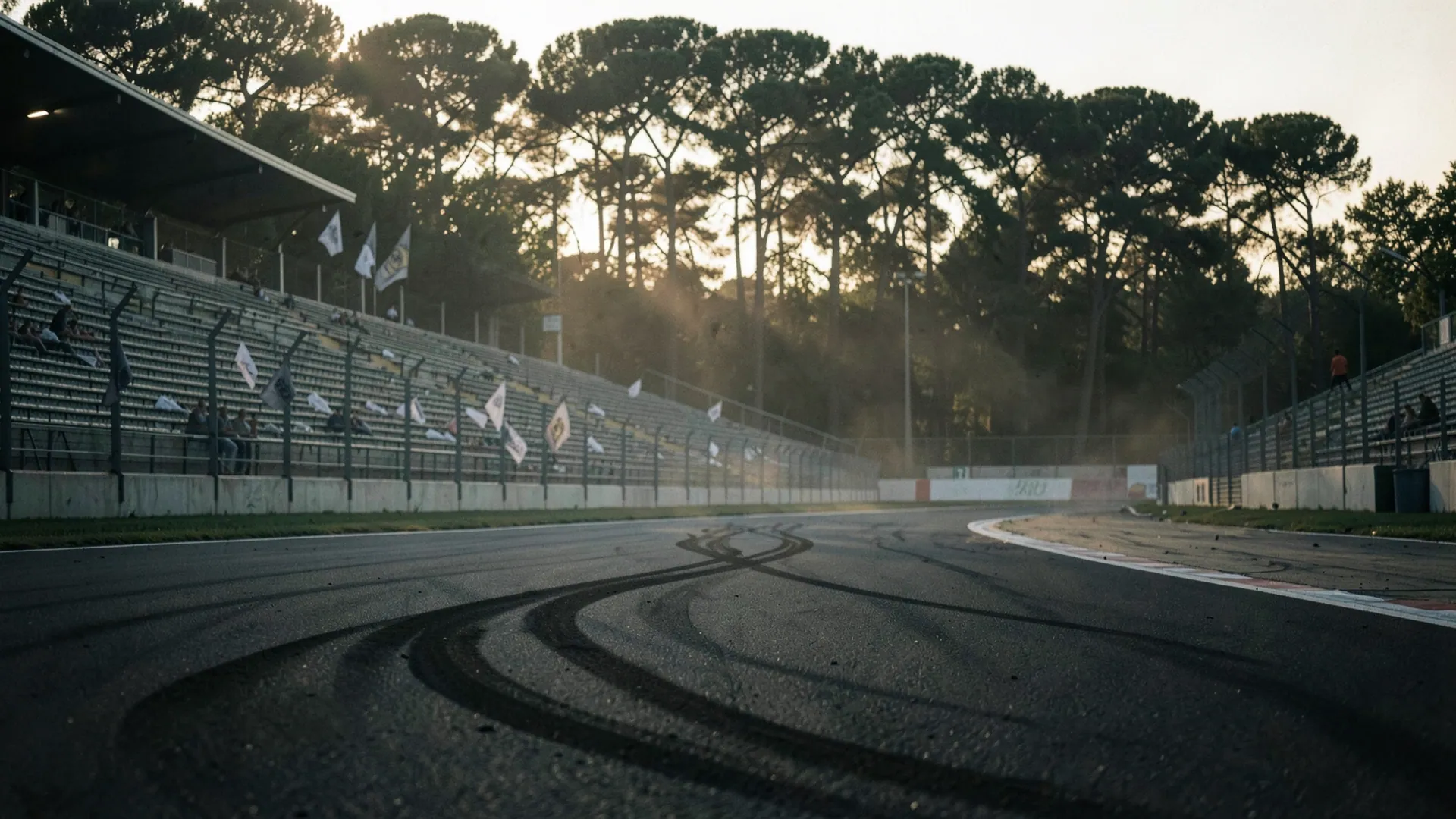
There are weekends that resolve themselves neatly, and then there are weekends like Monza, whose consequences keep arriving days later like aftershocks. Charles Leclerc’s violent crash, Pierre Gasly’s delayed podium and Toto Wolff’s refusal to intervene at Mercedes have all continued to generate discussion well into the build-up to Madrid, while off-track the sport’s succession planning ticked forward with news that ought to make Red Bull’s junior programme rivals sit up: the next Raikkonen has entered the pipeline. Add in Max Verstappen reflecting candidly on the contract saga that briefly threatened to reshape the 2026 grid, and Lewis Hamilton facing the uncomfortable arithmetic of a title race that appears to be slipping away, and you have a genuinely rich news day even by this sport’s saturation standards.
Verstappen’s contract confession: how close did Red Bull really come to losing him?
Max Verstappen’s admission that he held “serious” conversations with both McLaren and Mercedes before committing his long-term future to Red Bull is the kind of detail that recasts a storyline we thought we understood. At the time, the paddock consensus was that Verstappen’s recommitment was never seriously in doubt — a matter of tidying up terms rather than weighing genuine alternatives. His own account now suggests otherwise, and it’s worth taking seriously rather than dismissing as retrospective spin designed to flatter his market value.
Context matters here. Red Bull’s competitive position through parts of this cycle has been shakier than at any point since the team’s early-2020s dominance, with Adrian Newey’s departure, aerodynamic inconsistency and a difficult relationship dynamic around the second car all feeding uncertainty about the team’s trajectory. For a driver of Verstappen’s stature — one who has openly discussed walking away from underperforming machinery before — testing the water at McLaren, who have emerged as the sport’s benchmark constructor, and Mercedes, who retain the infrastructure and history of a team rebuilding towards the 2026 regulation reset, would have been entirely rational.
What’s notable is the language Verstappen has chosen since: describing Red Bull as a “second family” rather than simply the team that pays him best. That framing matters, because it reframes his decision as one rooted in loyalty and comfort rather than pure competitive calculation — even as he acknowledges he explored the alternatives with genuine intent. It’s a more human, more credible version of driver-market politics than the sanitised statements we usually get, and it deserves credit for that honesty. The wider takeaway for Red Bull is sobering, though: even their generational talent needed persuading, and the next time performance dips for an extended run, this conversation may not end the same way.
Raikkonen’s return to the paddock — this time through his son
There’s something quietly poetic about Robin Raikkonen signing for Red Bull’s junior programme, and it’s easy to see why the story has generated so much coverage across the F1 media landscape today. Kimi Raikkonen’s own relationship with Red Bull’s sister outfit system predates the current junior programme structure entirely, and his path — Sauber, McLaren, then a rebuilt Ferrari-Lotus-Alfa Romeo career defined by an almost anti-corporate detachment from F1’s media obligations — makes him one of the more singular champions of the modern era. That his son, born in 2015 and only karting since 2022, should now enter the pipeline of the team most associated with aggressive junior development is a neat symmetry, even if Robin’s route to a Grand Prix seat remains, realistically, a decade-scale project rather than an imminent storyline.
Red Bull’s junior programme, for all the criticism it has attracted over the years for its ruthlessness — Daniil Kvyat, Alex Albon’s demotion, and countless others discarded en route to producing Verstappen — remains the most productive talent pipeline in the sport’s recent history. Signing a Raikkonen is as much a marketing exercise as a talent bet at this embryonic stage, but it’s not a cynical one: the programme’s whole model depends on casting wide and early, and a recognisable surname attached to genuine karting form is exactly the kind of low-risk, potentially high-reward acquisition the scheme is built to make. Kimi’s own measured response — supportive without gushing — is entirely in keeping with a driver who has spent two decades resisting F1’s tendency towards manufactured sentiment. Expect this story to resurface in fragments for years, each junior category step treated as news, long before it says anything meaningful about whether Robin has his father’s speed.
The Gasly podium saga and what it exposes about the FIA’s process
Pierre Gasly’s delayed podium recognition — the specifics of which have been well covered elsewhere — has become less a story about one result and more a referendum on how the FIA handles time-sensitive decisions. Zak Brown’s public call for procedural change carries real weight given McLaren’s current standing as constructors’ pace-setter and the team with arguably the most to lose from opaque or slow adjudication. When a result affecting podium standings, championship points and manufacturer credit takes an extended process to resolve, it undermines the sport’s basic promise to its audience: that what happens on Sunday afternoon is settled by Sunday evening.
This isn’t a new complaint. F1’s stewarding and review processes have long been criticised for inconsistency between races, for the black-box nature of some decisions, and for timelines that seem to bear no relation to the pressure the sport otherwise puts on itself to deliver instant clarity everywhere else — graphics, timing data, strategy analysis, all delivered in real time. A podium ceremony delayed in its final confirmation, even by administrative process rather than dispute, chips away at the theatre F1 sells. Brown’s intervention is measured rather than inflammatory, and that’s precisely why it should carry force with the FIA: this is a competitor with genuine standing making a structural argument, not a wounded party looking for scapegoats. If the governing body is serious about the sport’s presentation as it courts new broadcast markets, tightening these processes should be low-hanging fruit.
Wolff’s restraint at Mercedes — and why Coulthard is right to admire it
Toto Wolff’s decision not to impose team orders at Monza, allowing his drivers to race rather than dictating an outcome, has drawn pointed praise from David Coulthard — and it’s worth examining why that endorsement carries weight. Coulthard’s own career included the sharp end of team orders controversy during his McLaren years, so his instinct to respect a principal who resists that lever isn’t nostalgic sentimentality; it’s informed by having lived the alternative.
The calculation for Wolff is genuinely difficult, and it’s worth being honest about the trade-offs rather than treating restraint as automatically virtuous. Team orders exist because constructors’ points and psychological championship momentum can matter more than the pride of finishing position on a given Sunday, particularly at a track like Monza where overtaking opportunity is scarce and track position often determines the result outright. Choosing not to intervene risks compromised results, drivers racing each other into needless risk, and second-guessing if the numbers don’t add up at season’s end. But it also preserves something harder to quantify: driver trust, morale, and the sense within a garage that both cars are racing on merit rather than being managed like assets on a spreadsheet.
Given Mercedes’ current position — rebuilding, blooding Kimi Antonelli as a genuine title contender this season, still searching for the consistency that defined their turbo-hybrid dominance — protecting the internal culture of the team may matter more right now than optimising every single points-scoring opportunity. Wolff appears to have made a philosophical bet that trust compounds over a season better than short-term management does. It’s the kind of decision that only looks obviously correct in hindsight, and Coulthard’s endorsement suggests it’s being read as the right kind of leadership rather than mere conflict-avoidance.
Ferrari’s twin crises: Leclerc’s crash, Hamilton’s tension, and a title slipping away
Ferrari’s Monza weekend has left two threads dangling that the team cannot afford to let tangle further. The first is straightforwardly physical: Charles Leclerc’s heavy crash was serious enough to prompt a health update, and it’s a relief for Ferrari and for the sport that he’s described himself as okay. The mechanical silver lining — confirmation that he avoided engine damage and therefore won’t carry a grid penalty into the Spanish Grand Prix — is a rare piece of good fortune for a team that hasn’t had much of it lately, and it matters practically given how punishing power unit penalties have become under the current allocation rules.
The second thread is more corrosive because it’s not mechanical, it’s human. Reports of tension between Lewis Hamilton and Leclerc, and the accompanying calls for Ferrari’s management to intervene, echo a pattern this team knows uncomfortably well — two elite drivers, one seat’s worth of priority, and a hierarchy that’s never been cleanly established. Hamilton’s move to Ferrari was always going to be judged partly on whether he could coexist with an incumbent who has spent his whole career as the team’s reference point. Early tension isn’t fatal to that project, but it does need managing actively rather than left to resolve itself, because Ferrari’s history — Alonso-Massa, even earlier eras — shows how quickly unmanaged intra-team friction can curdle a season.
That friction now sits against a genuinely stark points picture for Hamilton. Sitting 76 points behind Antonelli after a difficult Italian Grand Prix is the kind of gap that doesn’t mathematically end a title challenge this early, but it does start to strain credibility, particularly with a rookie in Antonelli looking increasingly comfortable carrying Mercedes’ championship hopes. Whether Hamilton’s eighth title is “dead” is probably premature framing, but the trend line is not one Ferrari can watch passively.
On the radar
- Madrid’s Madring debut — Verstappen’s warning of “big shunts” at a brand-new street-style layout is a reminder that first visits to unfamiliar circuits often produce unpredictable, high-attrition sessions.
- Leclerc’s raceability post-crash — a clean bill of health is one thing; rediscovering full confidence through a new, unfamiliar venue is another test entirely.
- Antonelli’s championship composure — carrying a 76-point cushion as a rookie will be examined as closely as any of his lap times from here.
- FIA process reform — watch whether Brown’s comments prompt any concrete change to review timelines, or simply another round of promises.
- Ferrari’s internal management — any visible gesture toward clarifying team dynamics between Hamilton and Leclerc will be read as significant, however small.
- Robin Raikkonen’s junior calendar — his first competitive outings under Red Bull colours will be scrutinised disproportionately to their actual stakes.
The picture emerging from this news cycle is of a sport comfortable interrogating itself — on process, on psychology, on succession — even as the championship battle itself edges toward clarity. Mercedes’ calm may be Ferrari’s warning; Red Bull’s contract anxiety may be its rivals’ opportunity. Little of it is settled, and that’s precisely why it’s worth watching closely into Madrid.