
Antonelli Wins United States Grand Prix From Pole to Move Within Reach of the Title
Andrea Kimi Antonelli converted pole into a ninth win of the season in Austin, stretching his lead to 123 points as George Russell's eighth place blew open the fight for second.
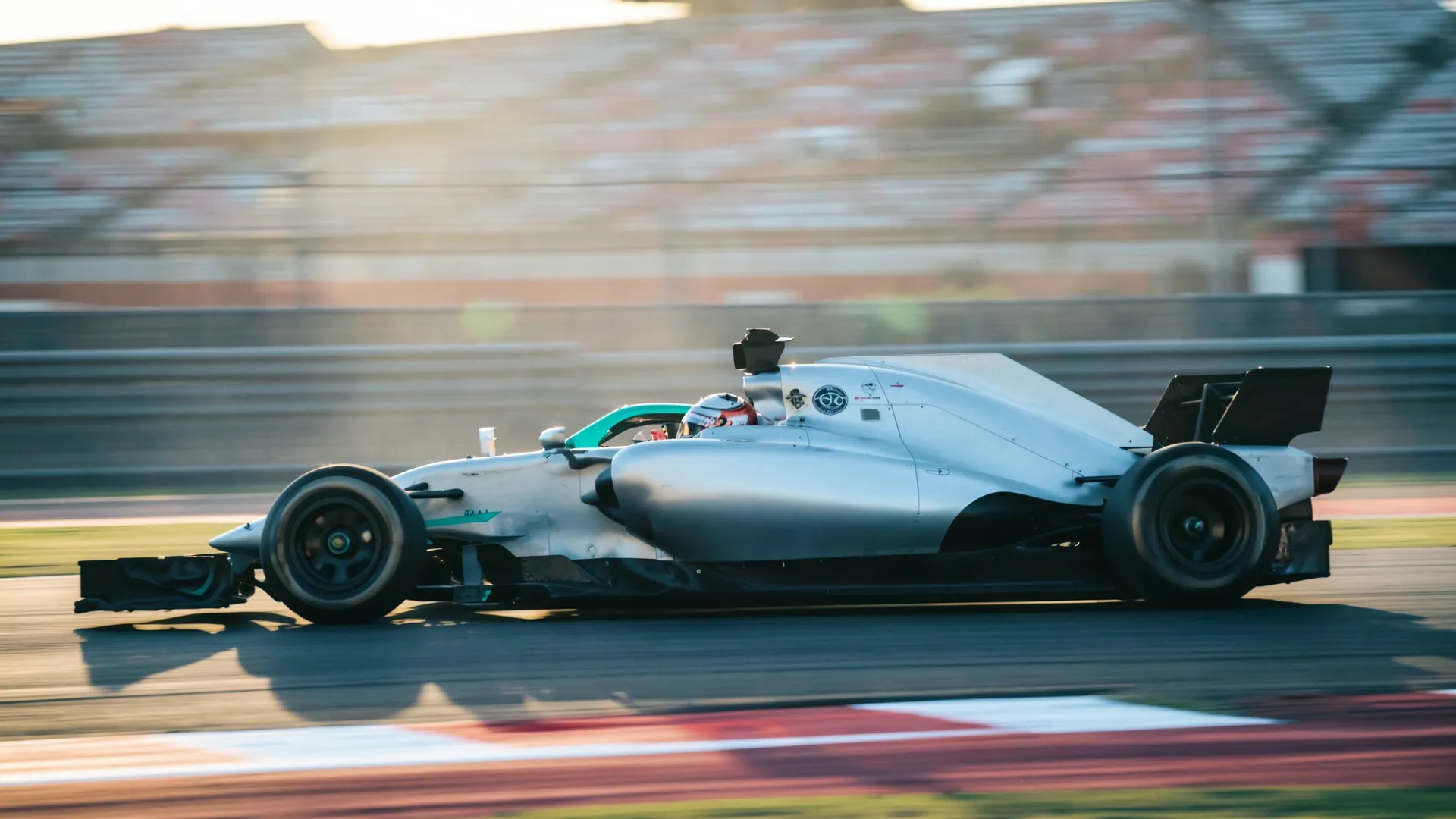
Andrea Kimi Antonelli won the United States Grand Prix at the Circuit of the Americas on Sunday, converting pole position into a 13.078-second victory over Charles Leclerc’s Ferrari. It was the Mercedes driver’s ninth win of the season. With team-mate George Russell finishing only eighth, Antonelli’s championship lead grew from 102 points to 123 with five rounds remaining. Max Verstappen completed the podium for Red Bull, a second clear of Lewis Hamilton.
Antonelli’s quiet authority at COTA
There was nothing flamboyant about this win, and that is the point. Antonelli started from pole with Verstappen alongside, Isack Hadjar’s Red Bull third and the two Ferraris behind. By the flag, none of them was within 13 seconds of him.
The margin is more telling when set against the fastest lap. Leclerc set the quickest time of the race, a 1:37.976, so the Ferrari had genuine speed at some stage of the afternoon. It was never enough, or never sustained for long enough, to trouble the leader. A driver who wins by 13 seconds while someone else holds the fastest lap is usually managing his tyres and his risk rather than emptying the car on every lap. That restraint has been one of the defining features of Antonelli’s season.
Mercedes has now won 12 of the 18 Grands Prix held this year, and nine of those victories belong to Antonelli. His day was not entirely free of awkwardness. Crash.net reported that the team poked fun at him afterwards over an embarrassing gaffe in Austin. The podium also generated headlines unrelated to the racing, with the same outlet reporting that US senator Ted Cruz was loudly booed when he appeared on it.
| Pos | Driver | Team | Grid |
|---|---|---|---|
| 1 | Andrea Kimi Antonelli | Mercedes | 1 |
| 2 | Charles Leclerc | Ferrari | 4 |
| 3 | Max Verstappen | Red Bull | 2 |
| 4 | Lewis Hamilton | Ferrari | 5 |
| 5 | Lando Norris | McLaren | 8 |
| 6 | Isack Hadjar | Red Bull | 3 |
| 7 | Oscar Piastri | McLaren | 7 |
| 8 | George Russell | Mercedes | 6 |
| 9 | Liam Lawson | RB F1 Team | 9 |
| 10 | Pierre Gasly | Alpine F1 Team | 10 |
Ferrari’s race pace outperformed its grid slots
Ferrari left Austin with more points than the team that won the race. Leclerc’s 18 and Hamilton’s 12 gave the Scuderia 30, one more than Mercedes managed with Antonelli’s 25 and Russell’s four.
Leclerc’s climb from fourth to second, ahead of both Red Bulls, was the drive of the afternoon among the chasing pack. Combined with the race’s fastest lap, that progress points to a car whose long-run pace was stronger than its one-lap form on Saturday. Hamilton told a similar story on a smaller scale. He gained a place from fifth and finished 1.030 seconds behind Verstappen, close enough to suggest that a slightly better grid slot might have produced a Ferrari two-three.
For a team that has won only twice this year, the lesson is familiar and frustrating. On race day the car could live with everything except the leading Mercedes. Starting fourth and fifth, however, left both drivers with work to do before they could make use of that pace. A cleaner Saturday in Mexico City would make Ferrari a far more awkward proposition.
Red Bull’s podium came with a broken link
Verstappen’s third place, from second on the grid, was solid rather than spectacular, but the circumstances made it more creditable than it looks. As PlanetF1 reported, he was working with a new race engineer in Austin as GianPiero Lambiase prepares to leave Red Bull. On top of that unfamiliar partnership, Verstappen told Sky Sports that team radio dropouts during the race had been “a disaster”.
That combination matters. A first weekend with a new engineer is about building trust: learning how the other person delivers information and how quickly they react to requests. Losing the radio link intermittently strips away the very channel that process depends on. Verstappen still brought the car home on the podium and kept Hamilton behind him. Red Bull will want the communication problem understood before Mexico, where the pressure on that relationship will only grow.
Hadjar had the opposite afternoon. Starting third, he slipped to sixth, passed by Leclerc, Hamilton and Lando Norris, and finished 34.373 seconds behind the winner. Eight points is a decent haul for a driver in his first Red Bull season. A third-place grid slot should yield more, though, and the drop says something about the gap between his qualifying speed and his ability to hold position over a full race distance.
Between them, the pair scored 23 points. That was enough to draw Red Bull level with McLaren on 355 in the constructors’ standings, having arrived in Austin seven points behind.
Russell’s costly afternoon, and Norris’s recovery
The heaviest loser of the day was the man second in the championship. Russell started sixth, finished eighth behind both McLarens, and crossed the line 54.303 seconds behind a team-mate driving the same car. PlanetF1 placed him among the weekend’s losers, and on the evidence of the classification that is hard to dispute.
Over a season, a driver can absorb an off weekend. With the battle for runner-up as tight as it now is, however, Russell gave away ground he will struggle to recover. He arrived in Austin with a nine-point cushion over Hamilton. He leaves with a single point between them.
Norris produced the strongest recovery in the top 10, climbing from eighth to fifth and finishing 30.521 seconds behind Antonelli. That is a respectable result from a difficult starting position. Oscar Piastri, by contrast, started and finished seventh, more than 22 seconds behind his team-mate. Piastri sits 67 points behind Norris and has yet to win a Grand Prix this year, a surprising return for a driver of his ability and one McLaren will be keen to understand over the winter.
Bortoleto, Stroll and a long day at the back
Only 11 cars finished on the lead lap, with Nico Hülkenberg’s Audi the last of them in 11th, more than a minute and a half behind the winner. The top four teams are in a different race from everyone else.
The points-paying places outside the big four went to the expected names. Liam Lawson finished ninth from ninth for RB, and Pierre Gasly took a single point in 10th for Alpine. Lawson’s two points extend RB’s hold on fifth in the constructors’ championship to 33 points over Alpine.
Further back, the most impressive progress came from Gabriel Bortoleto, who started 21st and finished 13th for Audi. Gaining eight places in a race where so few cars ran within reach of one another reflects a well-judged afternoon. Lance Stroll made a similar climb from 22nd to 15th. That left him ahead of Fernando Alonso, who started 12th and dropped to 16th, a rare reversal of the usual order at Aston Martin and an unwelcome one for a team with only seven points this year.
Haas had little to show for the afternoon. Esteban Ocon finished 14th, a lap down, while Oliver Bearman was not classified. Franco Colapinto was also missing from the classification for Alpine. Cadillac’s long wait for a first point goes on: Sergio Pérez finished 19th and Valtteri Bottas retired. Williams fared little better, with Alexander Albon and Carlos Sainz 17th and 18th.
Mexico City could settle it
The arithmetic now overwhelmingly favours Antonelli. His lead of 123 points over Russell compares with 125 points available to a driver who wins all five remaining Grands Prix. For Russell to overturn it, he would need to win every race while Antonelli scored almost nothing. RaceFans calculates that Antonelli is virtually guaranteed to clinch the title in Mexico City. It also notes that if another race were cancelled, he would become champion automatically, because the points remaining would no longer cover his lead. Whenever it comes, the crown would make him the youngest world champion in the sport’s history.
The more compelling contest is now for second place:
- George Russell (Mercedes): 242 points
- Lewis Hamilton (Ferrari): 241 points
- Max Verstappen (Red Bull): 236 points
- Charles Leclerc (Ferrari): 233 points
- Lando Norris (McLaren): 211 points
Nine points cover four drivers from three teams, and Norris, 31 points behind Russell, is not out of it either. Austin reshaped this group sharply: Hamilton gained 12 points, Leclerc 18 and Verstappen 15, while Russell added only four.
In the constructors’ championship, Mercedes leads Ferrari by 133 points, 607 to 474. With 43 points available per round to a team scoring a one-two, or 215 across the five remaining rounds, the title is not yet mathematically secure. In practice, though, it would take a collapse for Mercedes to lose it. The live battle is for third, where Red Bull and McLaren are tied on 355 points with five races to separate them.
Antonelli should be champion by this time next week, and nothing in Austin suggested otherwise. The finish worth watching is the race behind him. On the evidence of Sunday’s long-run pace, Ferrari is best placed to put a driver in second. Leclerc looked the quicker of its two drivers at COTA, but Hamilton starts Mexico with eight points in hand over him and only one behind Russell.