
Italian Grand Prix preview: what to watch at Monza
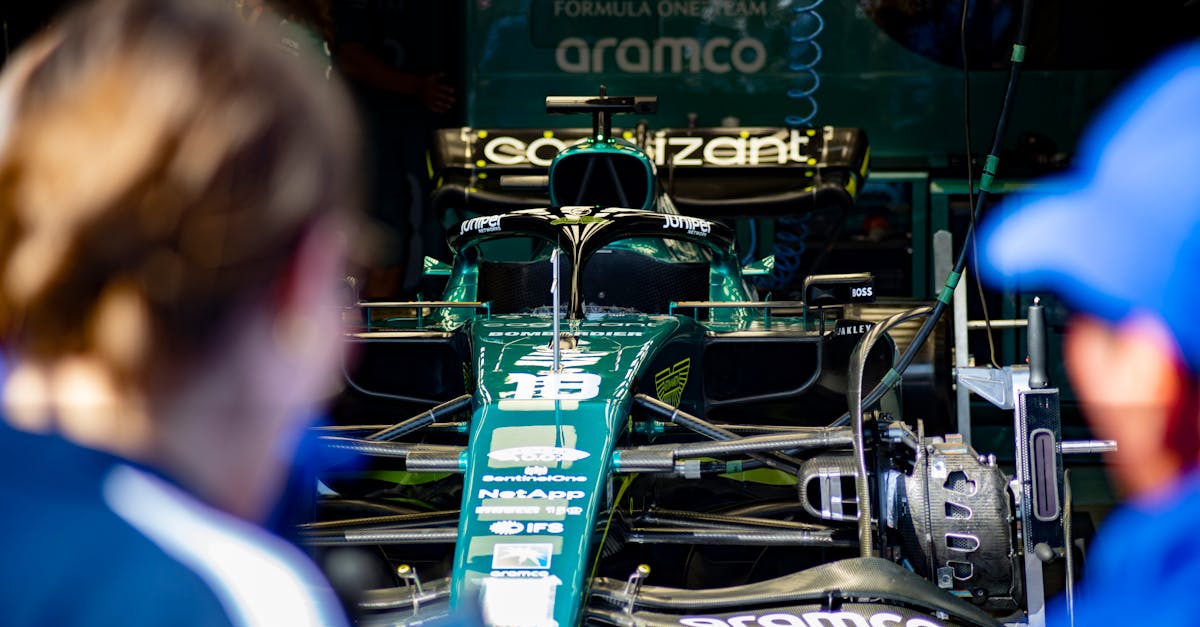
Monza in September has a way of stripping Formula 1 back to its essentials. There is no low-speed technical section to hide a weak diffuser, no long, grinding corner to expose a driver’s confidence under braking — just three enormous straights, three chicanes, and the two banked Curva Grande and Lesmo sweeps that punish anything less than total commitment. For a title race that currently has Andrea Kimi Antonelli holding a healthy but not unassailable advantage at the top of the standings, the Autodromo Nazionale di Monza arrives at a fascinating moment: a track where raw power, low-drag efficiency and bravery under braking tend to matter more than aerodynamic sophistication, and where the pecking order can shuffle in ways the previous few rounds haven’t suggested.
Circuit characteristics
Monza is, and always has been, the outlier on the calendar — the venue where teams run the lowest downforce levels of the season, sometimes stripping wings back to little more than bare endplates in the pursuit of top speed down the pit straight and through to the first chicane. That trade-off defines the whole weekend. Cars that are draggy or unstable under braking will bleed lap time on the straights but can claw it back into the chicanes; cars that are planted and efficient at high speed but nervous under heavy braking will struggle to convert that advantage into clean laps.
The layout itself is deceptively simple on paper — a lap dominated by three long straights broken up by the Variante del Rettifilo (Turn 1-2), the Variante della Roggia, and the Ascari chicane — but the details are unforgiving. The first chicane is Monza’s most notorious overtaking zone, a heavy braking zone at the end of the pit straight where DRS trains bunch up and lock-ups are common on lap one and beyond. The Curva Grande and the two Lesmo corners are taken at enormous speed with minimal steering input, meaning any instability there is punished instantly and can compromise the run through to Ascari. The Parabolica, the long right-hander that spits cars onto the start-finish straight, rewards a driver who can carry speed on the way in without paying for it on the way out, since exit speed there is amplified all the way down the pit straight.
Tyre stress is unusual here too: it’s less about lateral loading, given how few high-speed corners there are, and more about traction and braking stability, with Turn 1 in particular chewing through fronts under repeated heavy braking. Degradation tends to be moderate rather than severe, which historically has opened the door to varied strategies — one-stop races are common, but undercut and overcut windows around the chicanes can be tight, and a well-timed stop has decided plenty of Italian Grands Prix in the past. Slipstreaming remains a genuine factor in qualifying, where drivers hunt for a tow through Turn 1 and Ascari, and in the race, where the long straights make DRS trains and last-gasp passes into the first chicane a near-certainty.
The championship picture
Antonelli’s 242 points give him a lead of 59 over both Russell and Hamilton, who are tied on 183 — a scoreline that tells its own story about the season so far. That the two Mercedes-adjacent names (Russell driving for the works team, Hamilton presumably scrapping at the sharp end elsewhere) sit level on points suggests a title fight with more than one credible pursuer, even if neither currently has the momentum to be favourite over Antonelli. A 59-point gap is substantial but not remotely settled with a significant chunk of the season still to run; it’s the kind of margin that can evaporate over two or three difficult weekends, particularly at a venue like Monza where low-downforce efficiency can rearrange the competitive order in ways a twisty circuit wouldn’t.
For Russell and Hamilton, the calculus is straightforward in theory and brutally difficult in practice: they cannot afford to simply match Antonelli’s results, because a draw does nothing to close 59 points. They need him to have a genuinely poor weekend — a strategic misstep, an off-colour qualifying lap, a reliability scare — while simultaneously banking maximum points themselves. Monza’s slipstream-heavy qualifying format and its high correlation between grid position and race outcome (overtaking is possible but not trivial once cars are in clean air) make Saturday afternoon disproportionately important this weekend.
Norris, on 159, and Leclerc, on 155, are a further step back but not yet out of the conversation, particularly for a Ferrari driver walking into Ferrari’s home race. Monza is Scuderia Ferrari’s cathedral, and Leclerc knows better than most that the emotional weight of the tifosi can lift a car beyond where it strictly belongs on raw pace — but it can also amplify the pain of a below-par showing. For Norris, the calculation is less about home advantage and more about consistency: he needs Monza to be a weekend where McLaren’s low-drag package plays to its strengths, because points lost now to a rampant Antonelli are points that become exponentially harder to recover later in the year.
Ones to watch
Antonelli walks into Monza as championship leader but also, in a sense, as the man with the most to lose. A low-downforce track is a great leveller, and if his advantage over the field has been built partly on circuits that suited his car’s specific strengths, this weekend will test whether that pace translates to a totally different aerodynamic demand. How he handles the pressure of defending a lead at a circuit renowned for slipstream-assisted overtaking will be worth close attention.
Russell and Hamilton are both worth watching not just for their championship position but for how they approach risk. Level on points, neither can afford to play it safe if the other capitalises — expect both to push qualifying to the limit in search of that crucial tow.
Leclerc, racing at home in red, carries the sort of expectation that can either sharpen a driver or smother them. A strong Monza result would be timely, both for the championship and for the psychological lift it gives a team that lives and dies by its home crowd’s mood.
Norris and McLaren are the team to watch for a different reason: if their car is as competitive in a straight line as it has been through corners elsewhere, Monza could be the venue where they close a chunk of the gap to the front in one weekend.
What to watch for
- Qualifying slipstream tactics — who sacrifices track position to gain a tow, and whether any driver misjudges the queue and is left exposed.
- Downforce-level gambles — teams running unusually low or high wing levels relative to their rivals, and how that trade-off plays out over a full race distance.
- The Turn 1 chicane on lap one — historically Monza’s highest-drama overtaking zone and a common source of contact.
- Strategic divergence — with degradation manageable, expect at least one team to try an alternative one-stop window to jump rivals.
- Whether Antonelli’s title advantage narrows or hardens, given how differently Monza tends to reward cars compared with the rest of the calendar.
- Ferrari’s home-race form under the full weight of tifosi expectation.
The takeaway
Monza rarely respects a season’s established form, and that is precisely what makes this Italian Grand Prix such a compelling watch for the title race. Antonelli’s 59-point cushion is real, but a circuit built on straight-line speed and bravery under braking is exactly the kind of variable that can either cement a champion’s dominance or hand his rivals the sort of weekend they need to make this fight interesting again.