
Norris Questions Stewards Over Leclerc Penalty That Reshaped the Brazil Result
Lando Norris won at Interlagos but has publicly disagreed with the late penalty handed to Charles Leclerc, reviving an old argument about how predictably Formula 1's stewards apply their own standards.
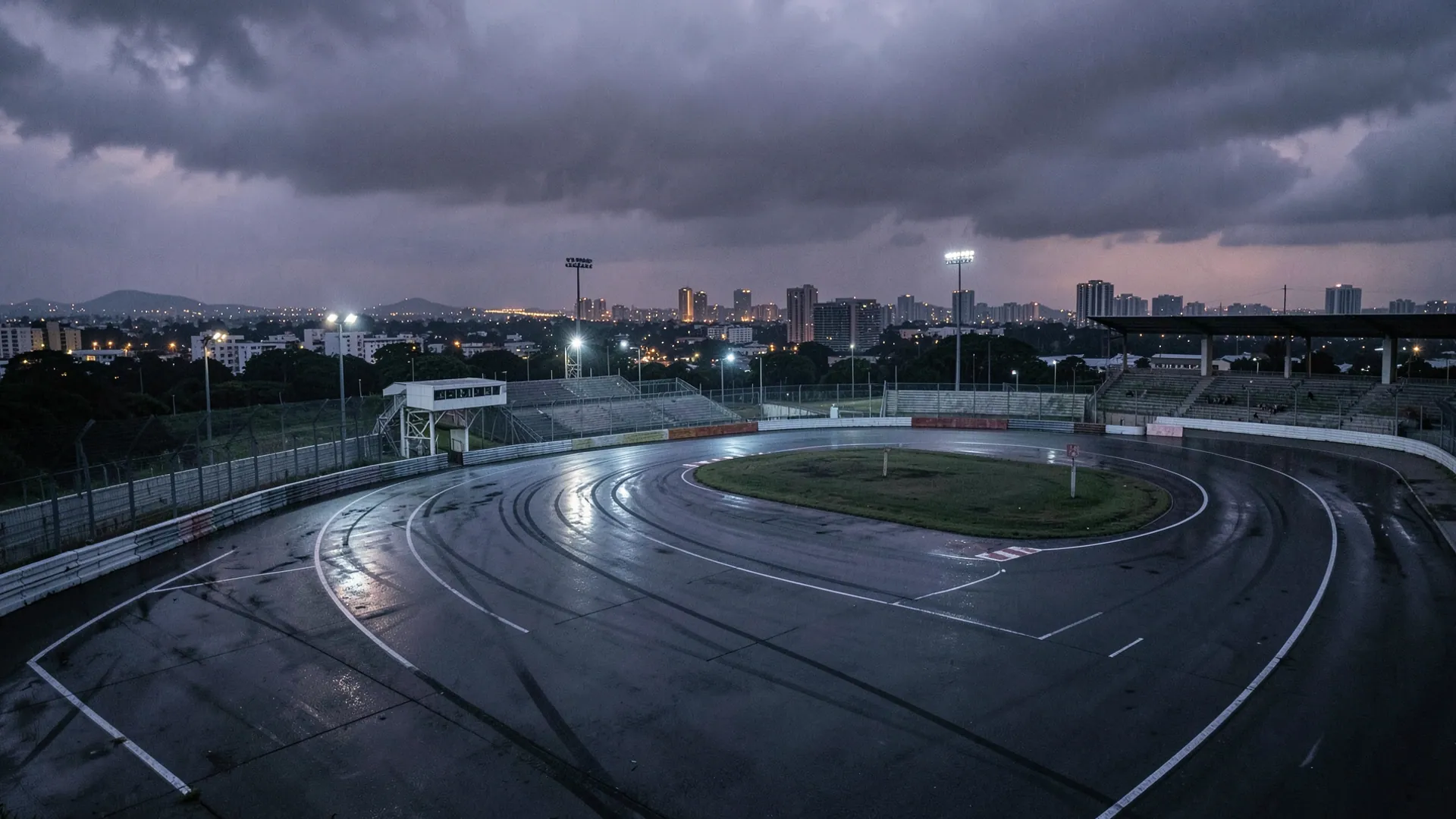
Lando Norris has said he disagrees with the stewards’ decision to penalise Charles Leclerc at the Brazilian Grand Prix, a verdict delivered late on Sunday that changed the classified result at Interlagos. Norris won the race from pole position, so the ruling did nothing to his own afternoon. That is exactly why his objection deserves attention.
A winner with nothing to gain
Race winners rarely spend their post-race capital on other people’s penalties. The usual script after a lights-to-flag victory is to talk about tyre management, the opening lap and the team. Norris chose to go further. As reported by GPfans and Crash.net, he made clear that he did not agree with the stewards’ call against the Ferrari driver.
The context makes the intervention more pointed. Norris arrives in Las Vegas as the reigning world champion in a season that has largely gone against him. Brazil was only his third win of 2026, and he sits sixth in the drivers’ standings on 246 points. He is not lobbying for a result he lost or against a rival he needs to slow down. Leclerc was classified eighth, taking four points from 14th on the grid, and the penalty had no bearing on the McLaren at the front.
When a driver with no stake in a decision says it was wrong, it carries more weight than the usual complaint from the injured party. It suggests the disquiet comes from the cockpit’s understanding of what is and isn’t acceptable wheel-to-wheel racing, rather than from self-interest. Drivers are the people the rules are meant to govern. If they cannot predict how a judgement will fall, that is a problem worth taking seriously, even when they turn out to be wrong about the individual case.
Why a handful of points still matters
On the face of it, the timing softens the stakes. Andrea Kimi Antonelli leaves Brazil on 390 points, 111 clear of Max Verstappen with three rounds left. The title is now beyond anyone else’s reach. Even if every remaining weekend carried a sprint, the most a driver could score is 99 points. The Mercedes driver has his championship, and no penalty at Interlagos altered that.
Below him, the picture is very different. The fight for second place in the championship is one of the tightest the sport has produced in years:
| Position | Driver | Points | Gap to 2nd |
|---|---|---|---|
| 2 | Max Verstappen | 279 | – |
| 3 | George Russell | 262 | 17 |
| 4 | Lewis Hamilton | 261 | 18 |
| 5 | Charles Leclerc | 249 | 30 |
| 6 | Lando Norris | 246 | 33 |
Five drivers are separated by 33 points. Verstappen strengthened his hold on second with a drive from 21st on the grid to second at the flag, but Leclerc remains in range. A penalty that drops a driver even one place in the points costs him at least a point and often several. It also hands those points to whoever moves up behind him. In a fight this compressed, a stewards’ decision can effectively redistribute the final championship positions.
The constructors’ table adds a financial layer. Ferrari’s 510 points leave them comfortably second, but only 17 points separate Red Bull (415) and McLaren (398) in the battle for third. Prize money is paid according to championship position, so every reshuffled finishing order means a cost or a windfall for somebody. Late changes to a result are never purely sporting matters.
Austin, Mexico and a rulebook that keeps moving
Norris knows this territory better than most. At the 2024 United States Grand Prix, he passed Verstappen around the outside at Turn 12 in the closing laps, left the track in doing so and was given a five-second penalty that cost him a podium. McLaren were furious and the drivers were divided. A week later in Mexico, Verstappen collected two 10-second penalties for his defending against Norris. The fallout from those two weekends led to repeated revisions of the driving-standards guidelines that stewards use to judge overtaking and defending.
Those guidelines were meant to bring clarity: who has the right to the corner, when a car is considered alongside, and when a driver forfeits his position by leaving the track. They have helped in some respects. But every rewrite resets the drivers’ sense of what is permitted, and every borderline case tests whether the text survives contact with real racing.
Norris has also lived through the other kind of result-changing decision. At Las Vegas last year, both McLarens were disqualified after excessive wear was found on the skid blocks. That verdict was painful, but it was unarguable: a measurement either falls within the regulations or it does not. Racing incidents are a different category. They depend on interpretation, on camera angles and on a panel’s reading of intent and responsibility. That panel changes from weekend to weekend, with former drivers serving among the stewards on a rotating basis. The FIA has discussed a more permanent, professionalised stewarding structure for years, precisely because rotation makes consistency harder to guarantee.
Consistency, not severity, is the real complaint
The stewards deserve a fair hearing here. They work with tools no driver has during a race: multiple onboard feeds, telemetry, overhead footage and the time to review it all. A driver’s view of an incident, even one watched back afterwards, is rarely as complete as the evidence in the stewards’ room. Norris disagreeing with a decision does not make it wrong, and the stewards would be failing in their job if they ruled by popular consent.
Yet the strength of Norris’s position is that it is not really about one incident. The persistent complaint from drivers over the past three seasons has rarely been that penalties are too harsh or too lenient. It has been that they are hard to predict. A move judged legitimate at one circuit appears to be punished at another, and a driver ends up racing as much against an interpretation as against the car beside him.
Timing is the second issue. A result that changes late on Sunday, after the podium and after the crowd has gone home, undermines confidence in what spectators saw. There are good reasons why some decisions cannot be made during a race, and investigating properly is better than ruling hastily. But the longer the gap between the chequered flag and the final classification, the more the sport asks fans to accept that the race they watched was provisional.
The remedy is neither softer stewarding nor fewer penalties. It is greater transparency about the reasoning, published promptly and written so that drivers can see how the guidelines were applied to the specific facts. The FIA does issue decision documents, but they tend to be brief. When the reigning champion publicly disagrees with a verdict that did not even affect him, that is evidence the explanation has not done its job.
Las Vegas will test whether anyone was listening
The next opportunity comes on 22 November in Las Vegas, a circuit that seems designed to generate exactly this sort of controversy. Long straights feed heavy braking zones, grip on a cold street surface is scarce, and the walls punish anyone who misjudges a move. Late-braking lunges and contested corner entries are almost guaranteed, and so is work for the stewards.
With the title settled, the remaining three rounds will be defined by the scramble for second place and by the constructors’ fight for third. Those are the battles a single contested ruling can tip. Norris’s comments make it likely the subject will be raised at the drivers’ briefing, and the FIA would be wise to use that meeting to walk the field through the reasoning behind the Leclerc decision rather than simply defend it.
The stewards may well have got Brazil right. But if the Las Vegas finishing order is still being rewritten long after the flag, and the drivers cannot explain why, the doubts Norris raised at Interlagos will follow the sport into the final two rounds.