
Rosberg, Hill and Sainz Diagnose Ferrari's Hamilton-Leclerc Problem: Unclear Rules
After Lewis Hamilton and Charles Leclerc renewed their duel in Mexico City, three drivers who have lived through intra-team rivalries argue that Ferrari's instructions, more than its drivers' egos, need fixing.
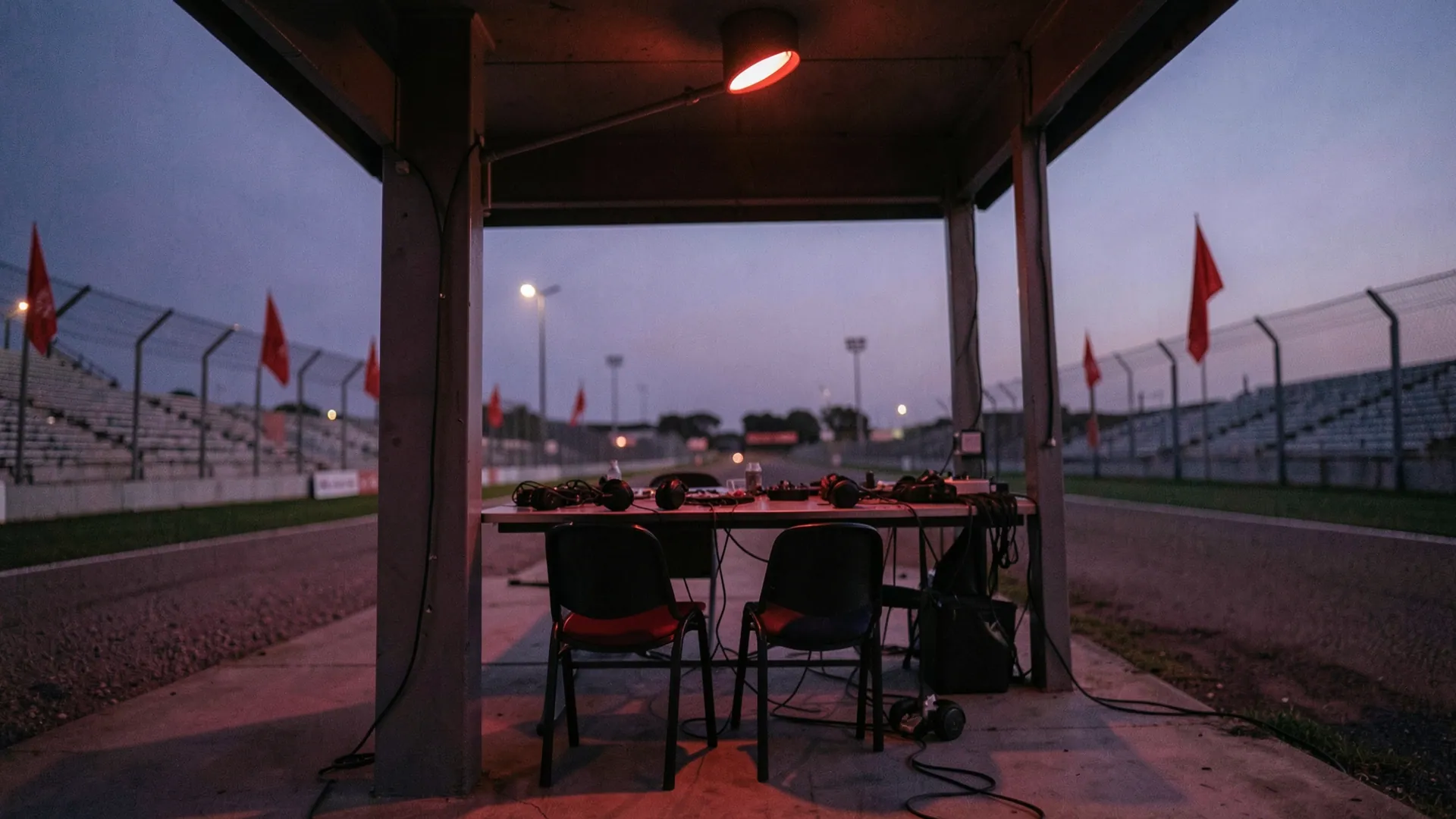
Nico Rosberg, Damon Hill and Carlos Sainz have each offered Ferrari a diagnosis this week for the friction between Lewis Hamilton and Charles Leclerc, which flared again at last Sunday’s Mexico City Grand Prix. Their arguments differ in emphasis but meet at one point: the trouble at Maranello has less to do with two strong-willed drivers than with a team that has not told them clearly enough what it expects.
It is a fair charge, and the 2026 standings show why Ferrari should act on it now rather than over the winter.
A pole position that ended without a win
Ferrari arrived at the Autódromo Hermanos Rodríguez with every reason to expect a third victory of the season. Hamilton qualified on pole, and Leclerc lined up third. By the flag, Hamilton had finished second and Leclerc fourth, while Max Verstappen won for Red Bull from fifth on the grid.
Andrea Kimi Antonelli finished third for Mercedes. That result stretched his championship lead to 119 points over Verstappen and 121 over Hamilton, with four rounds remaining.
For Ferrari, a weekend that began with the front of the grid in its hands produced 30 points and another reminder of how rarely it has converted speed into wins this year. The team has won two grands prix in 2026, one for each driver. Mercedes has won 12. When chances are that scarce, how the team manages its two drivers stops being a matter of etiquette and starts to affect results.
The rivalry itself is not new. Hamilton and Leclerc have been measuring themselves against each other since the seven-time champion arrived at Maranello in 2025. What has changed is that, with Ferrari closer to the front, their battles now involve podiums and wins rather than minor points.
Rosberg’s verdict: “The instructions are not clear enough”
Few people are better placed than Rosberg to comment on racing Hamilton in identical machinery. The pair were team-mates at Mercedes for four seasons, from 2013 to 2016. In that time their relationship moved from childhood friendship to open hostility, and Rosberg beat Hamilton to the 2016 title before retiring days later.
Speaking to Motorsport.com, Rosberg compared the Ferrari clashes to his own experience and said the problem was that “the instructions are not clear enough.” He knows the consequences at first hand. Mercedes’ history with the pair includes contact at Spa in 2014, the first-lap collision in Barcelona in 2016 that eliminated both cars, and the last-lap clash in Austria later that year. After each incident the team tightened its rules of engagement and made the penalties for breaking them more explicit. Mercedes never stopped the rivalry; it defined the terms on which it could continue.
Rosberg has also described, in comments reported by GPfans, how in the build-up to their 2016 title fight Hamilton would at times suspect a “conspiracy” against him after a contentious team decision. That remark connects directly to Rosberg’s point about clarity. When drivers do not know exactly what the rules are, every strategy call, pit-stop sequence and radio message can be read as favouritism. Vague instructions simply give two competitive people more to argue about.
Sainz on the pressure, Hill on the fix
Sainz brings a different perspective. He spent four seasons alongside Leclerc at Ferrari, from 2021 to 2024, before Hamilton took his seat, so he knows the Monegasque’s racing instincts and the expectations that come with a red car.
His assessment, given to PlanetF1, is blunt and realistic: “I don’t think you can ever calm those two guys 100% down and expect them not to go for a move for a race win.” Sainz is not telling Ferrari to give up on managing them, only to stop expecting harmony. Any framework Maranello writes has to assume that both drivers will push it to its limits, because that is what the team hired them to do.
Hill’s view, as reported by Crash.net and RacingNews365, is that the solution is simple, and he believes it “ends all debate”. He has standing on the subject. In 1996 he won the championship in a fight against his Williams team-mate, Jacques Villeneuve, that ran to the final round at Suzuka. Williams let its drivers race that year, and the team still won both titles.
That precedent is useful because it shows that letting drivers race is a legitimate policy when the team commits to it in advance. Problems arise when a team’s position on racing changes from week to week.
What the standings tell Ferrari to do
The case for strict team orders depends on what a team has to protect. Ferrari’s position in the 2026 standings is unusual in that respect.
| Drivers’ championship | Points | Gap to leader |
|---|---|---|
| 1. Andrea Kimi Antonelli (Mercedes) | 380 | — |
| 2. Max Verstappen (Red Bull) | 261 | 119 |
| 3. Lewis Hamilton (Ferrari) | 259 | 121 |
| 4. George Russell (Mercedes) | 250 | 130 |
| 5. Charles Leclerc (Ferrari) | 245 | 135 |
With four grands prix left, Antonelli’s lead over everyone is larger than the 100 points available from grand prix victories alone. Even Hamilton, Ferrari’s best-placed driver, would need a collapse at Mercedes along with a run of results Ferrari has not produced all year. Using orders to back a title challenge would mean protecting a challenge that, realistically, no longer exists.
The constructors’ table points the same way. Ferrari is second on 504 points, 126 behind Mercedes and 122 clear of Red Bull. Red Bull could close that gap on paper, but the cushion is comfortable enough that it does not justify holding one driver behind the other.
What is still at stake is more personal. Only 16 points separate Verstappen in second from Leclerc in fifth, with Hamilton and George Russell between them. Runner-up in the championship matters to drivers, and it matters to how each Ferrari driver enters 2027. Both have a reason to race hard. Ferrari has little reason to stop them.
The answer, then, is to put the rules in writing, as Rosberg suggests, rather than to hand down orders. Before Interlagos, Ferrari should tell both drivers exactly when they are free to race and when they are not:
- whether positions are frozen after the final pit stop;
- how strategy offsets are handled when one driver is on fresher tyres;
- what counts as an acceptable move between team-mates.
The team should then apply those rules the same way to both cars, including when the decision does not favour the driver with the more famous name. If both drivers know the rules in advance, there is far less room for suspicion afterwards.
Interlagos as a warning
The Brazilian Grand Prix on Sunday is a fitting place to test whatever Ferrari decides. Interlagos is where Sebastian Vettel and Leclerc collided in 2019 while fighting over fourth place, putting both Ferraris out of the race. That incident followed a season of disputed instructions and drivers who no longer trusted each other. It remains the clearest recent example of what happens when Ferrari leaves its drivers to settle a rivalry on track without clear rules.
Hamilton and Leclerc are both experienced enough to race wheel to wheel without contact, and so far they have mostly done so. Rosberg, Hill and Sainz are not predicting a crash. Their argument is that Ferrari is relying on goodwill when it should be relying on rules, and that this goodwill will run out at the moment when results matter most.
Ferrari’s realistic goal for 2027 is a title challenge, and that is when the stakes of this rivalry will rise sharply. If Maranello agrees a clear, fair framework in the final four races of 2026, it will start next season with a rivalry under control. If it does not, the arguments over Mexico City will return in a year when the championship is at stake.