
Audi Hires Former Mercedes Engine Chief as It Confronts Its Power-Unit Gap
By recruiting one of the engineers behind Mercedes' hybrid-era dominance, eighth-placed Audi has acknowledged that its 2026 power unit is the main obstacle between it and the front of the grid.
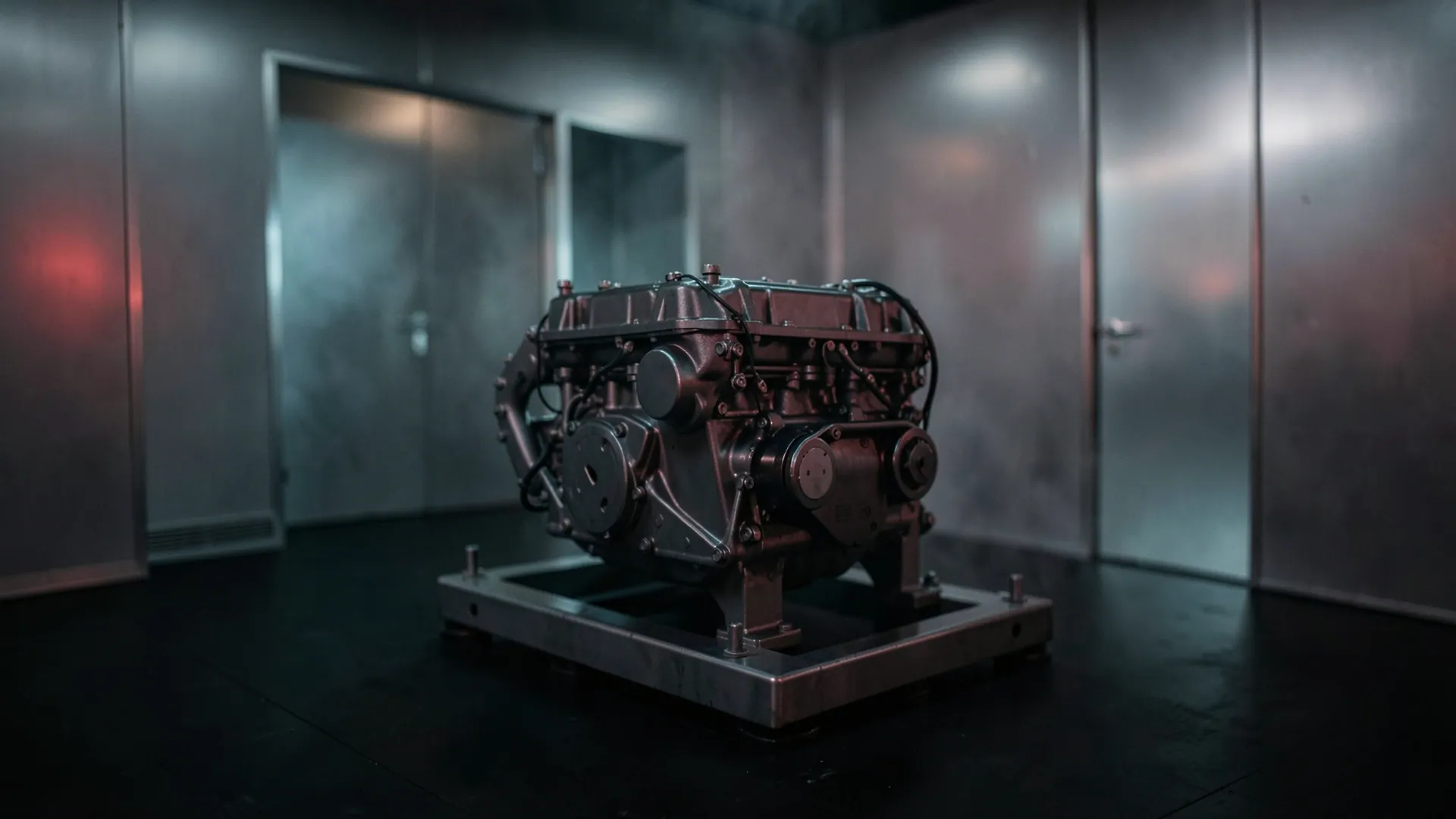
Audi has hired a former Mercedes Formula 1 engine chief, one of the figures behind the Brackley team’s hybrid-era dominance, to lead a key part of its F1 operation, according to PlanetF1 and GPfans. The appointment comes three days after a United States Grand Prix in which neither Audi scored. After 18 rounds the German works team has 23 points and sits eighth in the constructors’ championship.
Teams make senior hires every year. This one stands out because of where the engineer has come from and what that says about where Audi believes its problem lies. A manufacturer that builds its own power unit has gone to the most successful engine department of the past 12 years and taken someone who helped build it. That is not the move of a team chasing a little more from its floor or its tyre management. It is an admission that the gap is in the engine.
What Brixworth knows that Neuburg needs
Mercedes High Performance Powertrains in Brixworth produced the power unit that underpinned eight consecutive constructors’ titles from 2014 to 2021. Its advantage at the start of that era came from early, deep integration between engine and chassis, from thermal efficiency the rest of the paddock took years to match, and from reliability that rarely cost the works team or its customers a result.
The 2026 regulations removed the MGU-H, moved the split between combustion and electrical power close to 50/50, and introduced fully sustainable fuel. In principle, that reset should have levelled the field. In practice, Mercedes is ahead again. The works team has won 12 of the 18 Grands Prix, nine of them through Andrea Kimi Antonelli and three through George Russell, and leads the constructors’ championship with 607 points, 133 clear of Ferrari. Antonelli’s victory from pole in Austin took him to 365 points, 123 ahead of Russell.
Brixworth has now got two very different rulebooks right from the first race. That points to something more durable than a single clever design: a method for setting targets, correlating dyno results with track data, and turning efficiency gains into lap time without breaking parts. That method is what Audi is buying.
The limits of the deal are clear. Intellectual property rules and contractual restrictions mean an incoming engineer cannot bring Mercedes drawings to Audi’s power-unit base in Neuburg. What they can bring is judgement. They know which development paths are worth the dyno hours, how a winning engine department is organised, and what “good” looks like on the data. For a manufacturer in its first season as a full works entrant, that calibration may be worth more than any individual component.
Eighteen rounds of evidence
The table makes Audi’s position plain, though it does not tell the whole story.
| Pos | Constructor | Points |
|---|---|---|
| 6 | Alpine | 69 |
| 7 | Haas | 30 |
| 8 | Audi | 23 |
| 9 | Williams | 12 |
| 10 | Aston Martin | 7 |
| 11 | Cadillac | 0 |
Audi is seven points behind Haas for seventh and 11 ahead of Williams. Taken alone, that is a respectable place in a congested lower midfield. But Audi did not take over Sauber to finish between Haas and Williams. It has set itself the target of fighting for the championship by 2030, and it measures itself against Mercedes, Ferrari and Red Bull, not against customer teams.
Austin was a fair example of the problem. Nico Hülkenberg started 11th and finished 11th, one place outside the points and with no obvious way to make up ground. Gabriel Bortoleto recovered from 21st on the grid to 13th, which was a solid drive, but he was lapped. In fact every finisher from 12th place down was lapped by Antonelli. When the four leading teams fill the top eight places and most of the field goes a lap down, the deficit cannot be measured in tenths per lap. It is structural.
From outside the team, it is difficult to say how much of that deficit belongs to the chassis and how much to the power unit. A hire of this kind is Audi’s own answer to that question. Teams with limited budgets for senior recruitment spend them where they believe the biggest losses are.
The rest of the grid supports that view, with some caveats. Mercedes power sits in the championship-leading works car, in a McLaren that is tied with Red Bull on 355 points, and in an Alpine that is sixth. Williams, also Mercedes-powered, has only 12 points, which shows that a strong engine cannot save a weak overall package. The flip side is just as relevant to Audi. Aston Martin, the works Honda team, has seven points. Under these regulations, building a competitive power unit has proved harder than many expected.
The Red Bull precedent and the Honda warning
Audi is not the first manufacturer to try to shorten its learning curve by recruiting from Brixworth. When Red Bull set up its own powertrains division in Milton Keynes ahead of these regulations, it hired heavily from Mercedes HPP. This year’s results suggest the approach worked. Max Verstappen has two wins, finished third in Austin from second on the grid, and sits fourth in the drivers’ championship on 236 points. With Isack Hadjar sixth in Texas, Red Bull is level with McLaren in the constructors’ standings. A brand-new engine programme matching an established customer team in its first season is a considerable achievement, and the Mercedes alumni deserve part of the credit.
The opposite lesson comes from Honda’s return in 2015. Honda arrived with a strong engineering reputation and a works partnership with McLaren, then spent several seasons fighting a power unit that was down on power and unreliable. It did not win until 2019 with Red Bull, and did not take a drivers’ title until 2021. Newcomers do not always fail, but the delay between identifying a power-unit problem and fixing it is measured in seasons, because new hardware needs design time, dyno validation and a slot in a tightly regulated development schedule.
Audi has more help than Honda had. The 2026 rules include a catch-up mechanism that gives additional development scope to manufacturers that fall well short of the benchmark. The power-unit cost cap also means Mercedes cannot simply outspend everyone to stretch its lead. But a catch-up mechanism only provides the opportunity. Someone still has to decide how to use the extra freedom, and an engineer who has spent years setting the benchmark is well placed to make sure Audi’s additional development goes to the right areas.
Five races left, and a much longer timescale
None of this will change anything in Mexico City on 1 November, or in the four rounds after it. The new hire will not produce lap time this season. Audi’s realistic aims between now and the end of the year are to overturn the seven-point gap to Haas for seventh, protect its lead over Williams, and give Hülkenberg and Bortoleto as many chances as possible to score from the fringes of the top 10. The thin air of the Autódromo Hermanos Rodríguez puts heavy demands on cooling and power units, so it should offer at least some evidence of where Audi’s hardware stands.
The appointment matters more beyond 2026. It shows that Audi’s board, which has shown little patience with half-hearted motorsport projects in the past, has accepted the scale of the deficit and chosen to address it with the expertise most proven to work. It also adds to a trend that should concern Mercedes, even while it dominates. Brixworth’s know-how is now spread across several rival programmes, and every engineer who leaves takes part of that advantage to a competitor.
Hiring an architect of Mercedes’ success was the obvious move, and Audi was right to make it. The real test is whether it changes Audi’s development rate. If Audi’s power unit has not clearly closed the gap to Mercedes by the middle of 2027, with everything the catch-up rules allow, Neuburg’s problem will no longer be a shortage of know-how. It will be whether Audi’s own organisation can make good use of the talent it has brought in.