
F1's Middle East Deadline Passes With Qatar and Abu Dhabi Still in Limbo
Formula 1 has let its own mid-October deadline lapse without confirming the final two rounds, and that silence could decide whether Andrea Kimi Antonelli's title is won on track or settled by a calendar announcement.
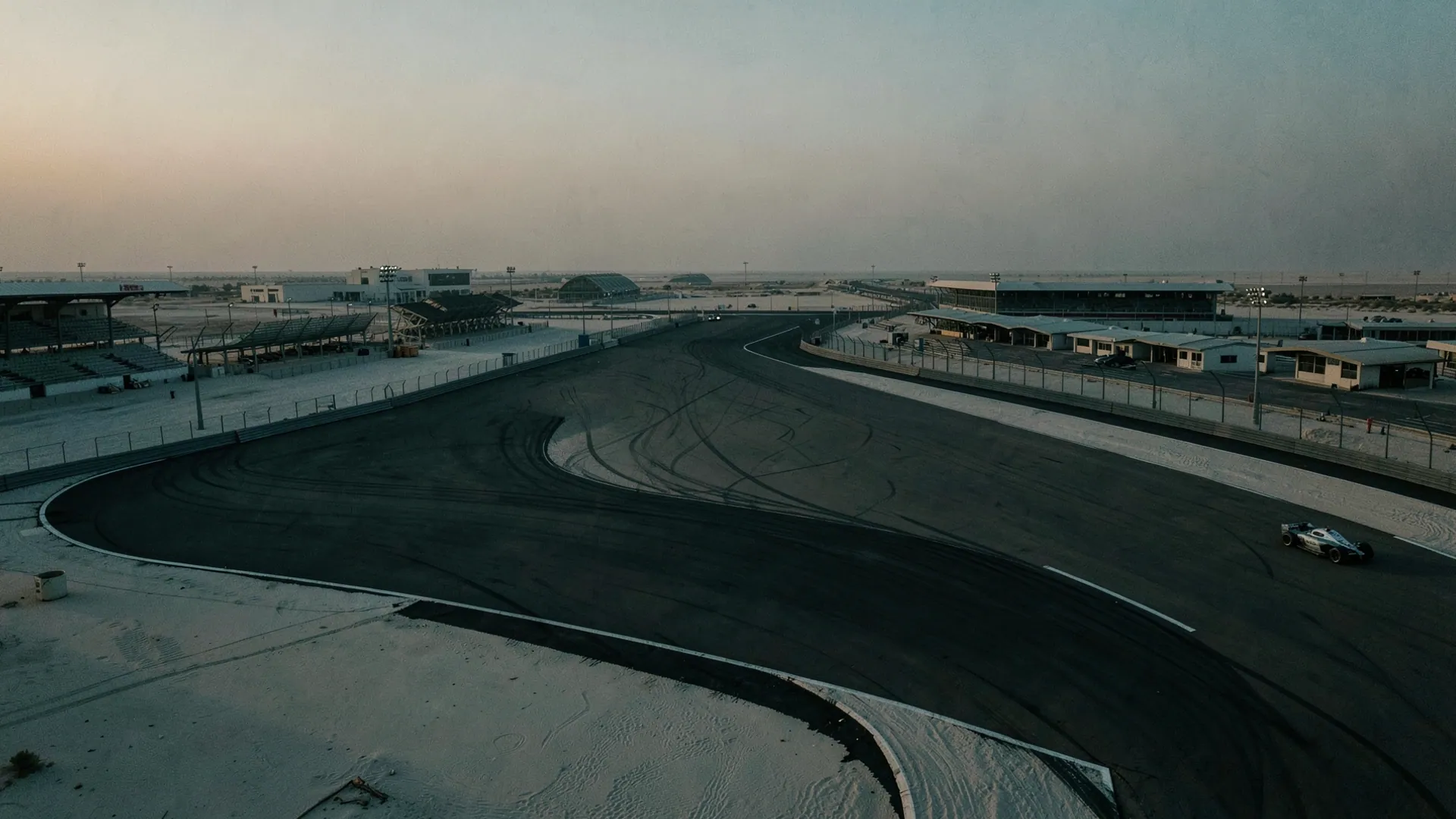
Formula 1’s self-imposed mid-October deadline for a final decision on the Qatar and Abu Dhabi Grands Prix has passed without an announcement, leaving the last two rounds of the 2026 season unconfirmed. As Crash.net has reported, the cut-off arrived and no definitive call followed. With six rounds still to run and the United States Grand Prix in Austin 10 days away, teams, drivers and fans head into the run-in without knowing whether it is six races long or four.
A cut-off that came and went
Deadlines in this sport are rarely arbitrary. A flyaway race depends on a chain of commitments: freight routing, hospitality build, travel and accommodation for thousands of personnel, broadcast production and the commercial arrangements with the promoter. Each of these hardens as the date approaches, and each becomes more expensive to unwind. A mid-October deadline for events at the end of the season reflects the point at which F1 judged it needed certainty to plan properly.
Letting that date slip is therefore significant. Either the situation that prompted the deadline has not resolved itself clearly enough to justify a firm decision, or F1 has concluded that the cost of waiting is lower than the cost of calling it wrong. Both are defensible positions. Neither is comfortable for the teams, whose logistics departments are now planning two versions of the end of the year at once.
There is also a credibility question. A deadline that the sport sets and then quietly passes signals that the timetable was softer than advertised. That matters less now than it will the next time F1 asks promoters, partners or teams to plan around a date it has announced.
Why Antonelli’s crown could be settled by the calendar
The sporting consequences are considerable, and the numbers explain why.
Andrea Kimi Antonelli leaves Singapore on 340 points, 102 clear of his Mercedes team-mate George Russell. Lewis Hamilton is 111 behind, Max Verstappen 119 and Charles Leclerc 125. Antonelli’s third place at Marina Bay, behind Verstappen and Leclerc, gained him 13 points on Russell, who recovered from 19th on the grid to ninth.
Counting Grand Prix points only (sprint points would add to these sums), the picture splits in two:
| Scenario | Rounds left | Maximum points available | Russell’s deficit | Title status |
|---|---|---|---|---|
| Full calendar | 6 | 150 | 102 | Open |
| Qatar and Abu Dhabi lost | 4 | 100 | 102 | Antonelli already champion |
If the two Gulf rounds were removed, no one could catch Antonelli. Russell would need 102 points from a maximum of 100. The 2026 world championship would have been decided before anyone reached Austin, and the official confirmation would come from a calendar statement rather than a chequered flag.
On the full calendar, the leader still has work to do. To clinch in Austin, he would need to outscore Russell by at least 24 points, which in practice means winning while Russell finishes 10th or lower and Hamilton no higher than fifth. That is unlikely given the form Russell showed in carving through the field in Singapore. A more realistic path takes the decision deeper into the Americas leg, which would give the season the kind of on-track coronation an eight-win campaign deserves.
None of this changes the substance of Antonelli’s season. He has won eight Grands Prix to Russell’s three and has been the defining driver of the year. But there is a real difference between a first title being sealed by his own drive and its being confirmed by an administrative decision. F1 knows this, and it may partly explain the reluctance to make a premature call.
The constructors’ fight is less sensitive. Mercedes lead Ferrari by 134 points, and even four rounds would leave a theoretical 172 points on the table for a team scoring a one-two at every race. The battle behind is tighter: McLaren sit third on 339, only seven points ahead of Red Bull. Losing two race weekends would reduce the chances for that order to flip, and with them the chance to change who collects the prize money that comes with third place.
What 2011, 2020 and 2022 teach about late decisions
F1 has been here before, and recent history offers warnings in both directions.
In 2011, the Bahrain Grand Prix was postponed from its season-opening slot amid unrest in the country. The question then dragged on for months. The World Motor Sport Council voted in June to reinstate the race later in the year, only for it to be abandoned after teams objected. The episode damaged everyone involved, largely because the sport kept the question open long after it could have closed it, and then reversed itself publicly.
The 2020 season showed the opposite skill. Faced with the pandemic, F1 rebuilt its calendar in instalments, confirming races in batches, adding venues such as Portimão, Mugello and Imola, and running a second race in Bahrain on a different layout. Each instalment, once announced, held. Flexibility worked because it was paired with firm commitments at every stage.
The 2022 Saudi Arabian Grand Prix is the third reference point. A missile strike on an oil facility near the Jeddah circuit during Friday practice led to a long meeting between drivers, team principals and officials before the race went ahead. The lesson there was about process. Decisions on whether to race in a region facing uncertainty need clear ownership and clear communication, because the people asked to turn up deserve to know who is weighing the risk and on what basis.
Taken together, those episodes suggest that a late decision is not automatically a bad one. What causes lasting harm is a decision that is late, unexplained and then revised.
The options, and who carries the cost of waiting
In principle, F1 has three routes for each event: confirm it as scheduled, cancel it, or replace it with an alternative. Replacement is the most complicated. A substitute venue needs a circuit that is available and licensed for F1, a promoter willing to commit at short notice, and logistics that fit between the surrounding rounds. In 2020 that was possible because much of the world’s sporting calendar had been wiped clean. In a normal autumn, it is much harder.
The cost of uncertainty is not shared evenly. The leading teams have the logistics depth to plan for both outcomes. Further down the order, the arithmetic is sharper. Haas sit seventh on 30 points, with Audi seven behind and Williams on 12. Aston Martin have seven points and Cadillac are yet to score in their debut season. For those teams, each race is a chance to move up a position worth real prize money or, in Cadillac’s case, to record a first point. Losing two of the six remaining opportunities would effectively freeze an order that is still open to change.
The drivers’ market is also affected. Isack Hadjar, Liam Lawson and Arvid Lindblad are all building cases inside the Red Bull system, and a shorter season means fewer races in which to make them.
Austin should not arrive without an answer
F1’s caution is understandable. A hasty cancellation that later proves unnecessary costs money and goodwill. A hasty confirmation that later collapses repeats 2011. But the deadline existed for a reason, and every day past it makes the problem harder for teams and the eventual message harder for fans to accept.
The sensible course is to give a firm answer, one way or the other, before the cars take to the track in Austin ahead of the race on 25 October. If the Gulf rounds are cancelled, the sport should say so plainly and accept that Antonelli is champion, rather than letting the title be confirmed weeks later in a footnote. If they are going ahead, confirming it now would restore some credibility to a timetable that has already slipped once.
A season this dominant deserves a clear finish. F1’s job over the next 10 days is to decide where that finish will be, and then to stick to it.