
Colapinto's Plea Over Online Abuse Puts Pressure on F1 to Protect Drivers
Franco Colapinto has asked fans to stop the online abuse he fears is harming his career, exposing how far Formula 1 and its teams still have to go to shield drivers from it.
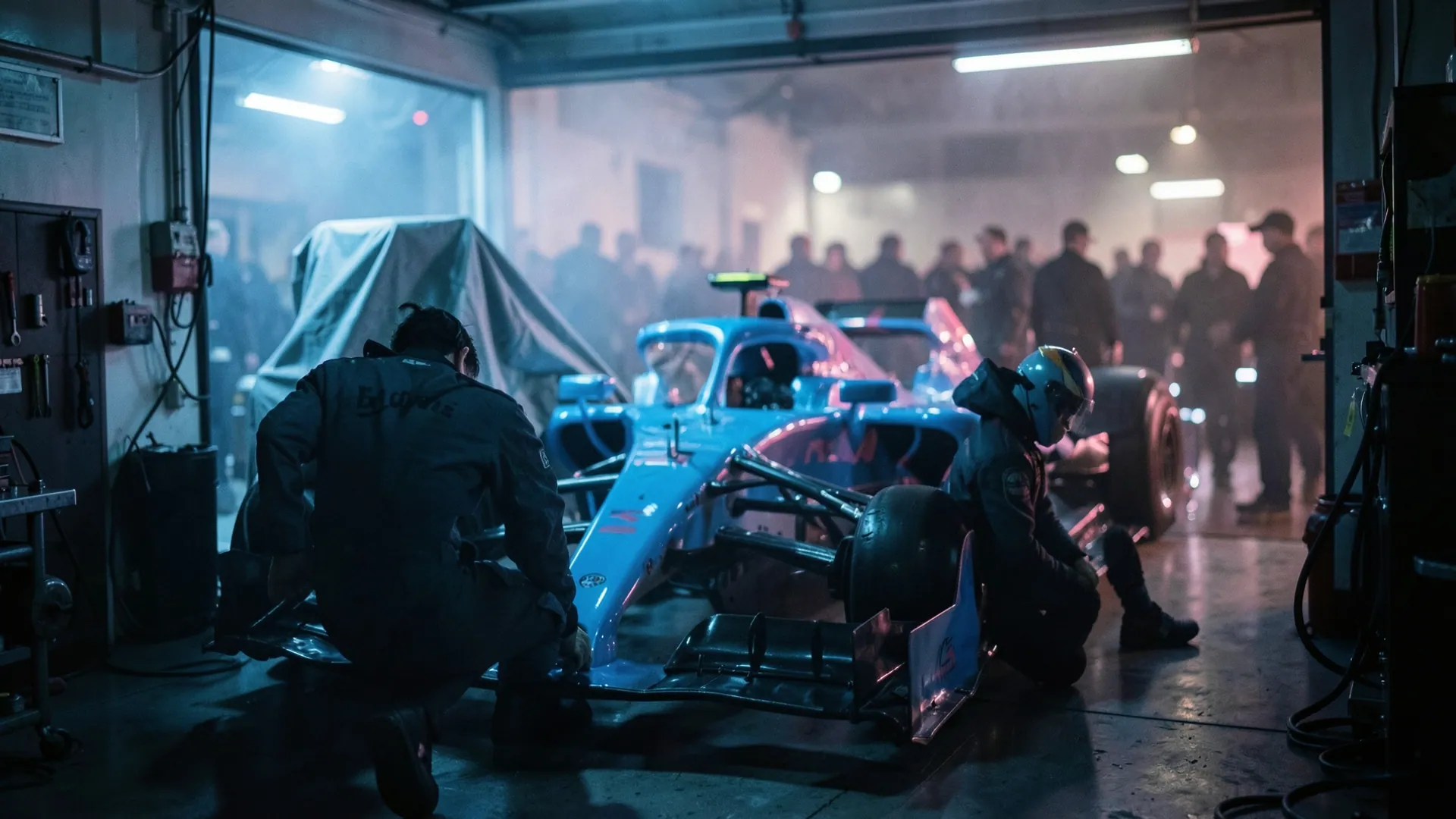
Franco Colapinto has urged fans to stop the online abuse he believes is damaging his Formula 1 career, according to Sky Sports F1. The Alpine driver’s appeal comes with six rounds of the 2026 season remaining and his future at Enstone far from settled. Few drivers say publicly that the noise around them could cost them their seat, and fewer still address it so directly to the people making it.
A driver asking his own crowd to stand down
Drivers who speak about online abuse usually do so as victims, describing what lands in their inboxes. Colapinto’s intervention is different. He has framed the problem in career terms, acknowledging something the sport rarely says out loud: the behaviour of a driver’s online following now shapes how teams, sponsors and rival paddock figures judge that driver.
That is an uncomfortable position for a 23-year-old. Colapinto did not choose the people who post in his name, and he cannot moderate them. Yet he understands that every abusive message sent by someone with an Argentine flag in their profile picture gets filed, fairly or not, under his name. Speaking up costs him something, because a section of the following that made him a commercial phenomenon will hear it as a rebuke. Staying quiet would cost more.
He deserves credit for that. The most effective voice against a fanbase’s worst behaviour is the person that fanbase claims to support. Team statements and governing-body campaigns are easy to dismiss as corporate box-ticking. A plea from the driver himself is harder to ignore.
The fanbase that made him, and the problem it created
Colapinto’s following has always been both his greatest asset and his most awkward liability. When Williams promoted him from Formula 2 at Monza in 2024 to replace Logan Sargeant, he became the first Argentine to race in F1 since Gastón Mazzacane more than two decades earlier. A country with deep motorsport roots and a long wait for a driver of its own embraced him with an intensity the paddock had not seen for a rookie. Points in Baku and Austin turned interest into something close to fervour.
The less flattering side arrived quickly. Crashes in São Paulo and Las Vegas late in 2024 brought scrutiny, and the online reaction to anyone seen as standing in his way grew increasingly hostile. When Alpine signed him as reserve for 2025, the pressure on Jack Doohan became relentless. Well before Alpine replaced the Australian with Colapinto after six rounds, Doohan had been the target of sustained online hostility, and the team spent much of that spring fielding questions that were really about social media rather than lap times.
None of that was Colapinto’s doing. But teams remember episodes like it, and they price them in.
The wider sport has its own scar tissue. Nicholas Latifi received death threats after his crash in Abu Dhabi in 2021 triggered the safety car that shaped the title decider, and he later wrote candidly about the experience. Lewis Hamilton was subjected to racist abuse after the British Grand Prix earlier that year, drawing condemnation from Mercedes, F1 and the FIA. Each episode followed a familiar arc: outrage, statements, a promise to do better, then silence until the next one.
Fourteen points behind Gasly, with perception in play
Colapinto’s appeal lands at a delicate moment on track. He sits 12th in the drivers’ championship on 27 points, 14 behind his team-mate Pierre Gasly, who is 10th on 41. Gasly has supplied roughly 60 per cent of Alpine’s 68 points.
| Points | Championship position | |
|---|---|---|
| Pierre Gasly | 41 | 10th |
| Franco Colapinto | 27 | 12th |
| Alpine (constructors’) | 68 | 6th |
Alpine are sixth in the constructors’ standings, a clear 38 points ahead of Haas but 32 behind the RB F1 Team in fifth. Singapore was a frustrating weekend for the team. Gasly started seventh but slipped out of the points and finished 11th, a lap down, leaving Alpine without a score while RB banked six through Liam Lawson’s seventh place.
That is the context in which “damaging his career” should be read. Colapinto is not losing the intra-team battle by a huge margin, but he is losing it, and a driver in that position is judged on more than the stopwatch. Team principals weighing a seat ask whether a driver brings money, marketability, stability and a manageable public profile. Colapinto scores heavily on the first two. If the third and fourth start to look like risks, the calculation shifts.
That calculation is unfair, and it should not happen. A team that quietly marks a driver down because some of his supporters behave badly is punishing the target of the problem and handing the abusers proof that their noise matters. But F1 teams are businesses with sponsor relationships to protect, and pretending the incentive does not exist helps nobody. Colapinto plainly sees it, which is why he has spoken.
How F1 could use its commercial weight
The sport has not been idle. The FIA’s Drive It Out campaign put online abuse on the governing body’s formal agenda and brought officials, drivers and teams into the same conversation. Teams now routinely issue statements when a driver is targeted, and several have tightened the moderation of their own channels. All of that helps at the margins, but none of it has changed the basic dynamic.
The core difficulty is that F1 does not control the platforms where abuse happens. It can, however, use its considerable commercial weight far more forcefully than it does. Formula 1 is one of the most valuable content properties on social media, and it negotiates with platforms as a major partner. A coordinated, sport-wide reporting channel, through which teams, drivers and the FIA refer abusive accounts directly and platforms commit to response times, would be a modest ask from an organisation of that size.
There are practical steps closer to home, too:
- Consequences in the real world. Where abuse can be linked to identifiable individuals, F1 and promoters can bar them from events and fan zones. A ticket ban carries more weight than a muted account.
- Shared moderation resources. The best-resourced teams can absorb a torrent of abuse on their channels. Smaller outfits, and individual drivers running their own accounts, often cannot. A central service funded by F1 would protect the drivers least able to protect themselves.
- Clear support for drivers who speak out. Colapinto has taken a public risk. Alpine and F1 should back him visibly and unambiguously, so that fans hear one message from the sport, the team and the driver.
- Honesty about engagement metrics. F1 has spent the past decade celebrating rivalry, controversy and online reaction as proof of growth. Outrage drives clicks, and clicks drive valuations. Until the sport separates passion from hostility in what it rewards and promotes, it will keep feeding the thing it condemns.
The last point matters most. Every time a contentious incident is packaged as viral content and pushed out for engagement, the sport stokes the same fire it later asks fans to put out. A championship that wants a global, young, intensely loyal audience has to accept some responsibility for the tone in which that audience is encouraged to engage.
Austin offers an early test
The first chance to see whether Colapinto’s words have landed comes at the Circuit of the Americas on 25 October, the first of the six remaining rounds. With Mexico City and São Paulo to follow, the season heads into a run where Latin American support will be at its loudest and most visible, in the grandstands and online.
That support can be the best thing about Colapinto’s career. The colour and noise of the Argentine crowd have energised races, and his commercial pull is part of what earned him a seat. The question now is whether his loudest supporters will listen when their driver tells them that the behaviour of some among them is hurting him.
Colapinto has done the hard part by saying it. If F1 and Alpine leave him to carry that message alone, they will have learned nothing from Latifi or Doohan. The sport should treat his appeal as its cue to act. Austin, with a large Latin American following expected and his seat for next year still to be secured, is where both he and the sport can show that the message has been heard.