
FIA Targets 2030 for V8 Return as F1's Hybrid Era Barely Begins
The FIA president has put a date on a V8 comeback, naming 2030 just 17 rounds into a hybrid formula that Mercedes is dominating and several manufacturers are still struggling to master.
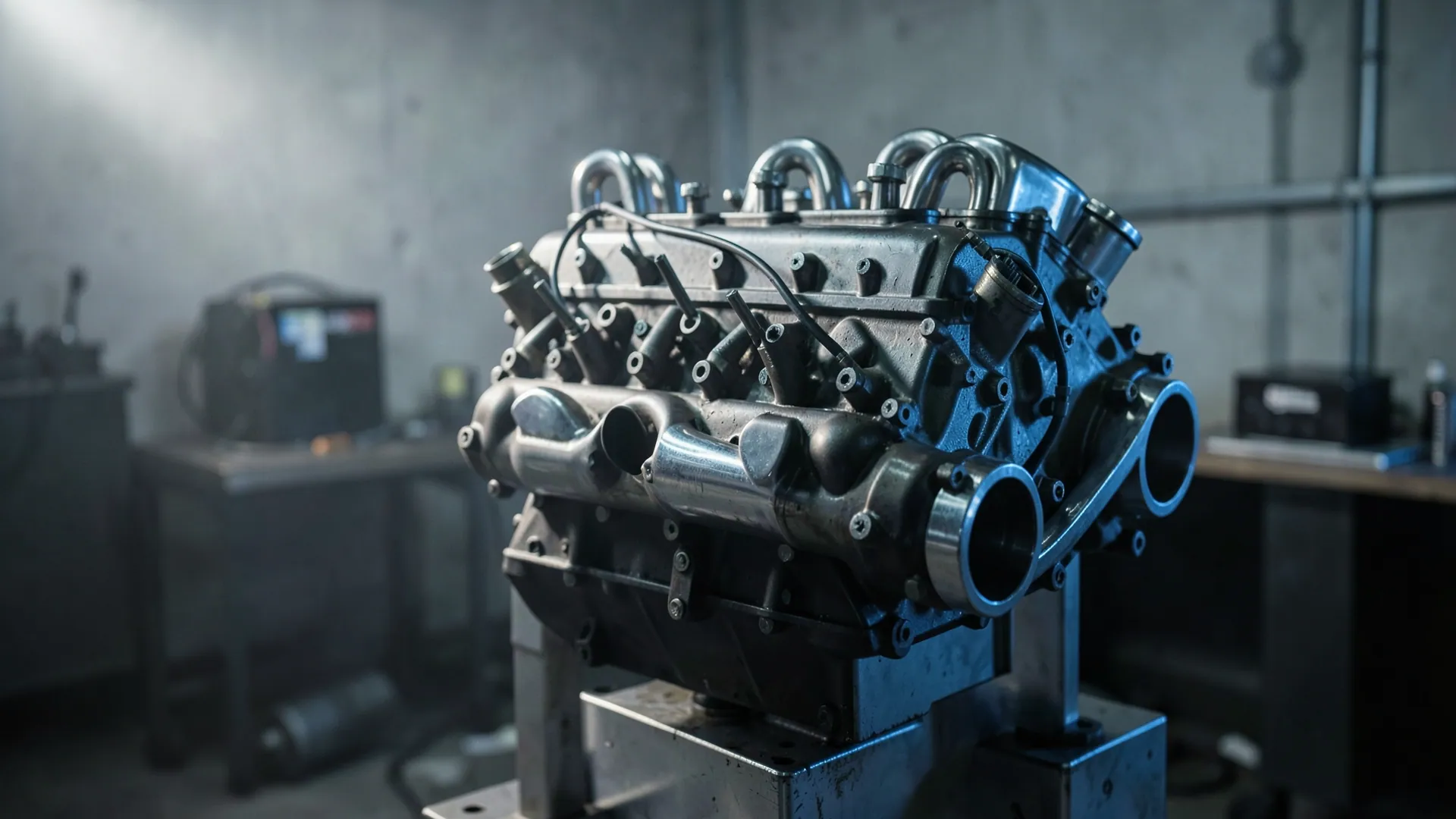
FIA president Mohammed Ben Sulayem has confirmed that Formula 1 intends to race with V8 engines again in 2030, putting a firm year on an idea he has championed since last year. He made the remarks during a panel on the sport’s planned return to Africa, an unlikely setting for a statement that would rewrite the most expensive and politically sensitive part of every car on the grid.
The timing matters as much as the substance. The current power unit regulations are 17 rounds old. The manufacturers who built engines for them are still fighting over the basics, and one of them is winning by a distance. Announcing a successor now changes how every team, engine builder and prospective entrant plans the next four years.
A date for the V8, but no rulebook yet
What has been confirmed is a direction and a date. RacingNews365 and PlanetF1 both report the 2030 target from the FIA president’s comments. What has not been published is just as significant. There is no technical framework yet: no displacement figure, no defined electrical share, no confirmed fuel specification and no cost cap for the new engines.
That gap is not a footnote, and the history of this idea shows why. In early 2025 Ben Sulayem floated a return to V10s running on sustainable fuel, and the proposal was discussed with the manufacturers. They were not willing to abandon the 2026 regulations they had spent years and hundreds of millions preparing for. The conversation then shifted to V8s and a later start date, which is where it has now landed.
A target year gives the idea weight it lacked a year ago. Until the FIA, Formula One Management and the engine makers sign off a set of regulations, though, 2030 is a stated intention rather than a settled fact. The engine formula is agreed through the sport’s governance structures, and the manufacturers have a powerful voice in that process. The FIA can propose, but it cannot simply decree.
A formula sold on stability, questioned after one season
The 2026 rules were sold on stability and relevance. The 1.6-litre V6 turbo was retained, the complex and costly MGU-H was removed, and electrical output was raised sharply so that roughly half the car’s power comes from the battery and MGU-K. All of it runs on fully sustainable fuel. The package was designed to bring car makers into the sport, and it worked. Audi took over Sauber, Ford partnered Red Bull’s new in-house engine programme, Honda became Aston Martin’s works supplier, and Cadillac arrived with Ferrari customer engines while General Motors develops its own power unit.
Those companies committed on the understanding that the rules would hold for a meaningful period. A V8 in 2030 means the current formula would run for four seasons. That is not unusually short by F1 standards; the V8 era itself lasted from 2006 to 2013. It is short, however, relative to the capital these manufacturers have sunk into it, and some of them have barely begun to see a return.
The case for change has been building since before a wheel turned in 2026. Concerns were raised during development about how much energy the cars would have to harvest and deploy, and about drivers managing battery charge rather than racing flat out. Cars that already carry heavy batteries and cooling systems are not getting any lighter. A V8 on sustainable fuel with a smaller electrical component answers all of those complaints, and restores the sound fans have missed since 2013.
How Mercedes’ 11 wins colour the debate
The championship tables make the political dimension hard to ignore. Mercedes has won 11 of the 17 Grands Prix so far and leads the constructors’ standings on 578 points, 134 clear of Ferrari. Andrea Kimi Antonelli has eight wins and 340 points, 102 ahead of his team-mate George Russell with six rounds remaining.
Singapore reinforced the picture rather than altering it. Max Verstappen won from pole for Red Bull, showing that the Red Bull Ford package can win on the right circuit. But Antonelli’s third place, with Russell recovering only to ninth from 19th on the grid, extended a lead that already looked decisive.
| Constructors after Round 17 | Points | Wins |
|---|---|---|
| Mercedes | 578 | 11 |
| Ferrari | 444 | 2 |
| McLaren | 339 | 2 |
| Red Bull | 332 | 2 |
Precedent hangs heavily over this. When the hybrid era began in 2014, Mercedes won 16 of 19 races and went on to dominate for years, largely because it understood the new power unit rules better and earlier than anyone else. Every major engine reset since has carried the same risk: one manufacturer reads the rules best and the field spends a long time trying to catch up.
That cuts both ways for a 2030 V8. Rivals stuck behind Mercedes may welcome a reset as their quickest route back to parity, whatever the official reasons given for it. Equally, any manufacturer that has finally got on top of the current formula will be wary of throwing that work away. It would be wrong to read the FIA’s announcement as a response to Mercedes’ form. Even so, anyone who believes the formula has handed one team an advantage it would otherwise keep until the end of the decade will see the appeal of an early reset.
Audi, Aston Martin and Cadillac face the hardest sums
The newcomers and the strugglers have the most to lose. Audi has 23 points this season. Aston Martin, Honda’s works partner, has seven. Cadillac has yet to score, with Sergio Pérez and Valtteri Bottas finishing 17th and 19th respectively in Singapore. These teams are still chasing the front-runners, and the engine is part of the gap in each case.
A 2030 engine would require serious design work to begin around 2027. That means running two programmes at once: closing the deficit on the current power unit while designing its successor. Under a cost cap, money and engineering hours spent on a future V8 cannot be spent on the V6 that has to race in 2027, 2028 and 2029. The manufacturers furthest behind would be asked to split their resources just as they most need to concentrate them.
There is also the question of why these companies came. Audi, Ford and General Motors did not enter F1 for nostalgia. The large electrical share and sustainable fuel gave their boards a story about technology transfer and carbon reduction. A V8 with reduced hybridisation still delivers the fuel half of that story. Whether it still convinces a board that signed off a works programme partly on electrification is a question only those manufacturers can answer, and none has yet done so publicly.
The right goal, approached the wrong way round
On the merits, a lighter, simpler, cheaper engine running on sustainable fuel is the correct direction. The 2026 formula asks too much of the battery and adds too much weight to cars that were already far heavier than their predecessors. Sustainable fuel is a more credible route to decarbonising motorsport than ever-larger battery packs. A naturally aspirated or lightly hybridised V8 would cost less to develop and lower the barrier for independent engine suppliers. The sound is a legitimate bonus rather than a frivolous one, because spectacle is part of what keeps F1 commercially strong.
The method is where the FIA must be careful. Confirming a date before publishing a framework invites exactly the uncertainty that drives manufacturers away. Rule-making credibility is an asset, and it has already been tested by last year’s abandoned V10 proposal. If 2030 is to happen, the regulations need to be agreed with the engine makers and published within months, not years. The electrical share needs to be fixed early, because it determines whether the manufacturers can still justify their presence. The cost cap needs to cover the transition explicitly, so that nobody is penalised for building two engines at once.
The paddock reconvenes in Austin for Round 18 on 25 October, and the V8 question will hang over every team principal’s media session. The measure of whether 2030 is real will not be what the FIA president says next. It will be whether Audi, Honda, Ford and General Motors put their names to a V8 rulebook before their 2027 budgets are set. If even one of them hesitates, the date will slip, and it may be the more pragmatic engine makers who save the idea by insisting it is done properly.