
Leclerc Says His Real Missed Chance Against Verstappen in Singapore Came After Turn 1
Charles Leclerc's second place at Marina Bay prompted debate about the opening corner, but the Ferrari driver believes his clearer chance to beat Max Verstappen came later, a distinction that matters for Ferrari's 2027 hopes.
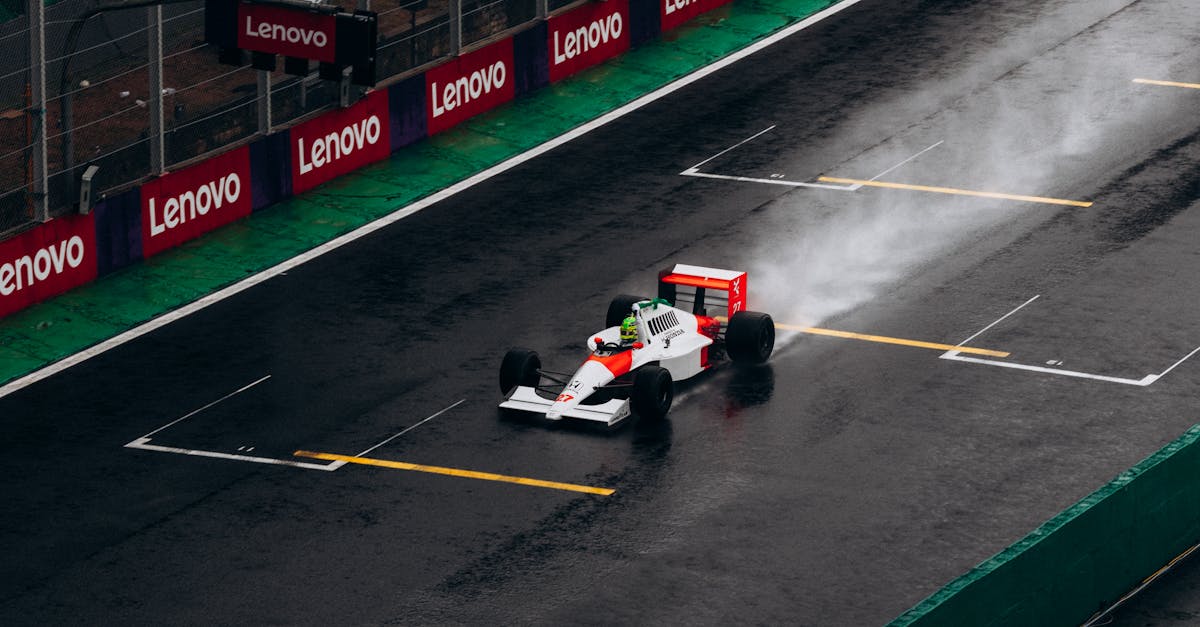
Charles Leclerc has acknowledged that he let a chance to beat Max Verstappen slip at the Singapore Grand Prix on Sunday, but not the one everyone was talking about. Verstappen won from pole position, with Leclerc finishing second for Ferrari after starting alongside him on the front row. Leclerc made the better getaway and had the inside line into Turn 1, and many observers felt he should have held his ground and taken the lead. His own verdict is more uncomfortable.
That difference matters. A driver who regrets a bold move he didn’t make is describing a judgement call. A driver who points to a quieter moment is describing a performance gap, and those are harder to fix.
The start that set the agenda
The first few hundred metres in Singapore shaped how the race was read. Leclerc launched better than Verstappen, drew alongside and had the inside going into the first braking zone. Within seconds, the race had its talking point: had Leclerc just declined the win?
The appeal of that reading is obvious. Marina Bay is the circuit where track position is worth most. Overtaking is scarce, the walls are close, and the leader can usually set the pace to suit himself and his tyres. Get to the front on lap one and the race often comes to you. On that logic, any hesitation at the start looks expensive.
The result itself was orderly. The top two finished where they started, Andrea Kimi Antonelli climbed from fourth to third for Mercedes, and the McLarens of Lando Norris and Oscar Piastri followed in fourth and fifth. The notable loser among the front-runners was Lewis Hamilton, who started third and finished sixth. On a weekend with so few changes at the front, it is not surprising that the one moment of genuine wheel-to-wheel doubt drew so much attention.
Why Turn 1 was never the prize it seemed
The case for Leclerc forcing the issue is weaker than it looks from the grandstand or the commentary box.
Singapore’s opening complex is a tight sequence of direction changes, and a car that out-brakes itself on the inside of the first corner can easily be compromised for the next. Holding the inside only pays if you can stop the car, make the apex and still have a clean exit. Overcook it and you have handed the place straight back or, worse, made contact on a street circuit with nowhere to go. Fighting Verstappen in that situation adds its own calculation. He has rarely given ground when he has the run of the corner, and both drivers know it.
There is also the question of what Leclerc stood to gain against what he stood to lose. Second place from second on the grid is a solid haul. A first-lap collision with the pole-sitter at Marina Bay would probably end the race for at least one of them and could bring out a safety car that reshuffles everyone behind. Leclerc has had enough Singapore nights go wrong to know how quickly a promising position becomes nothing.
None of this argues for timidity. The point is that the Turn 1 debate measured Leclerc against the wrong yardstick. The opening corner was a coin-flip with a heavy downside. Leclerc seems to agree, which is why his own regret lies elsewhere.
The admission that should concern Ferrari
Leclerc’s willingness to say he missed an opportunity, and to separate it from the moment everyone else fixated on, is typical of him. He is one of the more self-critical drivers on the grid, often quicker to identify his own shortcomings than his team’s. In this case, the honesty points to something more useful than a missed lunge.
At a circuit like Singapore, a win from second rarely comes from a single act of bravery. It comes from staying close enough to the leader for long enough that any wobble from him, his team or his tyres becomes something you can exploit. The chances are small and they don’t last: a lap where the gap is right, a moment where the leader is compromised, a window that is open for one or two laps before it closes. Miss one and the race usually settles into the procession the result suggests.
That is what makes Leclerc’s admission more telling than any second-guessing of the start. If the decisive chance came after the first corner, Ferrari had a car capable of putting real pressure on Verstappen at a track where Red Bull took both pole and the win. It also means that, once the opportunity came, the Scuderia did not turn it into the lead.
For a team with only two wins all season, one each for Leclerc and Hamilton, that is the more pressing lesson. Ferrari do not lack pace on the right weekends. What they have lacked in 2026 is the conversion rate that Mercedes have managed so ruthlessly, with 11 wins from 17 rounds.
Leclerc’s unfinished business at Marina Bay
Marina Bay keeps slipping away from Leclerc. In 2019 he started from pole and lost the win when Ferrari’s pit-stop timing brought Sebastian Vettel out ahead of him. In 2022 he started from pole again and was beaten off the line by Sergio Pérez, then spent the rest of a damp evening unable to find a way past. He still has not won in Singapore.
Verstappen, by contrast, had never won there before Sunday. For years it was the notable gap on his record, a circuit where Red Bull’s cars rarely suited the bumps and kerbs, and where he so often found himself managing a problem rather than controlling the race. His victory from pole was clean and largely untroubled, and it was only his second win of a season dominated by Mercedes. It also showed that he needs only a small opening to win, and that he rarely offers one himself.
The difference between the two front-row drivers was not raw speed. Verstappen’s race had no loose ends, and Leclerc, by his own account, left one.
What second place cost in the fight behind Antonelli
The drivers’ title has largely moved beyond both of them. Antonelli leads on 340 points after Sunday’s podium, 102 clear of his Mercedes team-mate George Russell, who recovered from 19th on the grid to ninth. With six rounds remaining, that margin leaves Antonelli very close to securing the championship.
Behind him, however, the fight for the places that remain is tight, and that is where Singapore’s missed chance has a measurable cost.
| Position | Driver | Points | Gap to 2nd |
|---|---|---|---|
| 2 | George Russell | 238 | – |
| 3 | Lewis Hamilton | 229 | 9 |
| 4 | Max Verstappen | 221 | 17 |
| 5 | Charles Leclerc | 215 | 23 |
| 6 | Lando Norris | 201 | 37 |
Had Leclerc and Verstappen swapped places on Sunday, Leclerc would be on 222 points and Verstappen on 214. The Ferrari driver would be ahead of Verstappen in the standings rather than six points behind, and only seven points away from his own team-mate. Instead, Verstappen moved ahead of him into fourth, and Leclerc dropped to fifth.
Places below the champion in the drivers’ standings bring little in themselves, but they shape reputations and, more practically, they reflect momentum heading into the winter. Ferrari are 134 points behind Mercedes in the constructors’ standings and 105 ahead of McLaren, so second place there looks secure. The remaining six rounds are therefore Ferrari’s best chance to show that they can turn competitive cars into wins, which they will need to do if they are to challenge for the title next year.
Austin, on 25 October, is a better test of that than Singapore was. The Circuit of the Americas offers genuine overtaking opportunities and a variety of strategies, so a driver who is close enough to the leader has more than one way to win. If Leclerc is right that the real chance at Marina Bay came after the first corner, the encouraging conclusion is that Ferrari had the pace to create that chance. At COTA, the measure of progress will be whether they can take it.