
Norris on Pole but Doubted: Can McLaren Convert Madring Pace into a Win?
Explore why fans and pundits question Norris's race-winning chances at the inaugural Madring GP despite a standout qualifying lap and Stella's praise.
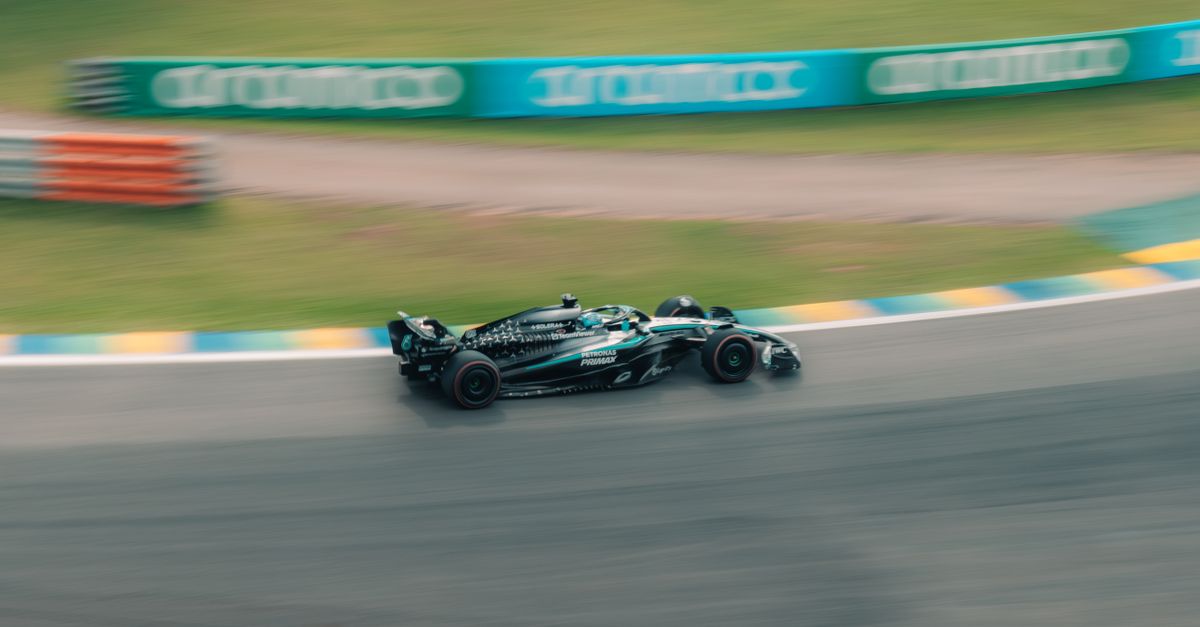
The numbers on the timing screen told only part of the story on Saturday in Madrid. Lando Norris put together a lap good enough to deny Kimi Antonelli and Mercedes what briefly looked like a maiden pole position, and Andrea Stella did little to hide his admiration for how his driver found it. Yet by Saturday evening, the mood among fans and pundits was not one of confidence in a McLaren victory on Sunday — it was scepticism. Pole position at the inaugural Madrid Grand Prix has been treated less as a statement of intent and more as a question mark. That gap between the result and the reaction is worth examining properly.
A Lap That Surprised Even Mercedes
Toto Wolff’s reaction, as reported, is the most telling detail from qualifying. Mercedes believed, for a window of time, that Antonelli had done enough for pole after a marked improvement on his opening 1m32.140s — a genuinely strong lap by any measure, and one that would have been a landmark result for the young Italian. That Norris then came along and beat it tells you two things: first, that the ceiling at Madrid’s new layout was higher than Mercedes had banked on, and second, that Norris found something extra when it mattered, on a circuit nobody in the field had raced before.
Stella’s praise afterwards was not the routine, boilerplate stuff team principals produce for the cameras. Extracting a lap of that quality from a driver on a track with no historical reference points — no prior tyre data, no established racing line, no accumulated sector-by-sector knowledge — is genuinely difficult. Drivers are essentially building the circuit’s ideal lap in their heads in real time, and doing so under qualifying pressure with track evolution still happening beneath them. That Norris nailed it on a weekend where the unknowns were greater than usual is precisely what should make this pole meaningful.
So Why the Doubt?
The scepticism isn’t really about Norris’s talent or the validity of the lap. It’s about what pole position at a brand-new venue can and cannot tell you.
A qualifying lap is a sprint: eighteen corners of raw pace, low fuel, fresh tyres, one shot. A grand prix is an entirely different examination — of tyre degradation over a long stint, of how a car behaves as fuel burns off, of how easily (or not) cars can pass one another once they’re not all on a clean lap in isolation. At an established circuit, teams and fans have years of data to extrapolate from qualifying pace to likely race pace. At Madrid, on its first outing, that extrapolation is close to guesswork. Nobody yet knows whether this is a track where the pole-sitter can control the race from the front, or one where a car with better tyre management can carve through from further back.
That uncertainty naturally breeds caution rather than conviction. Fans have watched enough Saturday-to-Sunday reversals over the years — poles built on low-fuel single-lap trims that don’t survive contact with a 300km race distance — to instinctively hedge on a McLaren win purely on the strength of one lap, however visually impressive.
There’s also the matter of the competition immediately behind. Antonelli’s pace was close enough to briefly convince his own team principal he’d taken pole, which suggests Mercedes will be a genuine factor over a race distance rather than a one-lap outlier. A front-row or near-front-row starting position with a car that has looked competitive all weekend is not a threat to dismiss lightly, particularly if Mercedes has built its car around race-trim consistency rather than outright qualifying spike.
The Wider Context: Pole Is Not Currency, It’s Potential
This is a pattern worth situating in the broader story of this McLaren team and this Norris season. Poles have, at various points, been outstanding puzzle pieces without being the guarantee of victory that they might once have represented in eras of greater track-position dominance. Modern Formula 1, with its DRS zones, tyre-management variance and increasingly aggressive strategic calls from rival pit walls, has made the pole-to-win conversion far less automatic than it was a generation ago. Pundits doubting a pole-sitter’s chances isn’t disrespect — it’s an accurate reading of how this era of the sport actually behaves.
Layer onto that the fact that this is a new circuit with essentially zero historical race data, and the caution around Norris’s chances stops looking like unfair pessimism and starts looking like reasonable risk assessment. Nobody — not the drivers, not the strategists, not the pundits — has a reliable model for how Sunday will unfold at Madrid. In that vacuum, hedging is the sensible position, even for a driver who has just produced one of the laps of the weekend.
GP Headlines’ Take
None of this should diminish what Norris did on Saturday. Producing a lap strong enough to snatch pole from under Mercedes’ nose, on a circuit with no established reference points, is a legitimate marker of quality — and Stella’s praise reflects a team that knows exactly how hard that was to execute. But pole position at an unknown venue buys McLaren the best possible starting point, not a guaranteed outcome. The real test of this weekend isn’t the one-lap sprint that’s already happened; it’s whether McLaren’s race car can match the promise of its qualifying pace over a genuinely unpredictable Sunday. Doubt, in this instance, isn’t disrespect for Norris — it’s simply an honest acknowledgement that Madrid hasn’t yet told us who’s actually fastest when it matters most.