
Gasly's Pole Surprise: Alpine's Folding Rear Wing Gamble Pays Off at Monza
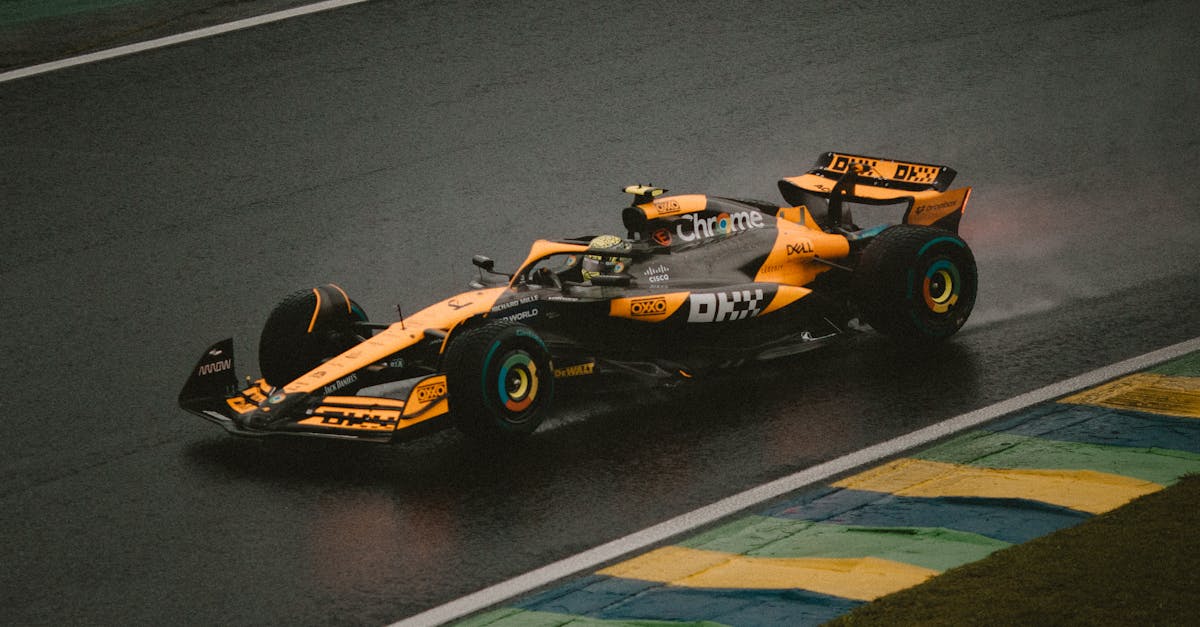
Six years ago, Pierre Gasly stood on the top step of the podium at Monza in only his second race for the fledgling AlphaTauri squad, in one of the most chaotic afternoons the sport has produced. On Saturday, back at the Temple of Speed, he produced a different kind of surprise — not a race-day scramble through mayhem, but a clean, decisive lap that put Alpine on pole position. The mechanism behind it was almost as interesting as the result itself: a folding rear wing, brought back specifically for Monza’s unique demands, that let Gasly carry a package no rival could match through the speed traps without sacrificing the stability he needed in the chicanes.
The Technical Trick: How a Folding Wing Finds Lap Time
Monza is the one weekend on the calendar where the usual aerodynamic compromise gets stretched to its limit. Every other circuit asks teams to balance downforce for cornering against drag for the straights; at Monza, with roughly 80% of the lap spent at part or full throttle and two long flat-out blasts either side of the first and second chicanes, the balance tips almost entirely toward minimising drag. Teams arrive with their thinnest rear wings of the season, often looking more like a knife edge than a conventional aerofoil.
A folding — or flexing — rear wing takes that philosophy a step further by making the wing’s behaviour load- and speed-dependent rather than fixed. At low speed, through the chicanes and the Parabolica, the wing sits in its stiffer, higher-downforce state, giving the driver the rear-end support needed to rotate the car and get back on the throttle early. As speed builds down the straights, aerodynamic load increases to the point where the wing’s flap deflects — effectively folding or twisting under its own aero loading — reducing its angle of attack and, with it, drag. The car cleans itself up exactly where it matters most: on Monza’s long straights, where every kilometre per hour of top speed converts directly into lap time and overtaking potential.
Crucially, this isn’t a driver-operated system like DRS, nor is it a new invention — flexible-wing philosophies have circulated in the paddock for years, exploiting the fact that F1’s regulations test bodywork rigidity with specific static load tests rather than banning all flex outright. If a wing passes those prescribed tests in parc fermé conditions but still deflects usefully under the higher, dynamic loads generated at racing speeds, it sits in a legal grey area that teams have long been willing to explore, provided they’re confident it will survive scrutiny.
Why This Matters Beyond One Lap
For Alpine, a team that has spent much of this season searching for the raw pace to trouble the front of the grid consistently, a pole position of this nature is significant on two levels. First, it’s a tangible return on a specific, resource-intensive piece of development work — building a bespoke low-drag rear wing solution for essentially one weekend a year is not a trivial undertaking, and getting it right on a Saturday when it counted is a genuine technical and operational win for the team.
Second, and more importantly for the weekend ahead, it raises the question of translation to race trim. Qualifying pace built around drag reduction is one thing; sustaining that advantage over a full grand prix distance — with fuel load, tyre degradation, DRS trains and the need to defend into the chicanes — is another matter entirely. A wing that flexes beautifully over a single low-fuel lap needs to prove it can also protect tyres and rear-end stability across dozens of laps of traffic and battle. Pole position earns Gasly track position and the first crack at clean air, which at Monza is worth more than almost anywhere else on the calendar, but it doesn’t guarantee the race will unfold the same way.
The Wider Context: F1’s Flexi-Wing History
Flexible bodywork has been one of the sport’s most persistent grey areas for years, and the FIA has repeatedly tightened its test protocols — most notably around front wings — precisely because straight-line speed gains of this kind are so valuable and so tempting to chase right up to the edge of legality. Rear wings have faced similar attention. Governing bodies have generally responded to these developments not by outlawing the concept in principle, but by raising the bar of the physical load tests components must pass, forcing teams to find ever more subtle ways of achieving the same aerodynamic effect. That a folding rear wing has resurfaced now, at the one circuit where the reward for reducing drag is at its absolute maximum, is entirely consistent with that pattern — teams push hardest at exactly the venue where the philosophy pays the biggest dividend.
A clever pole that Sunday must confirm
There’s something to admire in Alpine identifying Monza as the single weekend worth this level of bespoke investment and executing it well enough to put Gasly on pole. It’s a reminder that clever, targeted engineering can still outweigh raw budget on a given Saturday, and it’s a deserved moment for a driver with obvious affection for this circuit. But context matters: a low-downforce, low-drag special built for one lap is a different proposition from a car built to win a 53-lap race, and Sunday will tell us far more about Alpine’s underlying competitiveness than Saturday did. Enjoy the pole for what it is — a smart, well-timed piece of aerodynamic ingenuity — without assuming it rewrites the season.