
Ferrari's Fading Title Hopes: Why Hamilton's Dream Season Is Slipping Away
Examines Ferrari's qualifying and pace deficits at Zandvoort, backed by telemetry data, and what it means for Hamilton's title bid.
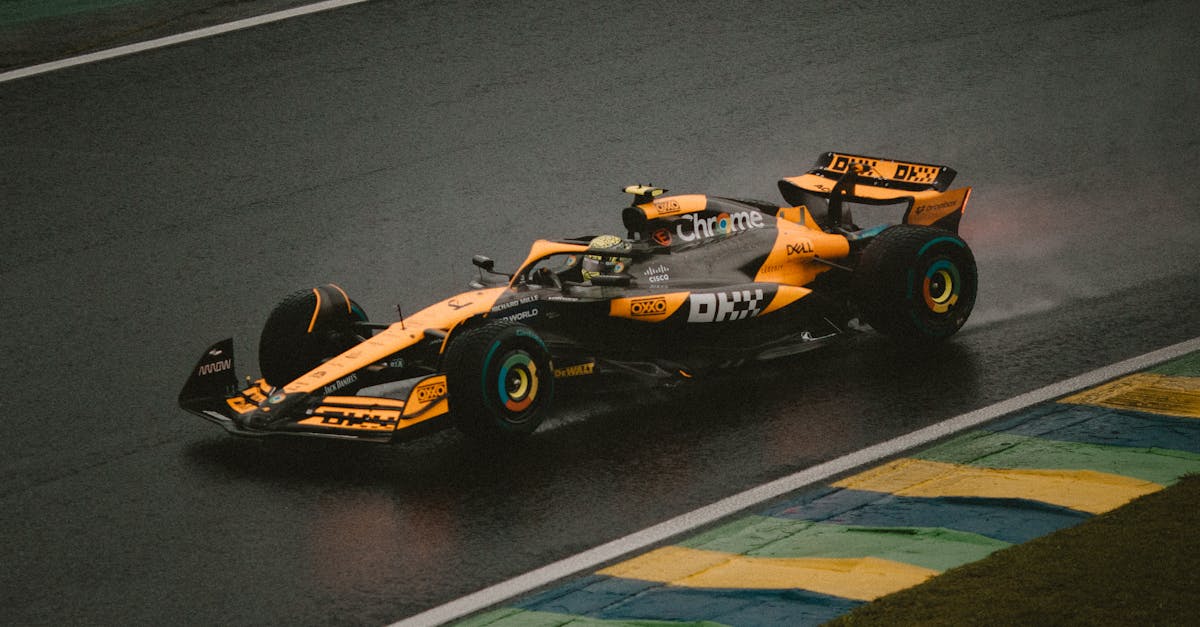
Zandvoort has a habit of exposing weaknesses that smoother circuits paper over, and this weekend it did exactly that to Ferrari. A team that arrived in the Netherlands still nominally in the title conversation left with a qualifying and Sprint performance that raised uncomfortable questions about where its single-lap pace has gone — and, by extension, about how realistic Lewis Hamilton’s pursuit of an eighth world championship actually is from here.
What Happened at Zandvoort
Ferrari’s weekend followed an increasingly familiar pattern: competitive, sometimes quietly impressive race pace undermined by a qualifying performance that left both cars starting from further back than their Sunday potential deserved. Charles Leclerc was candid about it, saying afterwards that he had far more confidence in the car over a race distance than he did over a single qualifying lap — a telling admission from a driver who has built much of his reputation on Saturday speed. That Leclerc, of all people, is now framing Ferrari’s strength as race pace rather than outright pole potential tells you how much the balance of this car has shifted, and not necessarily in the direction that suits Zandvoort’s characteristics.
The Sprint format compounded the problem. With practice time compressed, any misstep in set-up direction on Friday carries through the rest of the weekend with far less opportunity to correct it. Ferrari’s issues in Sprint qualifying and the Sprint itself weren’t an isolated blip; they were the first sign of a car that didn’t have the ideal window for Zandvoort’s specific demands, and that window never really opened up by the time grand prix qualifying arrived.
What the Telemetry Is Telling Us
Telemetry data from the weekend pointed to a deficit that wasn’t simply about raw horsepower or a single corner going wrong — it was systemic, showing up through the technical infield sections where Zandvoort punishes a car that can’t rotate cleanly and get back on the power early. That circuit’s characteristic mix of banked, high-commitment corners like Tarzan and the final banked turn, combined with a tight, low-speed middle sector, means a car needs both mechanical grip on turn-in and strong traction on exit. A car that’s tuned more for sustained load and tyre preservation over a stint — which appears to be where Ferrari’s current strengths lie — can easily lose those tenths on a single qualifying lap where there’s no margin to manage the balance.
This is a classic trade-off in F1 car design: a set-up biased towards protecting the tyres and maximising race-stint pace often sacrifices the ultimate rotation and confidence needed to nail one qualifying lap, particularly under Sprint-weekend time pressure. Ferrari appears to be living on the wrong side of that compromise right now. It’s a livable trade-off at circuits where overtaking is straightforward, but at a track like Zandvoort — narrow, hard to pass on, corner-speed dependent — starting position matters enormously, and a strong race car stuck behind slower traffic is a wasted asset.
Why This Matters for Hamilton’s Title Bid
For Hamilton, the stakes of this pattern are higher than for most. A driver chasing a historic eighth title doesn’t have the luxury of banking on recoveries from tenth or eleventh on the grid every other weekend. Track position is the currency of a title campaign, and every Saturday where Ferrari’s true pace isn’t reflected in grid slot is a Sunday where Hamilton is fighting through DRS trains and undercut windows rather than controlling the race from the front.
It’s also worth remembering how quickly the narrative around this Ferrari has moved. A month or two ago, there was genuine belief growing that this package could be developed into a consistent threat to the front-runners, with Hamilton in the frame as a serious title contender rather than a plucky outsider. Zandvoort hasn’t destroyed that possibility outright, but it has punctured the momentum. Championships are rarely lost in one bad weekend, but they are frequently lost in an accumulation of qualifying weekends where a car starts fifth when it’s capable of finishing second.
The Wider Context
None of this happens in a vacuum. Ferrari is a team simultaneously trying to close out a competitive campaign while directing engineering resource towards the next generation of regulations, and that dual focus inevitably creates friction in correlation and development priorities. A car whose fundamental characteristics reward race trim over qualifying trim can be a symptom of a development programme that has drifted, whether through wind tunnel correlation issues, aero philosophy choices, or simply a mechanical platform that doesn’t give the drivers the confidence to attack a single lap the way rivals like Mercedes currently can. Leclerc’s comments about race pace outstripping qualifying potential are a useful diagnostic — they suggest this isn’t a driver problem, but a car and set-up window problem that Ferrari’s engineers need to solve, and quickly, if the remaining races are to matter.
GP Headlines’ Take
Ferrari’s Zandvoort weekend wasn’t a disaster in isolation, but it was a warning sign dressed up as a bad Saturday. A team with genuine race pace and no qualifying pace is a team that will keep bleeding points it shouldn’t be losing, and Hamilton’s title bid can’t afford many more weekends like this one. The car clearly has something to offer over a stint; the challenge now is translating that into one committed lap when it matters most. Until Ferrari solves that puzzle, the eighth title Hamilton is chasing will remain a puncher’s chance rather than a genuine campaign — and puncher’s chances rarely survive a season of starting from row three.