
Leclerc-Piastri Near-Miss at Spa Raises Yellow Flag Protocol Questions
Analyze the lap-eight clash and yellow flag confusion that fueled calls for FIA procedural change.
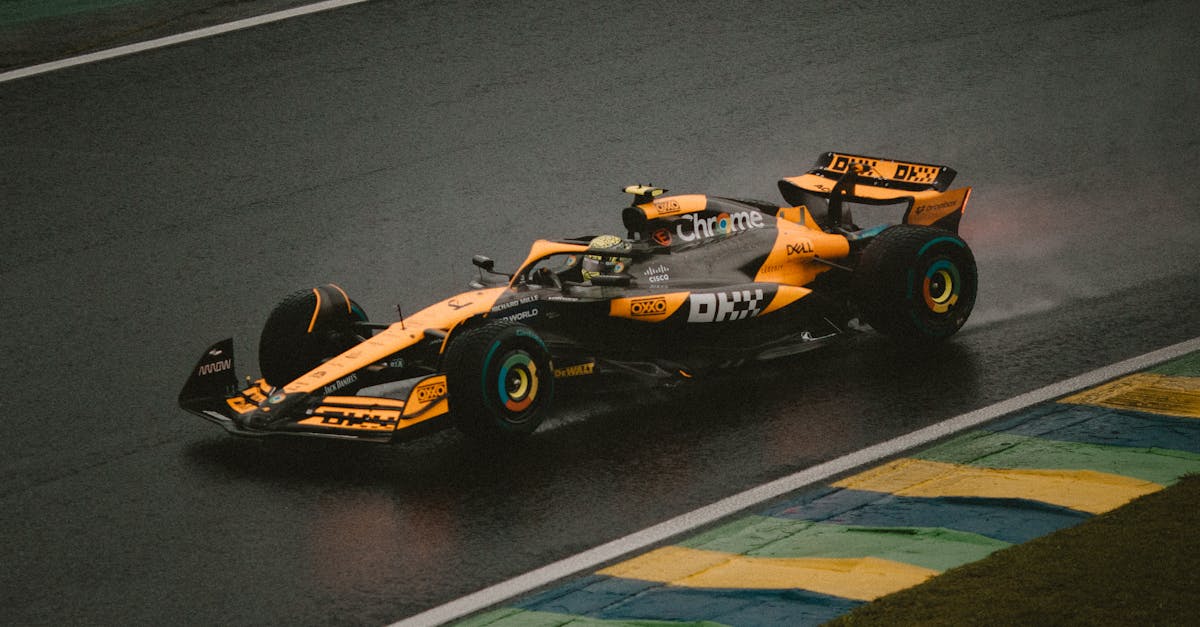
Leclerc-Piastri Near-Miss at Spa Raises Yellow Flag Protocol Questions
Eau Rouge and Raidillon do not forgive hesitation, and they do not forgive ambiguity either. That is precisely what made the lap-eight moment between Charles Leclerc and Oscar Piastri at Spa-Francorchamps so unsettling — not simply that two contenders ran perilously close through one of the fastest sequences on the calendar, but that the incident was entangled with a yellow flag situation that left drivers unsure exactly what they were racing into. Leclerc walked away with a podium and, by his own admission, a sense that the margins had been uncomfortably thin. Piastri walked away with damage and a pointed question about consistency. Between them sits an argument the FIA will need to address before the next flag ambiguity produces a genuinely serious accident rather than merely a nervous one.
What Happened on Lap Eight
The specifics, as described by those involved, centre on a Leclerc-Piastri clash in the early laps that left the McLaren driver with damage and Leclerc facing no sanction — a outcome Piastri clearly felt warranted scrutiny given the contact occurred. Leclerc’s own account adds the complicating layer: a yellow flag, he says, was positioned in a way that disrupted his track positioning and reference points at exactly the wrong moment. Spa’s characteristics make this a uniquely dangerous place for that kind of confusion. The run from Raidillon into the Kemmel straight is blind, committed and unforgiving of any driver who lifts, hesitates or moves off-line because a marshal panel has told them something is happening ahead that changes their approach. When that signal arrives at a point where a rival is also making a racing decision — in this case, apparently, a battle for position that ended in contact — the ingredients for a genuinely nasty accident are all present, even if the eventual outcome was contact rather than a crash into the barriers at 300 km/h-plus.
That the stewards opted against sanctioning Leclerc is, on its own, not remarkable — racing incidents involving damage but no clear breach happen most weekends. What makes it a story is the combination of factors: contact, damage to a championship-contending McLaren, no penalty, and a flag-related complication raised by the driver who came out ahead. That combination is what turns a routine early-race skirmish into a procedural conversation.
Why It Matters
Yellow flags exist to do one job well: warn drivers of a hazard ahead and mandate a reduction in commitment past that point. For that system to function, the flag’s meaning and location need to be unambiguous to everyone approaching it simultaneously, often at wildly different points in their own overtaking manoeuvres. Leclerc’s complaint — that the flag’s placement worked against him rather than simply warning him — points to a scenario where two drivers involved in the same battle may have been receiving, or reacting to, the signal differently. One driver moderating their approach because of a flag while another treats the situation as still racing-green is exactly the kind of asymmetry that produces contact through fast corners.
There’s also a fairness dimension that goes beyond the specific incident. Piastri is in a title fight where every point and every millimetre of car damage carries consequence. If contact occurs and the stewards decide no clear fault attaches, that’s a defensible racing outcome in isolation — drivers accept risk goes both ways. But if part of the muddle stems from a flag system that didn’t communicate cleanly to both parties, the “no sanction” verdict starts to look less like a clean judgement on driving standards and more like an acknowledgment that the incident was, in some sense, unadjudicable because the information both drivers were working from wasn’t equivalent. That’s a governance problem, not a driving one, and it’s the kind of grey area that erodes confidence in stewarding even when individual decisions are reasonable.
The Wider Context
Spa has form here. Its combination of blind crests, long high-speed sections and a start/finish straight that funnels cars into Eau Rouge at maximum commitment has made it one of the sport’s most scrutinised circuits for marshal-post positioning and flag visibility for decades. The track’s demands on driver trust — trusting that a green sector genuinely means green, that a yellow genuinely marks a specific hazard rather than a vague caution — are higher here than almost anywhere else on the calendar. The FIA has adjusted marshal procedures and light-panel systems at Spa before in response to visibility concerns; this incident, whatever its ultimate stewarding outcome, fits a pattern of Spa periodically exposing gaps between how flag information is meant to travel and how it’s actually received by drivers doing 300 km/h.
It’s also worth situating this within a season where yellow flag interpretation has already been a recurring flashpoint across categories — drivers lifting for double-waved yellows only to find a rival didn’t, or debate over exactly where a single-waved zone begins and ends. Spa’s geometry simply makes the consequences of any such ambiguity more dramatic and more visible than at a tighter, lower-speed venue.
GP Headlines’ Take
Leclerc’s frustration and Piastri’s concern are, in this case, two sides of the same underlying issue rather than contradictory complaints. Neither is really disputing that Spa produced a moment of jeopardy — they’re both pointing, from different angles, at a flag and incident-adjudication process that didn’t give either of them full clarity in real time. The stewards’ call not to penalise may well be correct on the strict racing merits. But the more instructive detail is that a top team’s driver picked up damage in a title fight and the loudest post-race conversation wasn’t really about who was at fault — it was about whether the information both drivers had access to was good enough to make fault meaningful at all. That’s the gap the FIA should be looking at, and Spa, true to form, is exactly the circuit to have exposed it.