
The 2026 F1 rule changes explained for beginners
New engines, active aerodynamics, lighter cars and sustainable fuel — a plain-English guide to Formula 1's big 2026 regulation reset.
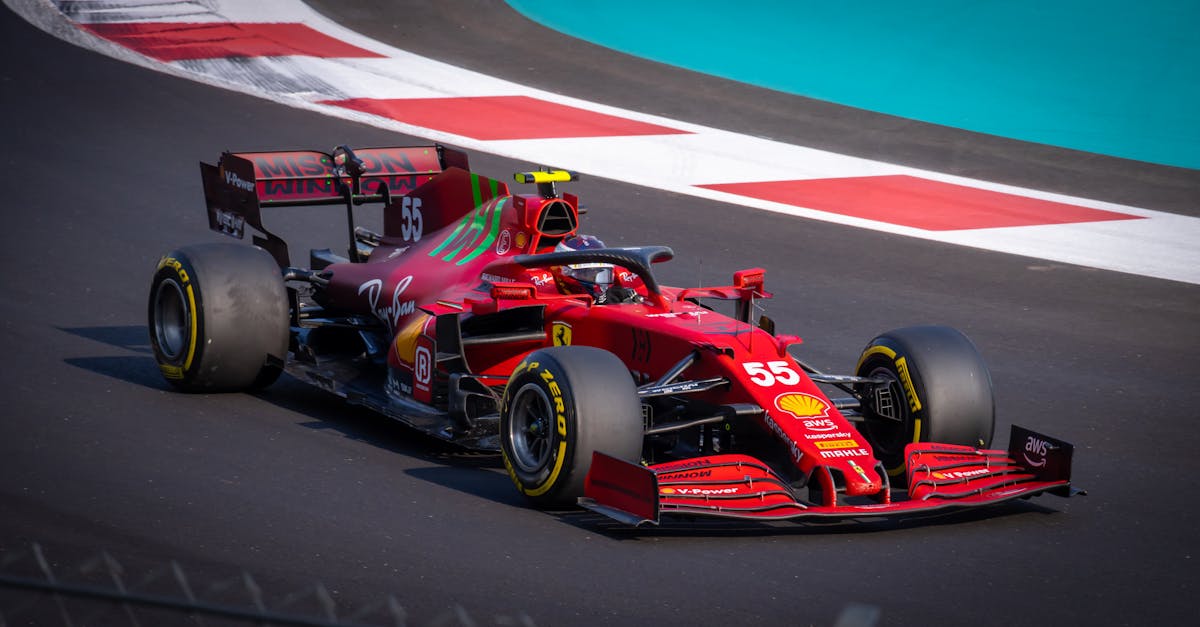
2026 brings one of the biggest rule shake-ups in Formula 1 history — arguably the most sweeping since the sport moved to hybrid power in 2014. It is not a single tweak but a coordinated reset: new engines, new cars, and new ways of racing, all landing in the same season. The power units change, the chassis change, the aerodynamics change, and even the way a driver attacks the car in front changes. For a newcomer, that can make the sport suddenly look unfamiliar. This guide explains what has actually changed, and why, in plain English.
If some of the jargon below is new to you, it may help to read our companion pieces on how Formula 1 works and the anatomy of an F1 car alongside this one.
Before we dive in, here is the reset at a glance — the old era against 2026:
| Area | Previous era | 2026 |
|---|---|---|
| Engine | 1.6L turbo-hybrid V6, combustion-led | 1.6L turbo-hybrid V6, roughly 50/50 combustion vs electrical |
| Energy recovery | MGU-K and MGU-H | MGU-K only (MGU-H dropped) |
| Electrical output | Modest support boost | Roughly tripled (~350 kW) |
| Fuel | Partly fossil-based | 100% sustainable fuel |
| Aerodynamics | Fixed wings, DRS flap | Active front and rear wings |
| Overtaking aid | DRS (drag reduction) | Manual Override (electric power boost) |
| Car size/weight | Larger and heavier | ~100 mm narrower, shorter, ~30 kg lighter |
| Tyres | Wider | Narrower Pirelli tyres |
| Grid | 10 teams / 20 cars | 11 teams / 22 cars |
Why the reset happened
Formula 1’s rules are rewritten in cycles, and the governing body times the big changes to serve several goals at once. The 2026 package was shaped by four main pressures.
- Attracting manufacturers. F1 wants more of the world’s carmakers building engines. A cheaper, simpler, more road-relevant power unit — heavy on electrical energy and running on sustainable fuel — is a far easier project to justify to a boardroom than the old, hugely complex hybrids. That pitch is credited with helping bring Audi in as a works team and Cadillac/General Motors onto the grid.
- Sustainability. The sport has committed to a net-zero-carbon ambition. Moving to 100% sustainable fuel and a bigger share of electrical power is the most visible part of that story, and it lets F1 argue that what it learns on track can filter through to everyday transport.
- Closing the field. Recent seasons have often been decided by one or two dominant teams. A clean rulebook resets everyone’s homework at the same time, giving the chasing pack a genuine chance to leapfrog the front — at least until the field converges again.
- Reducing cost and complexity. Alongside the technical rules sits a financial rulebook (the cost cap) that limits how much teams can spend. The 2026 engine was deliberately simplified — most notably by dropping one of its most expensive components — to keep budgets in check and lower the barrier to entry.
New power units: more electric, greener fuel
The headline change is the engine — or, to use the correct term, the power unit. F1 has kept the core concept it has used since 2014: a 1.6-litre turbocharged V6 hybrid. What changes is the balance of where the power comes from.
Under the old rules the internal combustion engine did most of the work and the hybrid system added a supporting boost. For 2026 the split moves to roughly 50/50 between combustion and electrical power. In other words, the electric side of the power unit is now doing close to half the job, rather than acting as a top-up. Precise outputs vary by manufacturer and operating mode, so treat any single horsepower figure you see with caution.
Two specific technical points are worth understanding:
- The MGU-H is gone. The old power units had two energy-recovery motors. One, the MGU-K, harvested energy under braking (much like the system in many road-going hybrids). The other, the MGU-H, recovered heat energy from the turbocharger. The MGU-H was brilliant but fiendishly complex and expensive, and it was a big reason newcomers were reluctant to build F1 engines. For 2026 it has been dropped entirely to simplify the power unit and lower the cost of entry.
- The MGU-K does much more. To make up for losing the MGU-H and to hit that 50/50 balance, the surviving MGU-K’s electrical output is roughly tripled, to somewhere around 350 kW. That is a large amount of deployable electrical power, and managing it — when to harvest, when to deploy — becomes one of the defining skills of the new era.
Finally, the fuel. The 2026 cars run on 100% sustainable fuel — a synthetic or bio-derived fuel made without fossil crude. It is designed so that the carbon released when it burns is broadly balanced by the carbon captured in making it. This is central to F1’s environmental pitch and, again, part of what drew new names to the grid.
What does all this mean for a driver behind the wheel? The single biggest shift is energy management. With so much power now coming from the electrical side, the amount of deployable energy is effectively a budget that must be spent wisely across a lap. Deploy too early and you run out on the part of the straight that matters; harvest too aggressively and you sacrifice lap time elsewhere. Expect engineers and drivers to talk constantly about lift-and-coast, deployment maps and battery state of charge — the invisible strategy layer that will decide a lot of races in the new era.
The engine manufacturers in 2026
One of the clearest signs that the reset worked is the line-up of companies building or badging power units. The well-established projects are:
- Mercedes — a long-standing engine builder, supplying its own works team and customers.
- Ferrari — the sport’s oldest name, building its own power unit as it always has.
- Honda, now partnered with Aston Martin as its works engine supplier.
- Audi, entering as a full works manufacturer (more on that below).
- Red Bull Ford — Red Bull’s in-house engine operation, Red Bull Powertrains, working in partnership with Ford.
The most eye-catching newcomer is Cadillac (General Motors), which joins the grid as a new team. It is widely understood that Cadillac will run a customer engine initially while developing its own power unit to arrive later this decade. Because the exact timing of GM’s own engine has moved around in reporting, we’d treat the “later this decade” framing as the safe, qualitative version of that story rather than pinning it to a specific year.
Active aerodynamics
Perhaps the most visible change on track is active (movable) aerodynamics. On previous cars the wings were fixed shapes (with the narrow exception of the DRS flap). For 2026, both the front and rear wings can change shape on command, switching between two modes:
- A high-downforce mode for corners — the wings work hard to press the car into the track, giving grip.
- A low-drag mode for the straights — the wings flatten out to cut air resistance, letting the car reach higher speeds and use energy more efficiently.
These are sometimes nicknamed Z-mode (high downforce) and X-mode (low drag). The point is efficiency: with so much of the car’s performance now coming from a fixed budget of electrical energy, letting the car shed drag on the straights helps it go faster for the same energy, and dialling downforce back in for the corners keeps it planted. If you’re fuzzy on terms like downforce and drag, our F1 glossary breaks them down.
Manual Override replaces DRS
For years, overtaking was aided by DRS (the Drag Reduction System): when a chasing car got within one second of the car ahead at a detection point, it could open a flap in its rear wing to reduce drag and close the gap on the straight. With movable wings now standard everywhere, a dedicated drag-reduction flap no longer makes sense as an overtaking tool.
In its place comes the Manual Override — an overtaking aid based on electrical power rather than aerodynamics. When a chasing driver is close enough to the car ahead, they can deploy an extra burst of electrical energy to help them attack down the straight. Instead of a passive flap that opens, the driver gets a deployable power boost. The idea is to keep racing close and give the attacker a fighting chance, while making the mechanism feel more like the driver actively pushing a button to pounce.
Smaller, lighter, nimbler cars
F1 cars had grown steadily bigger and heavier over the previous decade, to the point where they felt unwieldy on tighter, older circuits. The 2026 chassis rules push in the other direction. Compared with the outgoing cars, the new machines are:
- Narrower — by around 100 mm.
- Shorter in wheelbase.
- Lighter — roughly 30 kg less minimum weight.
- Running reduced downforce and drag overall.
- Fitted with narrower Pirelli tyres, front and rear.
The goal is a more agile car that is less punishing to follow closely. A big reason cars struggle to overtake is dirty air — the turbulent wake a leading car leaves behind, which robs the following car of downforce and grip. By trimming the aero and the dimensions, the rules aim to make the cars less sensitive to that dirty air, so a chasing driver can stay close enough to have a go. Whether the racing genuinely improves is one of the great open questions of the new formula.
There are practical knock-on effects, too. Narrower tyres change the mechanical grip available and the way tyres warm up and wear, which can shift the balance between qualifying pace and race-day tyre management. A lighter, smaller car should brake later, change direction more crisply and be a touch more forgiving on the tight street circuits that have grown on the calendar. And because downforce is down overall, cornering speeds may be slightly lower in places — the trade-off F1 has accepted in the hope of producing closer, more watchable racing.
A bigger grid: the 11th team
2026 also grows the field. Cadillac joins as the 11th team, taking the grid to 11 teams and 22 cars — the largest it has been in some time. A bigger grid means more seats for drivers, more livery variety, and more midfield battles to follow.
It is also worth being precise about the other change in team identity. The team that used to race as Sauber has become Audi’s works entry — Sauber is no longer a current F1 team name, and from 2026 you should think of that entry as Audi. So the story is one arrival (Cadillac, a genuinely new team) and one transformation (Sauber becoming the Audi works squad).
The cost cap and the sporting picture
Underpinning all of this is the cost cap, the financial regulation that limits how much a team can spend on the performance of its car each year. Introduced to stop the biggest teams simply outspending everyone, it remains a defining feature of the era.
The cost cap matters even more during a rules reset. Designing an all-new car and learning an all-new power unit is enormously demanding, but teams cannot just throw unlimited money at the problem. That places a premium on smart engineering and efficient development rather than raw budget — which is part of why a reset can shuffle the order. A cleverly run team that spends its capped budget well can, in theory, out-develop a richer rival who spends badly. There is a separate framework governing engine spending too, aimed at stopping the manufacturers from entering an unlimited arms race on the power unit.
What it means for the racing
Here is our considered take. A reset this large is genuinely double-edged.
The opportunity. When everyone starts a new rulebook at the same time, the established pecking order is up for grabs. Teams that interpret the regulations cleverly — especially the new power-unit rules — can leap forward, while others take a season or two to catch up. That can mean new race winners, fresh rivalries, and a more open championship. New formulas have a habit of producing surprises, and that unpredictability is exactly what makes the first year so compelling to follow.
The concern. The biggest risk is engine parity. When the power units are this new and this different, it is entirely possible that one manufacturer simply builds a better engine than the others at first. If that happens, the teams using that engine could enjoy an early advantage that has little to do with driver skill or clever chassis design — and a season decided by who has the strongest power unit is less satisfying than one decided on track. History suggests these gaps tend to close as rivals catch up, but the first season of any new formula is the least predictable, and early dominance by one engine is a real possibility rather than a certainty.
The honest summary: expect volatility. Some of it will be thrilling, some of it may be lopsided, and it may take a full season before we know who truly got the new rules right.
Frequently asked questions
Is the V6 engine gone in 2026?
No. F1 keeps the 1.6-litre turbocharged V6 hybrid concept. What changes is the balance — the electrical side now provides roughly half the power — and the removal of the complex MGU-H heat-recovery component.
What replaced DRS?
A system usually called Manual Override. Instead of opening a rear-wing flap to cut drag, a chasing driver deploys an extra burst of electrical power to help them attack. The movable wings that every 2026 car now has make a separate drag-reduction flap unnecessary.
Is Sauber still on the grid?
No. That entry now races as Audi’s works team. Treat Audi as the current name; Sauber is no longer a current F1 team.
How many teams and cars are there in 2026?
Eleven teams and 22 cars, following the arrival of Cadillac as a new team.
Are the cars really running on sustainable fuel?
Yes — the 2026 rules require 100% sustainable fuel, a fuel made without fossil crude and designed to be broadly carbon-neutral over its lifecycle.
The bottom line
2026 is a rare moment when almost everything changes at once: a simpler, more electric power unit on sustainable fuel; smaller, lighter, nimbler cars; active front and rear wings; a push-to-attack power boost in place of DRS; and a bigger grid featuring Audi as a works team and Cadillac as the new eleventh entry. Some of the fine details will keep evolving as the season unfolds, but those are the big ideas behind Formula 1’s new era — and the reasons the sport looks so different from what came before.