
Dutch Grand Prix preview: what to watch at Zandvoort
Everything to look out for ahead of the 2026 Dutch Grand Prix.
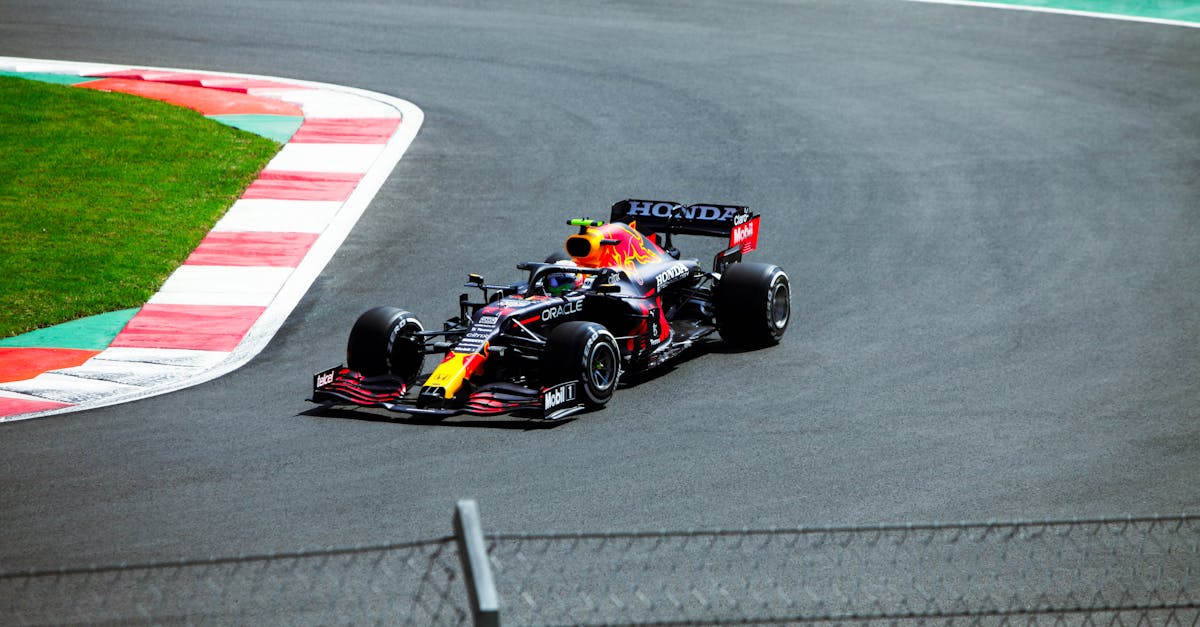
2026 Dutch Grand Prix Preview: Zandvoort’s Dunes Set for a Title Litmus Test
Formula 1’s return to the banked, wind-lashed confines of Zandvoort arrives at a fascinating juncture in 2026. Andrea Kimi Antonelli heads into the Dutch Grand Prix with a 50-point cushion at the top of the standings, a gap that flatters neither complacency nor panic among his rivals — it is substantial, but with more than half the season’s points still on the table, nothing is settled. Add in a circuit that has a habit of scrambling the competitive order through its unique demands on car and driver, and this weekend has the makings of a pivotal round rather than a procession.
Zandvoort’s return to the calendar in the 2020s reinjected a genuinely old-school challenge into a schedule increasingly dominated by street circuits and purpose-built facilities. Narrow, undulating and framed by dunes and grandstands that press right up against the tarmac, it rewards precision and punishes hesitation in a way few modern venues do. For a title fight entering its second half, that combination of technical severity and low overtaking margin makes this a weekend where championship contenders can ill afford a poor qualifying lap or a lapse under pressure.
Circuit characteristics
Circuit Park Zandvoort is short, tight and relentlessly flowing, a legacy layout dating back to the 1940s that has been sympathetically modernised rather than sanitised. Its defining features are the two banked corners — Tarzan (Turn 1) at the end of the pit straight, and the steeply banked final corner leading onto the start-finish straight — both of which allow drivers to carry noticeably more speed than a flat corner of equivalent radius would permit, while also creating fascinating variations in racing line and tyre loading through the banking itself.
Beyond the banking, the lap is a constant rhythm of medium and high-speed direction changes with very little respite: the flowing esses through the middle sector, tightening chicanes, and blind crests demand a car that is stable under load and confidence-inspiring on turn-in. Mechanical grip and a well-balanced aerodynamic platform matter more here than outright power, though a strong exit from the final corner onto the pit straight remains important for any overtaking opportunity into Tarzan.
That scarcity of overtaking opportunity is arguably Zandvoort’s most defining trait. With the track’s narrow width and largely single-file racing line, position is often decided far more by qualifying and strategy than by wheel-to-wheel combat. The DRS zones help, but the tight, twisting nature of the lap means a car that is even marginally quicker rarely finds it straightforward to pass — track position is king, and mistakes in Q3 or in the opening laps tend to be costly and hard to unpick.
Tyre stress is another crucial factor. The abrasive surface and constant lateral loading, particularly through the long banked corners, put real demand on the tyres’ shoulders, and the sea-influenced weather — Zandvoort’s coastal location makes it prone to wind and sudden changes in conditions — can throw an extra variable into tyre and strategy calls. Wind direction along the dunes has historically affected both car balance in the fast sections and the timing of pit windows, and teams that read the conditions best often gain more here than at circuits with more predictable microclimates.
The championship picture
The top of the standings currently reads as a genuine two-tier fight. Antonelli’s 219 points give him breathing room over Lewis Hamilton in second on 169 — a 50-point gap that is significant but not yet decisive at this stage of the season. Behind Hamilton, George Russell sits third on 160, just nine points further back, meaning that any dip in form from either of the two chasers could easily see positions two and three change hands over a single weekend.
Charles Leclerc, fourth on 138 points, and Lando Norris, fifth with 128, remain mathematically in the picture but now need more than consistency — they need Antonelli, and to a lesser extent Hamilton and Russell, to have below-par weekends while they themselves capitalise fully. Zandvoort’s low-overtaking characteristics make that a harder ask than at a circuit where a quick car can carve through the field; if Leclerc or Norris qualify outside the front two or three rows, converting that into serious points relative to the leaders becomes considerably more difficult.
For Antonelli, the calculus is straightforward in principle if not in execution: banking points at a track where mistakes are amplified and overtaking is scarce is an ideal way to protect a lead. A strong qualifying result that locks out track position removes much of the jeopardy a chasing pack might otherwise exploit. For Hamilton and Russell, the equation is about denting that gap wherever possible — Zandvoort’s format means any error from the sister Mercedes or from Antonelli himself could be seized upon immediately, since there’s little scope to lose ground in qualifying and recover it on Sunday.
Ones to watch
Antonelli himself is the obvious focal point. Leading the championship as a driver still building his long-term reputation at this level, how he handles the pressure of a circuit that offers no easy passing lane — and therefore no easy recovery from a mistake — will say plenty about his title credentials. A commanding weekend at Zandvoort, where the layout rewards the same precision and confidence that has presumably underpinned his points lead so far, would send a clear signal to the chasing pack.
Hamilton and Russell both have obvious motivation. Zandvoort has previously been a stronghold for Max Verstappen given his home support, and while the balance of competitive form has shifted this season, the atmosphere generated by the orange army remains one of the most intense on the calendar — a factor that can lift or unsettle drivers depending on temperament. For the two Mercedes drivers scrapping over second in the standings, keeping their heads amid that noise while extracting maximum performance from a car that needs to be right on the ragged edge through Zandvoort’s high-speed sections will be a genuine test.
Leclerc and Norris, meanwhile, represent the “something to prove” contingent. Both know that letting the gap to the top of the standings stretch much further starts to make the mathematics uncomfortable. A strong result here — built on quality in the crucial low-overtaking currency of qualifying — is less a bonus than a necessity if either is to remain a credible part of the title conversation deep into the second half of the season.
What to watch for
- Qualifying as the de facto race: with overtaking at a premium, Saturday’s grid order could be more decisive here than at almost any other round this year.
- Wind and weather: Zandvoort’s coastal exposure can shift car balance and tyre behaviour session to session — a wildcard for strategy calls.
- Tyre management through the banking: sustained lateral loads in Tarzan and the final corner will test tyre shoulders and could open up strategic variation.
- The gap dynamics behind Antonelli: any slip from Hamilton or Russell could compress the top three; any stumble from the pair could hand Leclerc or Norris a rare opportunity.
- Home-crowd atmosphere: the Zandvoort dunes generate one of the most intense fan atmospheres on the calendar, a factor that has historically affected driver focus and mistakes.
Takeaway
Zandvoort’s blend of technical severity, minimal overtaking and unpredictable coastal weather makes it a circuit where championship contenders are examined rather than merely tested. With Antonelli holding a healthy but not unassailable lead, and Hamilton, Russell, Leclerc and Norris all needing this weekend to go their way for different reasons, the Dutch Grand Prix looks set to be less about outright pace and more about who handles the pressure of a track that offers no forgiveness for error.