
Inside F1's 'Macarena Wing' Saga: Innovation the FIA Is Happy to Keep
How the rotating rear wing concept emerged, why Red Bull struggled to replicate it, and the FIA's stance on its legality.
Inside F1’s ‘Macarena Wing’ Saga: Innovation the FIA Is Happy to Keep
Formula 1’s rulebook has always had a habit of producing accidental poetry, and this season’s example is a rear wing that wobbles from side to side under load like a dancer mid-routine. Frederic Vasseur’s christening of the device as the “Macarena wing” was throwaway wit from a team principal, but the nickname has stuck precisely because it captures something true about this generation of F1 cars: even the most serious, wind-tunnel-honed pieces of aerodynamic hardware can end up looking faintly absurd in motion. That the FIA has now confirmed it sees nothing wrong with the concept — while quietly noting that Red Bull found it harder than expected to copy — tells us a great deal about where the competitive and technical battle lines sit heading into the second half of the 2026 season.
What’s Actually Happening
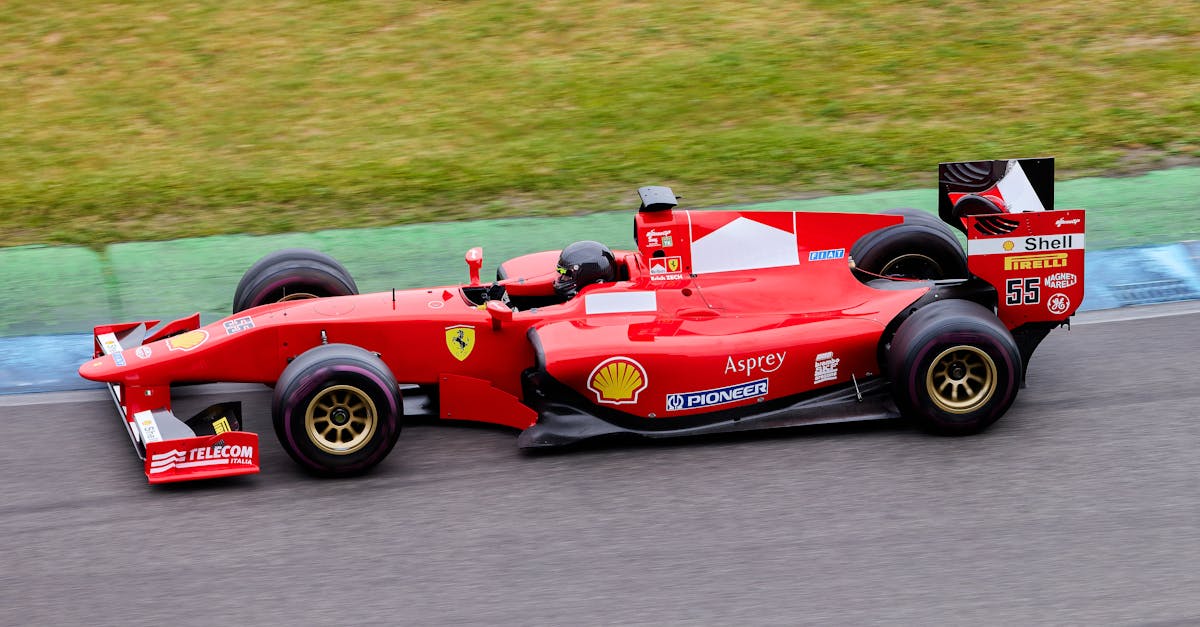
The rotating rear wing is, at its core, an exploitation of the flexibility limits written into the 2026 aerodynamic regulations. Under load — through fast corners and under braking — the wing’s mainplane or flap elements twist or oscillate laterally rather than simply flexing fore-and-aft in the way most fans are used to seeing with front wings and floors. Ferrari was first to bring the concept to the grid in a form pronounced enough to draw comment from rivals and media alike, and the visual effect — a wing that appears to wag or rock rather than sit rigid — was distinctive enough that it needed a name almost immediately.
The FIA’s role here has been to test the part against the sport’s existing flexibility and load-deflection tests, the same battery of static checks used for years to police front wings, floors and rear wings against excessive bending. Crucially, passing those tests is not a grey area or a loophole being tolerated on a technicality — it is the governing body confirming that a component behaves within the deflection limits mandated by the regulations, even if the manner of that deflection produces an unusual visual signature at speed. The FIA being “happy” for the wings to stay is not indifference; it is the natural conclusion of a technical department that has scrutinised the part and found no breach.
Why It Matters
The significance of a legal, rotating rear wing goes well beyond aesthetics. Any controlled movement in a wing under aerodynamic load has the potential to alter the balance between downforce and drag through different phases of a lap — the same principle that made mini-DRS-style flexing floors and rear wings such a preoccupation in recent seasons. A wing that stiffens or twists at high speed can effectively self-adjust the car’s aerodynamic profile without any driver input or moveable-aero mechanism as traditionally defined, offering a straight-line efficiency gain while preserving cornering downforce — precisely the trade-off that DRS itself was designed to formalise, only here it is baked into the passive structural behaviour of the part itself.
That is what makes this such a valuable discovery for whichever team masters it, and why Red Bull’s difficulty in replicating Ferrari’s version is the more interesting half of this story. Red Bull’s design language under Adrian Newey’s successors has never lacked ambition, and the team’s engineering department is as capable as any on the grid of reverse-engineering a rival’s structural trick once its existence is known. That it reportedly required “more work” than anticipated suggests the effect is not simply a case of loosening a layup or softening a bracket — it is a finely tuned piece of composite engineering, where the specific fibre orientation, resin choice and geometric detailing determine whether the wing behaves as intended or simply fails a test, or worse, flutters uncontrollably in a way that could compromise the car’s stability at speed.
The Wider Context
This episode sits within a much longer running theme in Formula 1: the constant, cat-and-mouse exploitation of flexibility limits that are, by necessity, defined by static load tests rather than dynamic, on-track behaviour. Mercedes’ front wing dramas, the flexi-floor controversies that dogged several teams in recent years, and now this rotating rear wing all stem from the same structural reality — regulations that specify maximum deflection under a prescribed force cannot fully anticipate every way a sufficiently ingenious design office can make carbon fibre behave once it is doing 300 km/h rather than sitting on a test rig. The FIA has periodically tightened these tests in response, and there is no guarantee the current rotating wing concept survives regulatory review indefinitely if it is deemed to be delivering a performance effect the tests were never designed to catch. For now, though, it passes, and in F1 that is the only currency that matters.
GP Headlines’ Take
There is something quietly admirable about this saga, even for those inclined to be sceptical of aerodynamic gamesmanship. Ferrari has identified a genuine grey zone within a legitimate test and turned it into a measurable advantage through composite engineering rather than any illicit mechanism — no motors, no driver-operated systems, just clever material science working within the letter of the rules. Red Bull’s struggle to replicate it so quickly is a reminder that even the sport’s most consistently excellent design teams cannot simply will their way to matching a rival’s structural trick overnight; some ideas are genuinely hard to copy, not just hard to think of. The FIA’s willingness to let the concept stand, provided it keeps passing the prescribed tests, is the correct call: regulating by intent rather than by measured outcome would be a far more dangerous precedent than tolerating a wing that dances a little under load.